
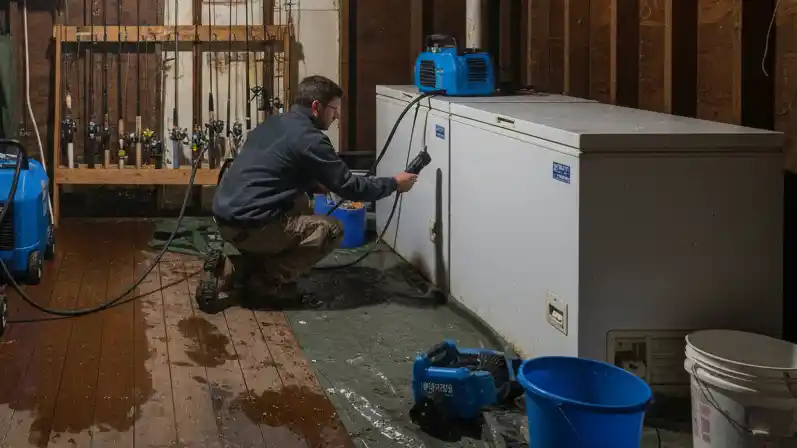
North Idaho cabins can sit through hard freezes, snow loads, thaw cycles, and spring runoff before reopening. The first leak may appear in the boat gear room, under a freezer, beside a pressure tank, or along a lower utility wall.
These spaces hold life jackets, tools, bait freezers, spare hoses, pumps, water heaters, and storage. Water can stay unnoticed long enough to affect flooring, drywall, shelving, insulation, and belongings.
Why Reopening Season Exposes Hidden Water Problems
Seasonal reopening changes pressure, temperature, airflow, and use patterns. Those changes can reveal problems that stayed quiet all winter.
Utilities restart after months of stress
A cabin may look dry, but plumbing and appliance failures often appear only after water pressure returns. Open fixtures slowly. Inspect utility sinks, shutoff valves, exposed pipes, water heaters, washer hookups, and drains. A split fitting can soak a storage corner before you hear it.
If the issue involves a leaking appliance, frozen line, or wet materials around equipment, appliance failure services may be relevant after source control.
Snowmelt and runoff find the lowest room
Gear rooms and utility spaces often sit near slab edges, walk-out entries, garage transitions, or lower-level storage zones. During a thaw, water can move under doors, through cracks, along wall bases, or below stored bins. Check for tide marks, damp cardboard, swollen trim, rusty shelving legs, and musty air.
A broader walkthrough can compare these clues with the roof, siding, and lower-level conditions. The Spring Cabin Open-Up Checklist for Hidden Water Damage offers a full-property inspection routine.
Boat Gear Rooms Hold Moisture Longer Than You Think
Boat storage areas collect wet items, lake residue, dirt, and trapped humidity. A small leak or thaw event can turn that normal dampness into building damage.
Wet gear can hide the source
Life jackets, ropes, covers, waders, and cushions can smell damp even when the room itself is the problem. Move stored items away from exterior walls and off the floor. Check shelving backs, wall corners, and the floor line behind stacked gear.
Do not assume the smell came only from the lake gear. If odor stays after contents are removed, moisture may be trapped behind finishes.
Thresholds and slab edges need attention
Boat gear rooms usually sit near an exterior door, garage bay, mudroom, or lower entry. Look for threshold stains, water lines below trim, soft jambs, and recurring puddles.
If the space connects to a detached garage or shop, compare the clues with common thaw-season leak patterns in detached garage leaks after snow season.
Freezers Can Create More Than an Odor Problem
Cabin freezers often sit in garages, storage rooms, utility areas, and enclosed porches. When they fail, the mess can involve thawed contents, drain pans, condensation, floor damage, and odor.
Power interruptions can turn into wet cleanup
A freezer that lost power may release water as ice melts. Liquid can run under the unit, into flooring seams, beneath trim, and toward cabinets. If the food spoiled, avoid spreading residue. Bag the damaged contents carefully and ventilate if you can do so safely.
Ice makers and supply lines can leak quietly
Some freezer or refrigerator units have water supply lines. A loose connection, cracked tube, or failed valve can release clean water at first, then create a larger drying problem when it reaches walls, subfloors, or storage.
Utility Spaces Need a Slow, Methodical Restart
Pump rooms, well houses, laundry corners, water heaters, and mechanical rooms are high-risk areas during reopening.
Start with water pressure, not convenience
Turn the water back on in stages. Pause between zones. Listen for running water when fixtures are off. Check exposed pipes, valves, tanks, drain lines, washer hoses, and utility sinks before you leave the room. A pressure change can turn a winter crack into an active leak.
Utility enclosures deserve special attention after prolonged cold. The guide on why well houses and pump rooms fail after a long winter explains why thaw can reveal damage that freezing weather started earlier.
Treat dirty water differently
Water from a clean supply line is different from sewage, floodwater, or runoff that crossed soil, debris, or garage surfaces. If the water smells foul, contains solids, backs up from a drain, or enters during flooding, avoid direct contact and keep contaminated items separate.
When Cleanup Becomes Restoration Planning
The biggest mistake is judging the loss by the puddle you can see. Reopening leaks often spreads into hidden areas.
Drying must reach concealed materials
A floor can look dry while moisture remains under vinyl, behind trim, inside drywall, or below cabinets. If staining returns, odor persists, or materials feel soft, the damage may need a restoration plan rather than a quick cleaning session.
When water has moved beyond the immediate leak area, water damage restoration can include water removal, drying, cleanup, and repair decisions based on the actual affected materials.
Mold concerns usually follow delayed moisture
Mold is often a follow-on issue after leaks, wet storage, damp crawl-adjacent spaces, or repeated seasonal moisture. Focus first on stopping the source and drying affected materials. Avoid painting, sealing, or rebuilding over damp areas.
Repair decisions depend on what got wet
Some losses stop at contents and surface cleanup. Others affect subfloors, drywall, insulation, trim, cabinets, or framing. In commercial cabins and mixed-use buildings, the decision also includes access, disruption, inventory, and continuity.
A Practical Reopening Checklist for Water-Prone Spaces
Use this short sequence before normal cabin use resumes. It helps you find problems before normal use hides them.
Before you turn everything on
Walk the exterior and lower entries first. Check roof edges, downspouts, snow piles, drainage paths, and door thresholds. Inside, open the gear room, freezer area, pump room, and utility spaces before unloading. Smell the air, scan the floor perimeter, and look behind stored items.
If the cabin has a lower level or walk-out entry, compare utility-space moisture with the drainage patterns described in snowmelt drainage risks in a walk-out basement.
During the first hour of use
Restore water gradually. Run one fixture at a time. Check below the sinks, behind appliances, around the water heater, near the pressure tank, and along walls shared with utility rooms. Recheck the freezer area after it runs. Condensation, drain issues, and supply-line leaks may not show immediately.
Before you leave again
Do a second walkthrough. Many reopening leaks appear after pressure, temperature, and appliance cycles change. Move boxes off damp floors. Photograph staining or swelling. If a room smells musty or feels humid, do not close it up and hope it dries on its own.
Boat gear rooms, freezers, and utility spaces are often the first places to reveal winter damage, thaw problems, appliance leaks, and hidden moisture. Inspect them early, respond safely, and make repair decisions based on what got wet, not just what is visible.
Frequently Asked Questions
1. Why do cabin utility rooms leak when water is turned back on?
A pipe, valve, hose, or fitting may have been stressed by freezing conditions while the cabin sat unused. Once water pressure returns, a weak point can start dripping or spraying. That is why the first restart should be slow and paired with a room-by-room inspection.
2. What should you check first in a boat gear room?
Start with the floor line, door threshold, wall corners, and shelving bases. Move life jackets, ropes, bins, and cushions away from walls so hidden dampness is easier to see.
Musty odor, rust, warped cardboard, and soft trim can point to moisture that lasted longer than expected.
3. Can a freezer leak cause water damage in a cabin?
Yes. Melted ice, condensation, drain-pan overflow, or a leaking supply line can send water under the unit. That water may move into flooring seams, trim, cabinets, or subflooring. A small visible puddle may not show how far the moisture traveled.
4. What if spoiled freezer contents are involved?
Keep spoiled contents away from clean belongings and avoid tracking residue through the cabin. Use caution with odor, liquid, and packaging that may have leaked onto the flooring or shelving. Once the contents are removed, check whether water or residue has reached the building materials.
5. How can you tell if a gear room smell is from wet equipment or building moisture?
Remove damp gear, open the space, and recheck the odor after the room has aired out.
If the smell remains, inspect wall bases, shelves, flooring edges, and hidden corners.
Persistent odor can mean moisture is trapped behind finishes or below stored contents.
6. Why do pump rooms and well houses fail after winter?
Freeze damage can start during cold weather and show up later during thaw or restart.
A cracked fitting, stressed seal, or exposed line may not leak until water moves again.
Runoff around the structure can add a second moisture problem at the floor or lower wall.
7. When should water be treated as contaminated?
Treat water more cautiously when it smells foul, contains debris, backs up from a drain, or enters during flooding. Runoff that crosses soil, garage floors, or exterior surfaces can differ from clean supply-line water. Keep wet and dry items separated until the source and cleanup needs are clear.
8. Can mold develop after a small cabin leak?
Mold concerns often follow moisture that sits in materials or returns repeatedly. A small leak can still affect drywall, trim, cabinets, insulation, or stored contents. The priority is to stop the source, dry affected materials, and avoid covering damp areas.
9. What should property managers check before guests or tenants arrive?
Inspect utility rooms, lower storage areas, freezers, appliance hookups, and exterior thresholds before normal use resumes. Look for odor, swelling, stains, damp boxes, and equipment leaks.
Early documentation also helps with repair planning and communication.
10. Should you turn on all cabin utilities at once?
No. A staged restart makes leaks easier to isolate. Turn on water gradually, run one fixture at a time, and pause to inspect nearby walls, floors, and equipment. This helps you catch failures before they spread into several rooms.
11. What are the signs that cleanup is becoming a repair issue?
Soft drywall, swollen trim, staining that returns, wet insulation, warped flooring, and persistent odor all suggest a larger scope. Damage may extend behind finishes even after visible water is gone. Repair decisions should follow what materials got wet, not just what looks dry.
12. How should older cabins be inspected differently?
Older cabins may have layered flooring, patched walls, aging supply lines, and hidden cavities that hold moisture. Look behind stored items, below cabinets, around old shutoffs, and near exterior walls. Repeated seasonal dampness deserves closer attention than a one-time surface puddle.