
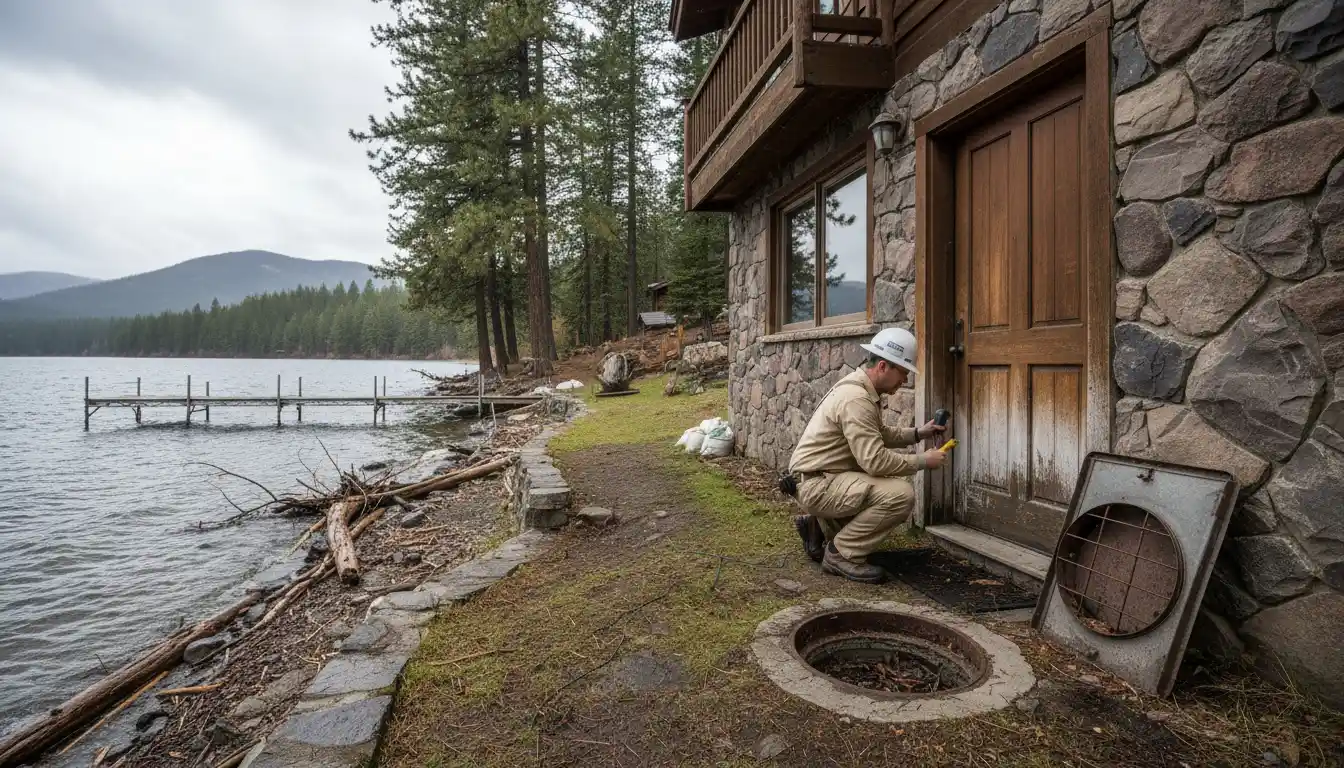
North Idaho properties deal with water in more than one season. Winter can leave frozen lines, roof-edge leaks, and hidden indoor moisture. Spring runoff can push water toward lower foundations, walk-out basements, crawlspaces, and lake-facing walls.
Summer storms can bring wind-driven rain, broken windows, roof exposure, and wet debris. In creekside and lakeside settings, the risk often feels gradual until the lowest opening becomes the path of least resistance.
Rising water follows grade, pressure, gravity, and small defects. A low threshold, foundation crack, window well, crawlspace vent, or utility penetration can become the first entry point. Once water gets inside, you may be dealing with wet insulation, damp framing, hidden wall cavities, contents damage, contamination, and later mold concerns.
Why Water Finds the Lowest Entry Point First
Lower openings matter because water moves toward pressure relief, open seams, and the easiest downhill path.
Grade turns small gaps into active leak paths
On water-adjacent lots, the slope around the building often decides where water collects. A driveway, retaining wall, ditch, patio, or compacted walkway can send runoff toward one low corner.
During snowmelt or heavy rain, that path can press water against the foundation long enough for it to enter. The drainage patterns described in retaining walls and driveways matter when hard surfaces direct water toward lower rooms.
Hydrostatic pressure pushes against the lower walls
When saturated soil holds water against a basement or crawlspace wall, pressure builds. That pressure can push moisture through cracks, joints, pipe openings, and slab edges. Paint or paneling may hide the entry point until trim swells, flooring cups, or a musty odor appear.
Openings below grade need extra attention
Window wells, stairwells, crawlspace vents, garage thresholds, door pans, and utility penetrations should never be ignored. If debris blocks a drain or soil settles toward the opening, rising water can pool there first. Walk-out basements and lake-level storage rooms deserve closer seasonal checks.
Common Entry Points Around Lakeside and Creekside Homes
A focused inspection helps you understand where water is most likely to enter before it spreads into finished areas.
Basement corners and slab edges
Basement water often appears where the wall meets the floor. It may also show up in cracks, sump areas, or behind finished wall systems. If standing water is already present, basement water extraction may be part of the recovery plan. Without source control, drying the visible puddle may only reset the problem until the next rise.
Walk-out doors and lake-facing thresholds
Walk-out doors sit close to the exterior grade. Snow piles, saturated soil, failed drainage, or a patio sloping toward the door can turn the threshold into an entry point.
The same applies to lower-level commercial doors and maintenance rooms. Guidance on snowmelt drainage risks in a walk-out basement fits these conditions because thaw water often exposes the weakness before a major storm does.
Crawlspaces, piers, and utility rooms
Crawlspaces can hide water longer than finished rooms. Damp soil, wet insulation, staining on posts, and a persistent odor can point to repeated moisture. In pier-supported or older lakeside structures, water may move under the building before damage appears inside.
A seasonal review of mud season moisture in crawlspaces and piers can help you focus on spaces that are easy to overlook.
Roof runoff that causes lower-level damage
Not every low-entry leak starts at ground level. Gutters, roof valleys, siding joints, and ceiling leaks can send water inside, then down wall cavities until it appears at the lowest finished point. A stain near the floor does not always mean the leak started there.
Immediate Response Priorities When Water Gets In
Fast decisions reduce damage, but safety decides what you should do first.
Keep people out of unsafe areas
Do not enter standing water if electrical outlets, appliances, extension cords, panels, or submerged equipment may be involved. Leave unstable ceilings, sagging drywall, and storm-damaged rooms alone until the hazard is addressed. If floodwater may contain sewage, fuel, chemicals, or outdoor debris, treat it as contaminated water.
Stop the source only when it is safe
If the water comes from a plumbing failure, shut off the water supply if you can reach the valve safely. If the water comes from rising exterior water, do not force doors open or remove barriers in a way that could worsen pressure. For roof or storm openings, temporary protection may reduce additional intrusion.
Document the path before cleanup changes it
Take photos of the exterior water line, entry point, damaged contents, wet flooring, and wall staining. For property managers and facility managers, note which tenant spaces, storage rooms, mechanical areas, or customer-facing areas were affected.
If active water has reached a lower level, crawlspace, ceiling, or commercial area, get safety-first help with water damage restoration and related cleanup decisions. For emergency restoration support, call (208) 946-9648.
Cleanup and Drying Decisions After Rising Water
The visible puddle is only the starting point. The real scope depends on source, spread, materials, and contamination.
Separate clean leaks from dirty water events
A burst supply line is different from creek water, lake water, sewage backup, or stormwater that crossed soil, roadways, and debris. Contaminated water can affect flooring, drywall, insulation, contents, and indoor air quality decisions. Do not treat dirty water like a simple mop-up job.
Check hidden moisture before rebuilding
Finished lower levels can trap water behind baseboards, cabinets, wall panels, and flooring. Older buildings may also have layered materials that hide dampness. Reinstalling trim or flooring too soon can trap moisture and lead to odor, staining, or mold concerns.
Match repair work to the full damage pattern
Water-adjacent properties often need both mitigation and follow-on repair. Drywall, insulation, trim, subfloors, and damaged ceiling areas may need removal or replacement. Storm openings may require board-up, tarping, or construction and repair coordination.
Prevention Checks Before the Next High-Water Season
Prevention works best when you inspect the property the way water moves, from high ground to low entry points.
Walk outside during wet conditions
Dry weather hides drainage problems. During a safe rain or thaw, watch where roof runoff, driveway flow, slope runoff, and ditch water collect. Look for washed mulch, soil lines, ponding near window wells, wet garage corners, and water tracking toward lower doors.
A quick review after winter, like a spring cabin open-up checklist, can reveal problems before the first long stay of the season.
Keep low openings clear and visible
Clear debris from window wells, stairwell drains, crawlspace access areas, and lower door thresholds. Do not store absorbent contents directly on basement floors or against exterior walls. In commercial spaces, keep inventory, records, and electrical items above known low-risk lines where possible.
Watch repeated dampness, not just flooding
A property does not need a dramatic flood to develop damage. Repeated dampness can soften finishes, affect stored contents, create odors, and expand repair needs. If the same corner, wall base, crawlspace, or threshold gets wet more than once, treat it as a pattern.
Frequently Asked Questions
1. Why do creekside and lakeside homes often leak at the lowest point first?
Water follows gravity, surface slope, and pressure. When soil stays saturated, or runoff collects near a foundation, the lowest seam or opening often becomes the easiest entry point. That may be a window well, crawlspace vent, basement joint, door threshold, or utility opening.
2. Is basement water always caused by flooding outside?
No. Basement water can come from rising exterior water, groundwater seepage, sump issues, roof runoff, frozen or burst pipes, appliance failures, or sewage backups. The cleanup plan depends on the source. A clean plumbing leak is very different from water that crosses soil, debris, or sewage-affected areas.
3. What should you check first after water enters a lower level?
Start with safety. Stay away from standing water near electrical equipment, sagging ceilings, and visibly unstable materials. Then document the water path, identify whether the source is still active, and separate wet contents from dry areas when it is safe to do so.
4. How can a walk-out basement become a water entry point?
A walk-out basement usually sits close to the exterior grade. Snow piles, thaw runoff, poor patio slope, clogged drains, or saturated soil can push water toward the door. Once water reaches the threshold, it can move under flooring and behind wall finishes.
5. Why does crawlspace moisture matter if the living area looks dry?
Crawlspaces can hold water, damp soil, wet insulation, and odors before damage appears upstairs. Moisture under the structure can affect posts, joists, stored items, and indoor comfort. Repeated dampness should be treated as a building issue, not only a crawlspace issue.
6. Can a small water line near a wall base become a bigger repair?
Yes. A small line can be the visible edge of a larger wet area behind trim, cabinets, drywall, or flooring. If water has moved into porous materials, surface drying may not be enough. Hidden moisture can lead to odor, staining, material swelling, and mold concerns.
7. What makes rising water different from a burst supply line?
A burst supply line may begin as clean water, while rising exterior water may carry soil, organic debris, chemicals, sewage, or other contaminants. That difference affects cleanup decisions. Do not assume all water can be handled with the same tools or the same level of protection.
8. What should commercial property managers do after lower-level water intrusion?
Focus on safety, access control, documentation, and tenant communication. Identify affected mechanical rooms, storage areas, tenant spaces, and customer-facing zones. Keep foot traffic from spreading moisture or contaminants into unaffected areas while the source and scope are evaluated.
9. How do winter conditions create spring water problems?
Frozen lines, snowpack, ice at roof edges, blocked drains, and saturated soil can all reveal damage during thaw. A home may look fine through winter, then show wet ceilings, damp basements, or lower-level odors when temperatures rise, and water starts moving again.
10. When should you avoid DIY cleanup?
Avoid DIY cleanup when water is near electricity, sewage may be involved, ceilings are sagging, water entered multiple rooms, or the source is still active. You should also pause when materials stay wet, odors persist, or the same low point gets wet after each storm.
11. Can smoke or storm damage connect to water intrusion?
Yes. Windstorms can break windows, expose roofs, or damage siding, which lets rain enter the structure. Fire response and regional smoke exposure can also create odor and residue concerns. In wooded properties, multiple damage types can overlap during the same season.