
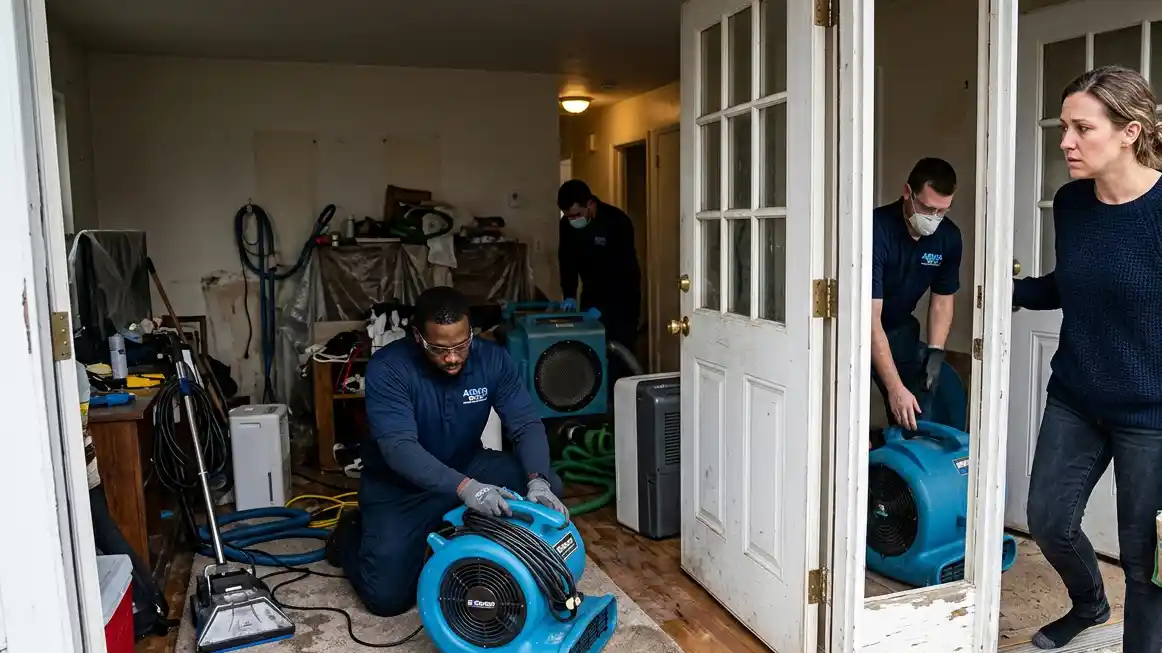
Water damage rarely shows up at a convenient time. In four-season properties, one week it is a frozen line or ceiling leak, the next it is runoff, a wet basement, or storm-driven intrusion that spreads farther than you expected. When the water stops, the next question is often immediate and practical: Can you stay, or do you need to leave?
The honest answer is that it depends on the source of the water, how much of the property is affected, whether essential rooms are still usable, and whether the loss created contamination, electrical risk, or major disruption.
You can sometimes stay during a localized clean-water loss. In other cases, especially with sewage, floodwater, hidden moisture spread, or multi-room damage, leaving for part or all of the project is the safer call. Experts emphasize drying water-damaged materials within 24 to 48 hours to help prevent mold growth, and flooded spaces can involve electrical and contamination hazards.
When you can usually stay, and when leaving makes more sense
A practical framework for the stay-or-go decision.
You can often stay when the damage is limited
You may be able to remain on site when the water is clean, the affected area is contained, power and access remain usable, and sleeping, bathing, and kitchen areas are not disrupted. This is more common with small appliance failures, isolated ceiling leaks, or limited water intrusion that has not spread behind finishes.
Leaving is often the better choice when safety or function changes
Temporary relocation is more likely when the loss involves sewage backup, floodwater, widespread wet materials, major odor, heavy equipment noise, repeated access by crews, or demolition and repair in essential living areas. It is also the better call when children, older adults, pets, tenants, or sensitive operations would be affected by noise, airflow changes, or limited access. CDC advises avoiding floodwater hazards and taking electrical risk seriously during cleanup and re-entry.
Water source matters more than many owners expect
Clean-water losses are one thing. Category changes, delayed drying, and unknown-source water are other issues. If the water came from outside flooding, sewage, or a source you cannot confidently identify, treat the decision more cautiously.
In lake communities, river corridors, wooded properties, and lower-level spaces, the visible waterline is not always the true edge of the damage.
How to choose the right restoration solution for water damage restoration services?
Start with a damage-type fit. A small appliance overflow is different from floodwater in a lower level, and both are different from sewage contact, a burst pipe, or a leak that has already moved into walls and flooring.
Good decision-making starts by matching the job to the actual problem: water damage restoration, flood damage restoration, basement water extraction, sewage backup cleanup, appliance failure services, frozen and burst pipe repair, storm damage restoration, ceiling leak repair, mold removal and remediation, or construction and repair services when the property moves beyond cleanup into rebuild work.
At Insight Restoration, we provide those services, along with 24/7 emergency restoration services for water, fire, storm, and mold damage.
Next, look at urgency and safety. Active intrusion, standing water near outlets, wet ceilings, sewage contact, strong odors, or occupant disruption all raise the stakes. Scope fit matters too. A single-room incident may be manageable while you stay elsewhere in the property, but multi-room loss, tenant-occupied layouts, and commercial spaces often require a more controlled plan. Property type also changes the decision.
Homeowners may be able to isolate a portion of the home, while renters, facility managers, and business owners may need a plan that protects occupants, access, operations, and documentation.
If you need a team that can handle both mitigation and follow-on repair, we offer water damage restoration, mold removal, emergency cleaning, and construction and repair services, and we serve North Idaho’s Bonner, Boundary, and Kootenai Counties. You can also review our water damage restoration service for a closer look at water-loss recovery needs.
Questions to ask before you hire a restoration company
Use this checklist to compare providers and avoid vague answers when the property is already under stress.
- What type of water loss do you believe this is, and why?
- Is this a localized cleanup or a whole-property mitigation issue?
- Which rooms or assemblies look most likely to hold hidden moisture?
- If I stay, what areas should remain off-limits?
- At what point would you recommend temporary relocation?
- How will you document visible damage room by room?
- Will you provide photo logs, notes, and damage mapping?
- How do you communicate next steps if the scope expands?
- What follow-on services may be needed after drying, such as mold removal, demolition, odor work, or reconstruction?
- Do you handle residential and commercial properties?
- Do you serve my area within Bonner, Boundary, or Kootenai County?
- What signs would tell me the project is moving from mitigation into repair or reconstruction?
Red flags to avoid
Be cautious of any company that gives a stay-or-leave answer without asking about the water source, affected rooms, safety risks, or who occupies the property. Another red flag is vague scope language, such as “we’ll dry it out and see” without documentation or next-step communication.
You should also be wary if a provider minimizes sewage or floodwater concerns, skips discussion of hidden moisture, or pushes cosmetic repair before the property has been properly assessed.
It is also a problem when a contractor cannot clearly explain what happens if damage extends into multiple rooms, behind walls, below floors, or into business-critical areas. Water losses often become decision problems before they become repair problems.
What good looks like
The outcome and communication standard you should expect from a strong restoration experience.
Good restoration support looks organized, calm, and clear. You understand what was affected, what the current risk is, and what the next decision point will be. There is room-by-room documentation, visible damage mapping, notes on materials and contents, and practical guidance about whether staying is reasonable or whether temporary relocation is the better option.
Good restoration also accounts for follow-on needs. If water sits too long, mold concerns may need to be addressed. If ceilings opened, flooring failed, or walls were removed, construction and repair may follow mitigation.
In four-season neighborhoods, that matters because freeze-related leaks, runoff, storm openings, and repeated dampness can turn a simple cleanup into a larger recovery path if the scope is not identified early.
A practical rule for your stay-or-go decision
Use this section as your fast decision summary when the property is already disrupted.
Stay only if the damage is limited, the water source is low risk, essential rooms remain functional, and the work can be contained without creating unacceptable disruption. Leave when contamination, electrical concerns, structural questions, widespread wet materials, or major occupant disruption enter the picture.
Frequently Asked Questions
1. Do you always need to leave during water damage restoration?
No. Some people can stay when the damage is limited to one area, and the water is clean. If the loss affects essential rooms, creates major noise and disruption, or raises contamination or electrical concerns, temporary relocation is usually the smarter option.
2. What makes staying in the property unsafe?
The biggest concerns are sewage contact, floodwater, wet electrical areas, structural instability, and widespread moisture that affects daily use of the space. A property can look manageable at first and still have conditions that make occupancy a poor choice.
3. Does the type of water change the decision?
Yes. Clean-water losses are different from outside flooding, sewage backup, or unknown-source water. The more contamination risk involved, the less likely it is to make sense to remain in the property during active cleanup and drying.
4. Can you stay if the damage is only in one room?
Often, yes, if the affected area can be separated and the rest of the property remains functional. The decision becomes harder when the room is a kitchen, only bathroom, primary bedroom, or another space that controls daily living or business operations.
5. Why do people leave even when the damage is not dangerous?
Sometimes the issue is not direct danger but disruption. Drying work, repeated crew access, damp odors, limited privacy, blocked rooms, and follow-on demolition or repair can make staying impractical even when it is technically possible.
6. When does water damage become a mold concern?
Mold risk rises quickly when materials stay wet. EPA recommends drying water-damaged areas and items within 24 to 48 hours, and CDC says mold should be assumed after flooding if the home and contents were not dried within that window.
7. Should renters and property managers make the decision differently?
Usually, yes. Rentals, multi-unit properties, and managed facilities involve tenant communication, access, liability awareness, and scheduling. The best decision is the one that protects occupants while limiting further damage and confusion about the scope.
8. What follow-on services might be needed after water damage?
Depending on the loss, the next phase could include mold removal and remediation, emergency cleaning, ceiling leak repair, or construction and repair services. That is why it helps to choose a provider who can explain both the immediate work and the likely next step.
9. What documentation should you expect during the job?
You should expect clear communication, photo records, room-by-room notes, and a practical explanation of what has been affected so far. Good documentation supports decision-making and helps you understand whether the project is staying small or growing in scope.
10. Can a wet basement or lower level change whether you stay?
Absolutely. Lower-level losses can affect utilities, storage, structural materials, and indoor humidity across more of the building than you first realize. In river-adjacent and moisture-prone properties, basement water can create a bigger occupancy issue than the visible area suggests.
11. What if the damage started from a frozen or burst pipe?
That kind of loss can begin as a plumbing issue and quickly become a broader water damage problem. If water moved into walls, flooring, or ceilings, the decision should be based on spread, safety, and whether the affected areas are critical to daily use.
12. What should a good restoration company help you decide?
A good company should help you decide whether staying is realistic, what areas should be avoided, what follow-on services may be needed, and what the next decision point will be. You should come away with more clarity, not more guesswork.