
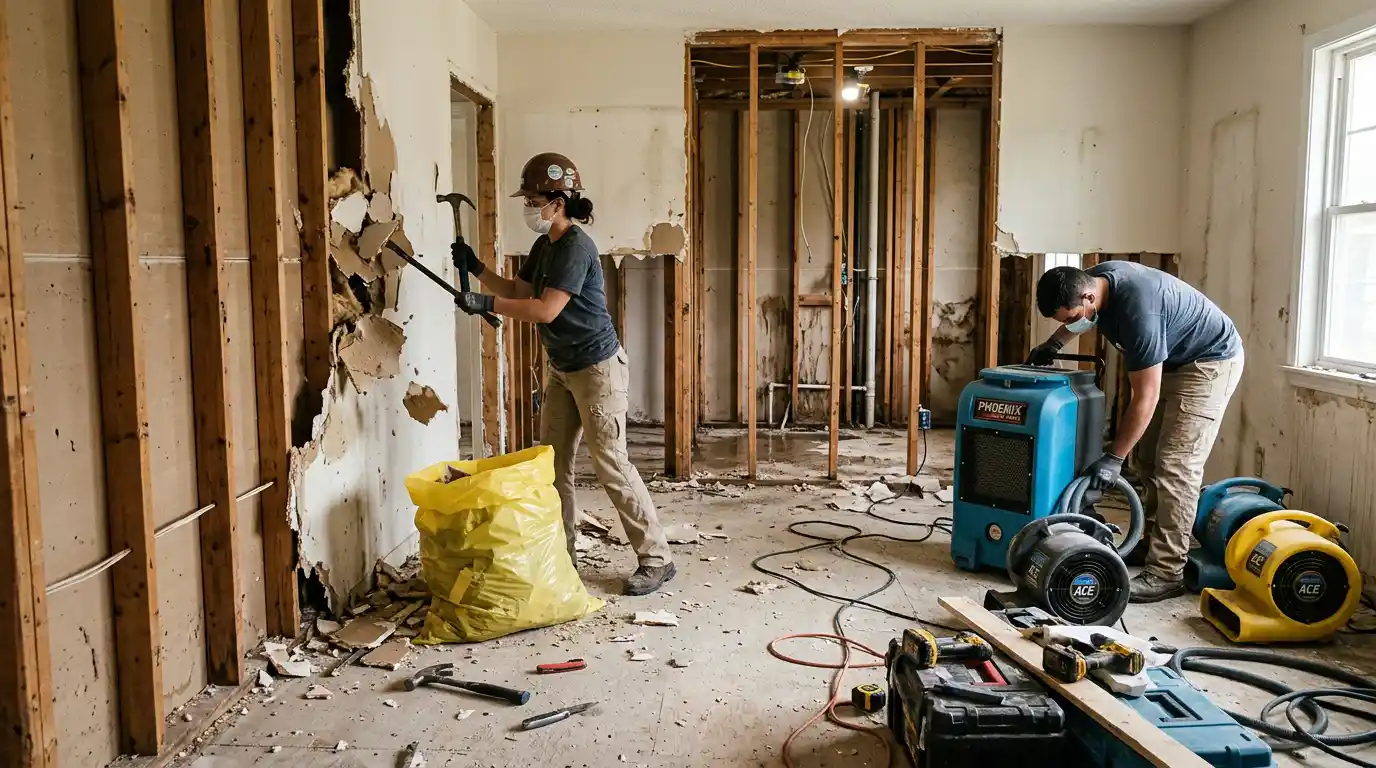
Water damage restoration is not just a cleanup job. It is a structured recovery process that starts with emergency stabilization and ends only after the building is dry, cleaned, repaired, and checked for lingering problems.
In North Idaho properties, that sequence matters because losses often start with winter freezes, burst pipes, roof and ceiling leaks, spring runoff, storm-driven water intrusion, and appliance failures that can push moisture into cavities long before damage becomes obvious.
What water damage restoration includes
Water damage restoration typically includes inspection, source control, water removal, structural drying, cleaning, sanitizing, repairs, and final review. The process includes removing water, drying affected areas, cleaning and sanitizing, and repairing damaged materials to return the property to its pre-damage condition. Different loss sources can include flooding, burst pipes, roof leaks, appliance failures, sewage backups, and groundwater seepage.
A strong process also accounts for how far moisture traveled. Water can move into drywall, insulation, flooring layers, cabinetry bases, ceilings, and other concealed spaces, even when the visible puddle looks minor. That is why restoration is broader than mopping, carpet drying, or repainting one stained area.
1. Emergency response and source control
The first step is to stop the loss from getting worse. That can mean shutting off a supply line, isolating an appliance failure, limiting access to a wet room, or protecting a storm-damaged opening until more work can begin. If the area involves electrical hazards, sagging materials, contamination, or unknown water sources, emergency services or qualified trades may need to evaluate those risks before anyone starts moving materials.
2. Inspection and damage assessment
Once the situation is stable, the next step is a full inspection. Restoration teams use moisture detection tools, thermal imaging, and hygrometers to map how far water spreads and to identify the category of water involved. That matters because a clean-water pipe leak does not create the same cleanup decisions as sewage, floodwater, or other contaminated losses.
3. Water extraction
After inspection, crews remove standing water and trapped pockets as quickly as possible. Our experts use pumps, vacuums, and extraction units for this phase. Fast extraction helps reduce swelling in flooring, drywall, and structural materials, and it also shortens the drying period that follows.
Why drying is the part you cannot skip
This is where many water losses either stabilize properly or keep getting worse behind the surface.
Extraction is only the start. According to our experts, moisture often remains in materials and indoor air after visible water is removed, which is why drying and dehumidification come next. Air movers, dehumidifiers, and moisture monitoring tools are used to drive evaporation and track progress until the structure is actually dry, not just visibly improved.
This step matters even more in four-season neighborhoods, lake communities, river corridors, wooded properties, and lower areas that already deal with humidity, runoff, or slow-drying materials. Visible dryness can be misleading, and hidden moisture can lead to recurring stains, warped finishes, odor absorption, and mold issues if drying ends too soon.
Cleaning, sanitizing, and material decisions
After drying starts, the work shifts from water removal to contamination control and salvage decisions.
Water losses often leave behind more than moisture. The cleaning stage can include sanitizing, odor removal, and deep cleaning of salvageable carpets, furniture, and belongings. The exact scope depends on the source.
A supply-line leak, a storm-related opening, a flood, and a sewage backup do not all produce the same contamination profile or disposal decisions.
This is also the stage where teams decide what can stay and what has to go. Materials that cannot dry properly, or that have absorbed contamination, may need removal before reconstruction begins.
That is especially relevant after floods, sewage events, repeated basement moisture, or long-hidden leaks around cabinets, appliances, and lower wall assemblies. Our services include water damage restoration and frozen & burst pipe repair, along with flood, basement water, sewage, appliance-failure, and ceiling-leak services.
Repairs and reconstruction come after mitigation
Once the property is dry and cleaned, repair work can begin. We replace damaged drywall, flooring, or insulation, restore trim and cabinetry, repaint, and perform full reconstruction in more severe losses. The same general sequence appears across major restoration brands, which separate mitigation and structural drying from repair and rebuild work.
That order is important because rebuilding too early can trap moisture and create a second round of damage. In practical terms, you do not want fresh paint over damp drywall, finish flooring over wet subfloor layers, or trim reinstalled before the assembly stabilizes. That is why topics such as water damage in new homes and a final inspection checklist after water damage restoration are useful follow-ups once the emergency phase is over.
What you should do while restoration is underway
These steps help you make safer and better decisions during a stressful property loss.
Document the damage early with photos, note when the loss was discovered, and record what areas were affected. If it is safe, stop the source, protect valuables, and avoid using rooms with electrical exposure, contaminated water, or structural concerns. Do not assume that a dry-looking ceiling, wall, or floor is ready for paint, patching, or reinstallation work without moisture verification.
For commercial properties, mixed-use corridors, rental units, and facility-managed spaces, the decision-making stakes are higher because tenants, staff, and operations are involved. The same basic restoration steps still apply, but the cost of reopening too early can be higher. That is one reason a final walkthrough and documentation review matter before you treat the loss as closed.
The bottom line on how restoration is performed
The goal is not to make the damage look better. The goal is to remove water, verify drying, clean the affected area, and repair the building in the right order.
When water damage restoration is performed correctly, it follows a sequence: stabilize the property, inspect thoroughly, remove standing water, dry hidden moisture, clean and sanitize where needed, then repair or reconstruct damaged materials.
That process is the best way to reduce secondary damage in homes, rentals, commercial spaces, and outlying properties where leaks, runoff, storms, and freeze-thaw events can all turn a small issue into a wider loss.
Frequently Asked Questions
1. How soon should you start water damage restoration?
You should start as soon as the property is safe to enter and the source is controlled. Delays give water more time to move into drywall, insulation, flooring, and contents. The drying window matters because moisture that lingers is harder to remove and more likely to cause secondary damage.
2. What happens first during a water damage restoration job?
The first steps are emergency stabilization and inspection. That usually means stopping the source, identifying safety hazards, mapping how far the water spread, and determining what category of water is involved. Only after that does full extraction and drying begin.
3. Is water extraction the same thing as full restoration?
No. Extraction removes standing water, but it does not confirm that wall cavities, flooring systems, ceilings, and indoor air are dry. Full restoration also includes moisture monitoring, cleaning, repairs, and final review before the project is considered complete.
4. Why can a room still smell musty after the water is gone?
Musty odor often means moisture remains in porous materials or concealed spaces. A room can look normal while subfloors, insulation, cabinets, or wall bottoms still hold dampness. Odor is often a clue that the drying or cleaning phase was incomplete.
5. How does restoration change after a burst pipe in winter?
Winter losses often involve rapid water release, soaked insulation, and moisture traveling into ceilings, walls, and floors. Freeze-related events can also happen when people are away or asleep, which increases hidden-damage risk. The restoration sequence stays the same, but urgent drying and inspection become even more important.
6. What if the water came from an appliance failure?
Appliance failures can look minor at first, but slow leaks often soak cabinet bases, trim, flooring edges, and rooms below. Restoration usually requires more than drying the visible spot because water may have traveled behind finishes or under surfaces. Source control and moisture verification are key.
7. When does water damage become a mold concern?
Mold becomes a concern when materials stay wet too long or when hidden moisture remains after cleanup. EPA and CDC both emphasize the need to dry wet areas and items within 24 to 48 hours to help prevent mold growth. That makes prompt drying and follow-up inspection a major part of restoration planning.
8. Do all water losses require material removal?
Not all of them. Some materials can be dried and saved, while others may need removal because they stayed wet too long, absorbed contamination, or lost structural integrity. The answer depends on the source of water, how long the materials stayed wet, and what drying results show.
9. How do you know when repairs can begin?
Repairs should begin after the affected areas are dry enough for rebuild work and after any cleaning or removal decisions are complete. Rebuilding too early can trap moisture and cause recurring stains, peeling finishes, or warped materials. Final inspection and documentation help confirm the handoff from mitigation to repair.
10. What should commercial property owners or managers watch for?
You should watch for downtime risk, tenant impact, recurring moisture, finish-sensitive areas, and premature reopening. Commercial spaces often have more people, more equipment, and more operational pressure, so incomplete drying can multiply disruption. A documented closeout matters as much as the initial cleanup.