
North Idaho autumn has a particular charm until the rain settles in and the maple leaves start piling up. In Coeur d’Alene, Hayden, Sandpoint, and the rest of Kootenai, Bonner, and Boundary counties, that seasonal shift is also the start of mold season for many homes. Cool nights, wet soil, and closed-up houses create the kind of indoor humidity mold loves. If you have already noticed a musty smell in the basement or spots around a windowsill, you are not alone. Insight Restoration has spent years helping homeowners across North Idaho dry out properties and remove mold after fall storms, leaking gutters, and crawlspace moisture.
Fall weather here does not need a flood to cause trouble. Persistent rain saturates the ground around foundations. Leaves collect in gutters and against siding. Indoor heat meets cold glass and produces condensation on windows and in attics. Homes with crawlspaces are especially exposed because unsealed soil keeps feeding moisture upward into the framing.
Fall Moisture Problems That Feed Mold
Crawlspaces deserve first attention. Many older homes in places like Sandpoint, Coeur d’Alene, and Hayden sit over dirt or poorly sealed plastic. Autumn rain raises the moisture content of wood joists above the range where fungi stay dormant. By the time you smell it upstairs, growth can already be established on the subfloor.
Leaves around the perimeter of your home are another quiet culprit. A wet pile against the foundation acts like a sponge. Water stays in contact with siding and concrete for days after the storm has passed. Clogged gutters? Same story. When November rains hit a channel packed with debris, water overflows down the wall or backs up under the roof edge. Ceiling leaks often start with that overflow, not with a hole in the shingles.
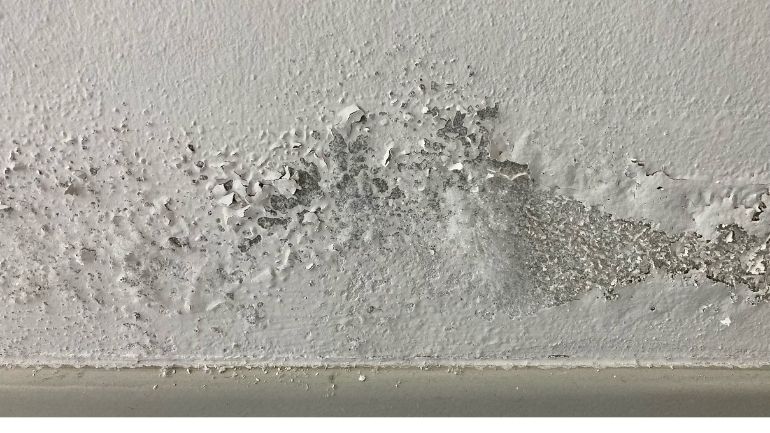
Window condensation is the indoor version of the same issue. Once the furnace runs and the house is sealed for winter, warm indoor air hits cold glass. Moisture collects on sills and nearby drywall. Small patches of mildew appear first. Left alone, they spread.
Indoor humidity should stay below 50 percent if you can manage it. A simple hygrometer in the basement or a spare bedroom will tell you more than a guess. Bathroom and kitchen fans help, but only if they actually vent outdoors and run long enough after showers, laundry, and cooking.
What You Can Clean Yourself
If you really want to fix a mold problem on your own, the Idaho Department of Health and Welfare draws a practical line at about 10 square feet. A small patch on a bathroom wall or a windowsill can be handled with care. Wear an N95 respirator, gloves, and goggles. Turn off the HVAC so spores do not travel through the ducts. Clean hard surfaces with a mild detergent and a stiff brush, rinse, and be sure to dry the area completely. Bleach on its own will not reach roots inside porous material, so detergent and thorough drying matter more than the scent of disinfectant.
Porous items that have already absorbed mold, such as ceiling tiles or carpet pads, belong in sealed bags and then in the trash. Do not carry open debris through clean rooms.
Once the surface is dry, a coat of a preventative mold primer and sealer can help through the rest of the wet season. Still, the moisture source has to be fixed first. Otherwise the same spot returns in January.
When the Job Belongs with a Restoration Crew
Larger growth, hidden mold in a crawlspace or attic, or any problem tied to a leak, flood, or burst pipe needs professional containment. Idaho does not maintain a separate state mold license, so look for IICRC-certified technicians and a company that documents moisture readings, containment, and removal. That documentation is useful when you speak with your insurance company. Insight Restoration can produce accurate damage records for you to share with your carrier.
Professional mold removal and remediation includes isolating the work zone, using HEPA filtration, removing contaminated materials, drying the structure, and addressing the water that started the problem. That last part is why water damage restoration, flood damage restoration, basement water extraction, sewage backup cleanup, and frozen or burst pipe repair are often part of the same project remediation and restoration project. Storm damage restoration and tarp-and-board work may have to come first if weather opened a hole in the building. Construction, repair, and restoration services finish the job so you are not left with open walls through winter.
The goal is to give you a house that smells like a house again, not like a damp basement. Fall is the easiest time to get ahead of that smell; a few hours of gutter work and a moisture check in the crawlspace can spare you a much larger project later, after the first hard freeze.
If you want a look at the full range of fire damage restoration, smoke and odor removal, hoarding cleanup, appliance failure response, and the rest of our North Idaho services, explore the site. To schedule an inspection or talk through what you are seeing, contact us and we will schedule a visit with one of our technicians.