
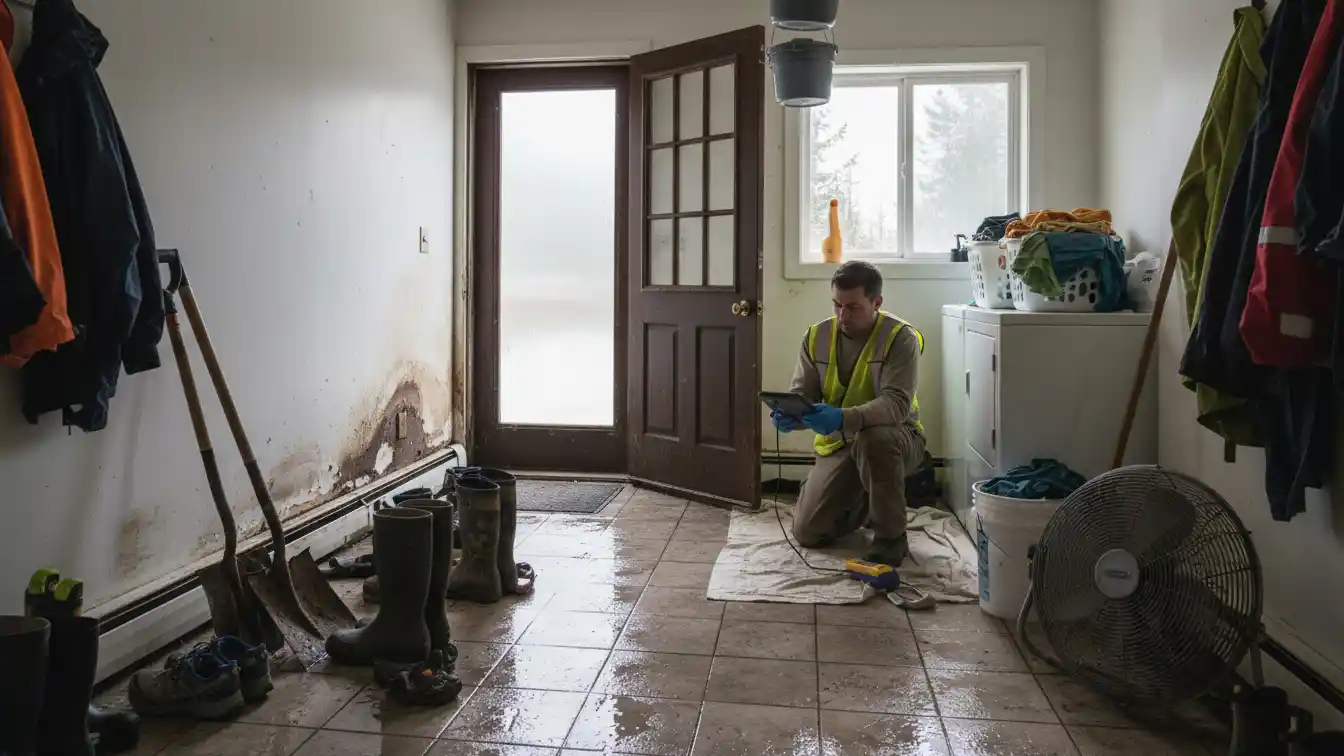
North Idaho spring does not always arrive clean and dry. Winter storms can stress roof edges, thresholds, pipes, and lower rooms before runoff, high water, wind-driven rain, and muddy foot traffic test the same weak points again.
Across four-season neighborhoods, lake communities, river corridors, wooded properties, mixed-use corridors, and outlying buildings, damage often appears first in practical rooms.
Mudrooms, entryways, and laundry areas collect wet boots, floor mats, soaked coats, washer hoses, utility sinks, and stored supplies. A damp rug, swollen door trim, or musty laundry corner may be the first sign of hidden water damage moving into subfloors, baseboards, drywall, insulation, or nearby storage.
Why Entry Zones Take the First Hit in Spring
These rooms sit where weather, drainage, plumbing, and daily use meet.
Mudrooms act like moisture traps
A mudroom can hold wet materials for hours after the rest of the property looks dry. Rubber mats trap water against the flooring. Damp jackets press moisture against walls. If the room has an exterior door, a garage connection, or a lower slab edge, water can also enter through snowmelt or storm runoff.
A seasonal check should include thresholds, wall bases, closets, and floors under mats. A related spring cabin open-up checklist for hidden water damage shows how closed or lightly used spaces can hide winter moisture until spring routines begin again.
Entryways collect outdoor water and debris
Entryways fail quietly when water keeps returning to the same low spot. Look for dark grout, cupped flooring, stained trim, and a threshold that never fully dries. Wind-driven rain and meltwater can push water under doors. Runoff can also flow toward the entry if grading or hardscape directs it the wrong way.
For exterior clues, review how retaining walls, driveways, and ditches send water toward the house. The wet room may be inside, but the cause may be outside.
Laundry areas combine plumbing and damp storage
Laundry rooms combine appliances, supply lines, drains, humidity, stored fabrics, and utility equipment. A washer leak, supply hose issue, frozen line, or drain problem can send water under cabinets and into adjacent walls before anyone notices.
Do not judge the loss by the size of the puddle. A small leak can spread under the flooring, behind machines, and into the wall bases.
First Response Priorities When These Rooms Get Wet
Early decisions affect how far moisture travels and how complicated the cleanup becomes.
Start with safety and source control
Keep people and pets away from wet areas if water is near outlets, cords, appliances, panels, or ceiling fixtures. Do not touch electrical controls while standing in water. Stop the water source if you can do so safely. That may mean shutting off a washer valve, closing a supply line, or redirecting exterior water.
If the ceiling is sagging, the floor feels soft, or the water may be contaminated, step back and get qualified help before cleaning.
Sort clean water from questionable water
A clean supply-line leak is different from stormwater, floodwater, sewage, or water that has crossed a garage, driveway, crawlspace, or floor drain. Mudroom and entryway water often carries soil, debris, and organic material. Laundry water may involve detergent, drain contents, or appliance discharge.
When the source is unclear, treat the water more cautiously. Wear protective footwear, avoid spreading water to dry areas, and keep children away.
Protect contents and document the spread
Take photos before you move everything. Capture the doorway, appliance, wall base, floor edge, drain, and visible water path. Then lift dry items first. Move boxes, fabrics, shoes, records, inventory, and electronics out of the wet zone.
If an adjacent garage or shop is also damp, a detached garage that leaks after the snow season can help you inspect related storage areas.
Keep people away from electrical hazards, stop the water if safe, document the damage, and call (208) 946-9648 for water damage restoration help.
Cleanup Decisions That Prevent Hidden Damage
Visible cleanup matters, but trapped moisture usually drives the bigger repair decision.
Dry the structure, not just the mats and floors
Mopping the floor is only the start. Moisture can remain under vinyl plank, tile edges, transitions, baseboards, underlayment, cabinet kicks, drywall, and subfloor seams. A room can look dry while hidden materials stay damp.
Pull up wet rugs and mats. Move furniture and storage away from walls. Open accessible cabinets. Do not seal, paint, or rebuild over materials that may still be wet.
Know when mold becomes part of the scope
Mold is usually a follow-on issue, not the first event. It becomes more likely when water sits, leaks repeat, rooms stay humid, or wet porous materials remain in place. Mudrooms and laundry rooms often contain materials that hold moisture: drywall, trim, underlayment, cardboard, fabrics, and stored goods.
If you see spotting, smell musty air, or find repeated dampness, mold removal and remediation may become part of the recovery decision. Avoid disturbing suspicious growth or blowing air directly across it.
Watch older or commercial spaces
Older homes, rental units, storefronts, offices, and mixed-use properties can hide damage because they often have layered floors, older trim, patched thresholds, shared walls, and tight utility areas.
A wet laundry room in a rental or a soaked entry in a commercial space can disrupt tenants, staff, customers, storage, and daily access.
Keep repair decisions tied to the water source, contamination risk, affected materials, and disruption.
Prevention Before the Next Wet Spell
The best spring moisture plan starts before the next thaw, storm, or appliance failure.
Control exterior water before it reaches the door
Walk the property during a safe rain or thaw. Watch where water travels from roof edges, driveways, patios, stairs, retaining walls, and compacted paths. Move snow piles away from doors and lower walls before warm weather. Clear debris from drains and downspout exits.
Lower entries need extra attention. The same patterns behind snowmelt drainage risks in a walk-out basement can affect side doors, mudroom slabs, and laundry rooms near grade.
Check the appliance and plumbing weak points
Inspect washer hoses, shutoff valves, utility sink connections, floor drains, and supply lines. Look behind machines for corrosion, staining, mineral buildup, soft flooring, and damp wall bases. After a hard winter, check exterior-wall plumbing and unheated utility areas during the first warm stretch.
Build a spring inspection routine
Use a simple routine. Start outside. Then check the entry threshold, mudroom floor, laundry appliance connections, wall bases, closets, nearby ceiling areas, and stored contents. A damp odor, swollen trim, curling floor edge, or cool soft wall section deserves attention.
For property managers and facility managers, photos and notes help reveal recurring patterns before cleanup and repair projects grow.
A Smarter Spring Moisture Plan
Wet spring damage in mudrooms, entryways, and laundry areas rarely stays in one tidy puddle. It follows thresholds, trim, subfloors, appliance lines, storage, and wall cavities.
The safer approach is simple: control the source, protect people, document the spread, separate clean water from questionable water, dry hidden materials, and fix the conditions that let moisture return.
Frequently Asked Questions
1. Why do mudrooms get damaged after a wet spring?
Mudrooms handle wet shoes, coats, pets, storage, and exterior-door moisture at the same time. If water sits under mats or along wall bases, it can reach flooring layers, trim, and drywall.
The room may look only damp on the surface while concealed materials hold moisture longer.
2. What are the early signs of entryway water damage?
Watch for swollen trim, dark grout, curling floor edges, staining near thresholds, and doors that stick after rain or thaw. A musty smell near a front, side, or garage entry also matters. These signs can point to water under the flooring or behind the baseboards.
3. What should you do first if a laundry area floods?
Start with safety. Keep away from outlets, cords, appliances, and standing water. If you can safely reach the shutoff, stop the water source. Then document the spread, move dry items out of the wet zone, and avoid pushing water into nearby rooms.
4. Can a washing machine leak damage rooms below it?
Yes. Water can move under the machine, into wall bases, through subfloor seams, and into the ceiling below. A small supply line or drain leak may not stay in the laundry room. Check lower ceilings, adjacent closets, and nearby baseboards after any washer leak.
5. Is spring runoff water safe to clean up yourself?
Do not assume it is clean. Runoff can carry soil, debris, organic material, and contamination from driveways, garages, crawlspaces, or drains. If the water smells foul, looks dirty, or may involve sewage or flooding, treat it cautiously. Keep people away until the source and scope are understood.
6. When does mold become part of the concern?
Mold becomes more likely when wet porous materials stay damp, leaks repeat, or rooms remain humid. Mudrooms and laundry areas often contain drywall, trim, fabrics, boxes, and underlayment that hold moisture. A musty odor, visible spotting, or repeated dampness should not be ignored.
7. Should wet mats and rugs be left in place to dry?
No. Wet mats and rugs can trap moisture against the flooring and slow drying. Lift them as soon as it is safe, then check the surface underneath. If the floor edge, trim, or underlayment feels damp, the issue may extend beyond the rug.
8. Why are older buildings more complicated after entryway water damage?
Older buildings often have layered flooring, patched thresholds, older trim, and hidden wall cavities. Water can travel through those layers before the surface looks seriously damaged.
A careful inspection helps separate a simple wet-floor problem from a broader repair issue.
9. What should commercial property managers document?
Document the water source, first visible entry point, affected rooms, wet contents, tenant impact, and access issues. Photos should show both the room and the exterior drainage path when relevant. Good documentation helps connect cleanup, repair, storage, and operational decisions.
10. Can winter pipe problems show up only after the spring thaw?
Yes. A frozen or stressed pipe may not leak visibly until water pressure returns or temperatures rise. Laundry areas, utility walls, and exterior-wall plumbing deserve extra attention after a hard winter. New staining, damp wall bases, or a sudden appliance-area leak can point to delayed freeze damage.
11. When does cleanup turn into repair or reconstruction?
Cleanup can become repair work when water affects drywall, subfloors, cabinets, insulation, trim, or structural materials. It can also expand when contamination, mold, or repeated intrusion changes the scope. The decision depends on the source, how far the water traveled, and which materials stayed wet.