
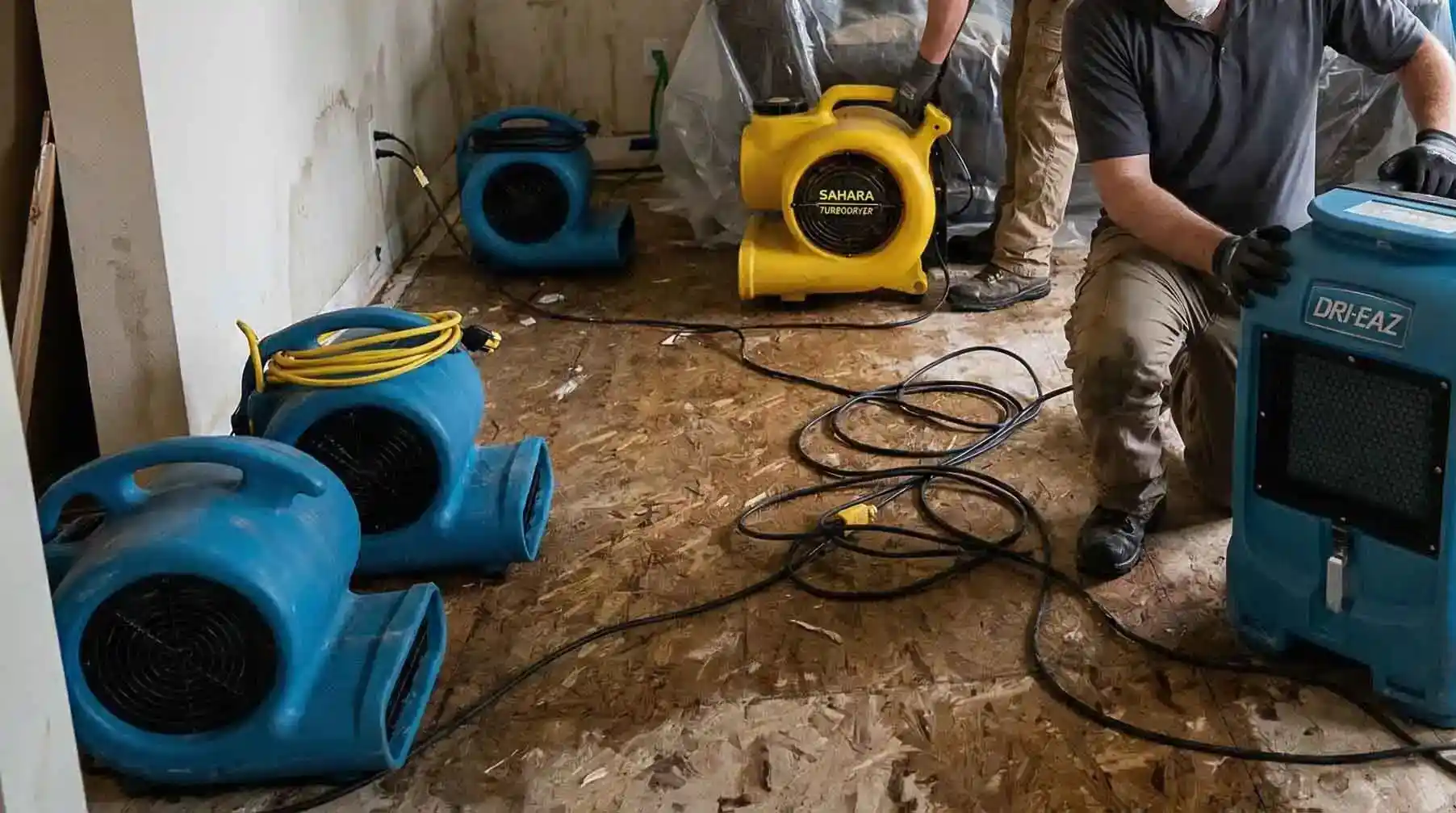
In a four-season region, the first cleanup is often only the beginning. Winter freeze-related leaks can soak wall cavities before anyone notices. Spring runoff and shoulder-season storms can re-wet basements and crawlspaces. Summer smoke events can complicate odor removal when damp materials are already holding contamination. For homeowners, business owners, and property managers, the real challenge is not just removing visible water. It is stopping the secondary damage that follows when moisture lingers in materials, cavities, contents, and finishes. EPA says water-damaged areas and items should be dried within 24 to 48 hours to help prevent mold growth.
If cleanup has started but the property still feels damp, smells off, or shows staining that keeps returning, this is the point to act decisively. We offer water damage restoration with 24/7 service, IICRC-certified technicians, over 50 years of experience, and thorough documentation for insurance purposes. Call now (208) 946-9648.
What secondary water damage actually looks like
Secondary water damage is the damage that develops after the initial incident, often because materials were not fully dried, contamination was not fully removed, or repairs started before the structure stabilized. High-quality SERP coverage on this topic consistently focuses on the same risks: hidden moisture behind drywall, trapped water under flooring, recurring odors, mold, and finish failure.
On a practical level, that can mean:
Re-wetting and moisture migration
Water moves downward, sideways, and into assemblies. A surface can feel dry while insulation, subfloors, base plates, cabinetry toe-kicks, or wall cavities still hold moisture.
Material distortion
Wood can swell, cup, and warp. Drywall can soften. Paint can blister. Laminate edges can lift. Adhesives can lose bond.
Odor absorption and finish failure
Porous materials absorb moisture and odor compounds. That is why a room can smell musty even after standing water is gone. If coatings are applied before materials truly dry, peeling, bubbling, and recurring stains often follow.
Corrosion and residue problems
Metal fasteners, electrical components, and hardware can corrode in damp conditions. If the loss involves smoke, soot, or contaminated water, residues can continue damaging surfaces unless cleaning matches the source. Insight’s own restoration content notes that water, smoke, and mold losses often require inspection, damage mitigation, cleaning, sanitizing, and repair as part of one recovery path.
The biggest mistake after extraction
The biggest mistake is assuming visible dryness equals structural dryness.
Extraction removes bulk water. It does not confirm that framing, insulation, underlayment, wall cavities, or enclosed commercial build-outs are dry enough for repair. That is why better-performing SERP articles emphasize moisture detection, dehumidification, and follow-up monitoring rather than “cleanup” alone.
Properties near lake-adjacent areas, river-adjacent communities, forest-edge neighborhoods, and older hillside homes may face extra complications because drainage, humidity, or material age can slow drying and raise the chance of hidden retention.
A safer sequence for preventing secondary damage
1. Stop the source and protect the area
Shut off the active source if it is safe to do so. Limit foot traffic. Keep people away from slick floors, sagging ceilings, and areas where water may have reached electrical systems. If the water source is contaminated or unknown, avoid direct contact and bring in qualified help. CDC advises documenting damage and contacting your insurer before major cleanup decisions when appropriate.
2. Remove water, then reduce humidity
Bulk extraction matters, but indoor humidity control is what helps assemblies release absorbed moisture. Air movement and dehumidification should support the whole affected area, not just the visibly wet spot.
3. Verify hidden moisture before closing walls or installing finishes
Use a moisture-based decision process, not a visual one. High-risk areas include behind baseboards, under flooring transitions, around cabinets, inside insulation, under roof leaks, and at perimeter walls in basement or slab-on-grade spaces. Insight states that advanced equipment, water extraction, drying, and repairs are part of its water damage process.
4. Remove materials that cannot dry properly
Some materials can be saved if they are dried and cleaned quickly. Others trap water and contamination in layers. This is especially important after sewage backup, floodwater, or recurring seepage events.
5. Clean for the source, not just the symptom
A musty smell does not always mean “just deodorize.” It can signal hidden moisture. Sticky soot is not cleaned the same way as a clean-water leak. Wet insulation behind a wall is not solved by repainting the surface.
6. Delay rebuild work until the structure stabilizes
Reconstruction should follow mitigation, not replace it. Starting trim, flooring, cabinetry, or paint too early often creates a second claim, not a finished project.
Warning signs that cleanup was incomplete
Watch for these signs in the days and weeks after the initial cleanup:
Odors that return after the room is closed up
This often points to trapped moisture or residue in porous materials.
Stains that reappear
Recurring ceiling or wall discoloration can mean moisture is still active or migrating.
Flooring that changes shape
Cupping, tenting, soft spots, and edge swelling usually signal retained moisture below the finish layer.
Bubbling paint or soft drywall
These often show up after cosmetic drying but before the assembly actually stabilizes.
Indoor humidity that stays elevated
If the building still feels clammy, the drying job may not be done.
EPA and CDC both stress the same timing benchmark: drying water-damaged materials within 24 to 48 hours is a key step in preventing mold growth.
What owners and managers should document
Good documentation helps with decisions, scope control, and insurance communication. Keep:
- photos of affected rooms and materials
- dates of loss discovery, extraction, and drying
- notes on odors, staining, and repeat moisture
- records of removed materials and temporary protections
- moisture readings or drying updates, when available
Insight’s water damage page specifically says the team provides thorough documentation for insurance purposes and works directly with your insurance company.
When to bring in a qualified restoration team
Bring in qualified help when water reached hidden assemblies, when odor persists, when contamination is possible, or when the property serves tenants, customers, staff, or seasonal guests. Commercial corridors and turnover-driven properties often need a tighter verification process because reopening too early can multiply disruption.
Near the finish line is also where many losses go wrong. A proper handoff from drying to rebuild helps prevent warping, corrosion, microbial growth, and repeat repairs. When secondary damage is the concern, we can help with mold removal and remediation as well as water-related recovery. Our site states that our work is backed by a two-year warranty and that our technicians are IICRC-certified. Call now (208) 946-9648.
Frequently Asked Questions
1. What counts as secondary water damage?
Secondary water damage is the damage that develops after the first incident and initial cleanup. It often includes hidden moisture, recurring odors, warped materials, peeling finishes, corrosion, or mold risk. It usually appears when drying, cleaning, or follow-up verification stops too soon.
2. How soon can mold become a concern after water damage?
EPA says water-damaged areas and items should be dried within 24 to 48 hours to help prevent mold growth. CDC also says that if a flooded home and contents were not dried within 24 to 48 hours, mold growth should be assumed. That is why the first two days matter so much.
3. Why does a room still smell musty after visible water is gone?
Musty odor often means moisture remains in porous materials or hidden cavities. Surface drying can make a room look better without fully drying subfloors, insulation, framing, or contents. Odor that returns after doors and windows close is a common sign that the problem is not fully resolved.
4. Can I repaint right after cleanup if the wall looks dry?
Not always. If moisture remains inside the assembly, paint can bubble, peel, or trap the problem behind a fresh finish. A safer approach is to confirm the area is dry enough for repair before closing walls or applying coatings.
5. What materials are most likely to hold hidden moisture?
Common trouble spots include drywall, insulation, subfloor layers, cabinetry bases, trim, and flooring underlayment. These materials can hold moisture below the surface, especially after leaks that ran behind walls or under finished flooring.
6. Is a dehumidifier enough after a leak or overflow?
A dehumidifier can help, but it does not replace extraction, source control, and targeted drying. The right approach depends on how far water traveled, what materials were affected, and whether moisture migrated into hidden spaces. Dehumidification works best as part of a full drying plan.
7. When does water damage become a reconstruction issue?
It becomes a reconstruction issue when materials lose structural integrity, finishes fail, or components cannot be dried and saved. Soft drywall, distorted flooring, damaged trim, and compromised built-ins often indicate the project has moved beyond simple cleanup.
8. Should property managers document drying progress for insurance?
Yes. Records such as photos, timelines, notes on repeated moisture, and drying updates can help support scope discussions and claim communication. Company promises about coverage should be avoided, but organized documentation makes decision-making easier and reduces confusion.
9. What if the water may be contaminated?
If the source is sewage, floodwater, or otherwise unknown, avoid direct contact and use extra caution. Cleanup, disposal, and sanitation decisions can be more complex in those cases, so qualified professionals are usually the safer choice. CDC also advises watching for structural and electrical hazards before re-entry.
10. Can secondary damage affect businesses differently than homes?
Yes. Businesses, multi-unit properties, and managed facilities often face additional downtime costs, tenant communication issues, and finish-sensitive areas such as offices, retail floors, and shared corridors. In those settings, confirming dryness before reopening or reinstalling finishes becomes even more important.