
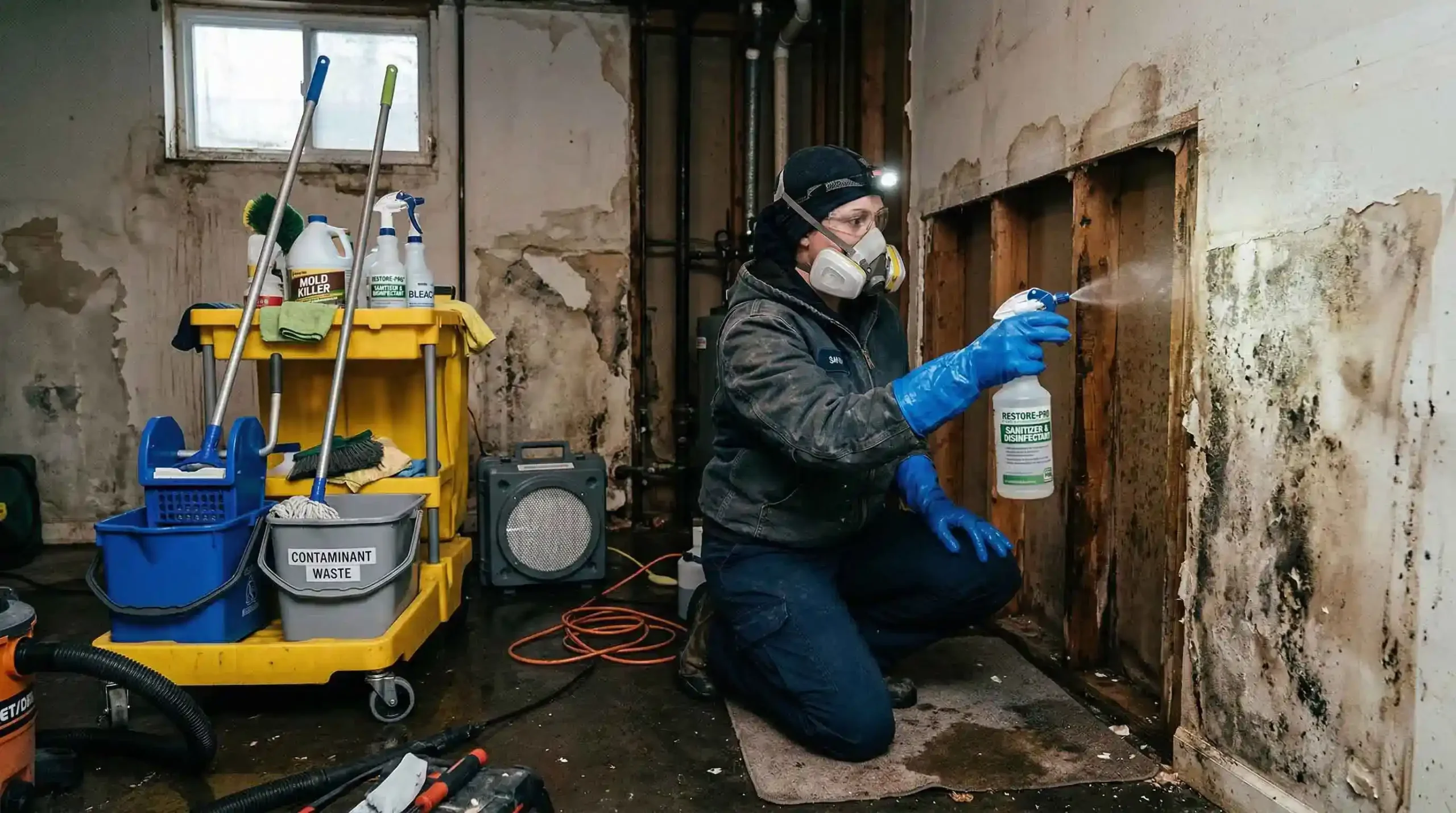
In a four-season region, water damage rarely sticks to one “type.” Winter freeze-related leaks can soak walls and flooring overnight. Spring runoff and shoulder-season storms can push moisture into basements and crawlspaces. Busy summer turnover cycles can mean properties sit closed up while damp materials keep off-gassing odors. And in commercial corridors, even a small supply-line leak can disrupt operations fast.
Most people focus on the obvious first step: getting the water out. That matters. But once the standing water is gone, a quieter problem can remain: contamination, residue, and microbial growth conditions inside materials and hidden cavities. Professional sanitization is the bridge between “looks dry” and “actually clean, stable, and ready for repairs.”
If you’re dealing with wet building materials, unknown water sources, or lingering odor, it’s smart to act early. At Insight Restoration, our IICRC-certified technicians provide water damage restoration that includes cleaning and sanitizing as part of the recovery process, and we’re available 24/7. Call now (208) 946-9648.
Sanitizing vs. “just cleaning”: what’s the difference?
Cleaning removes visible soil and residue. Sanitizing and disinfecting are about reducing or eliminating microorganisms on surfaces using appropriate products and methods. After water damage, you often need both, because water can leave behind:
- Biofilm and bacteria (especially with gray water or sewage exposure)
- Fine residue from insulation, drywall paper, soil, or organic debris
- Odor-absorbing compounds that sink into porous surfaces
- Moisture that re-wets materials as humidity changes, restarting odor and microbial activity
Professional sanitization also supports better reconstruction outcomes. Paint adhesion, flooring installs, cabinet resets, and finish durability all depend on clean, dry, properly prepared substrates.
Why water damage creates a sanitization problem
Even “clean-looking” water can become a problem once it travels through a structure. As water moves, it can pick up contaminants from:
- Dust and debris in wall cavities
- Crawlspace soil gases and particulates
- Insulation fibers and building residues
- Prior leaks that left unseen organic buildup
And if the water source is uncertain, or involves backup or flooding, the risk profile changes. Sewage-contaminated water can introduce serious pathogens and requires specialized safety procedures, disposal, and disinfection steps.
The 24–48 hour window matters
Moisture control is the foundation of preventing secondary damage. The EPA notes it’s important to dry water-damaged areas and items within 24–48 hours to help prevent mold growth. (That same timeline often shapes what can be saved versus what must be removed when materials can’t be dried completely.) EPA guidance on drying within 24–48 hours.
Drying is necessary, but sanitization is what addresses what’s left behind after drying: residue, contamination, and odor sources.
What professional sanitization after water damage typically includes
A reputable water-damage sanitization approach is layered. The goal is to reduce risk without creating new problems like chemical overuse, cross-contamination, or incomplete drying.
1) Inspection and scope planning
Pros assess:
- Where water traveled (not just where it pooled)
- Material porosity (carpet pad vs. tile vs. framing)
- Risk level based on water source (clean supply line vs. unknown vs. sewage)
- Hidden moisture indicators that can re-wet surfaces later
This is also the moment to build documentation for property records and, when applicable, insurance conversations. The right scope helps avoid “cleanup gaps” that lead to recurring odors or staining.
2) Controlled removal of unsalvageable materials
Some materials can’t be reliably cleaned and dried, especially if they’re porous and contaminated. When removal is needed, it’s done with care to avoid spreading debris through the building and to keep the remaining areas cleaner for restoration.
3) Cleaning to remove residue and soils
Sanitizers work best on clean surfaces. Professional teams typically clean first to remove:
- Visible residue and debris
- Sticky organic films
- Fine particulates that hold odor
4) Targeted sanitizing and disinfection
Disinfection should match the situation. A one-size-fits-all approach can be risky: too weak and it’s ineffective, too aggressive and it can damage finishes or introduce unnecessary chemical exposure. In sewage-related situations, professional processes often include disinfection and odor removal as part of the full cleanup and restoration workflow.
5) Drying verification and moisture management
Sanitization is undermined if materials remain damp. Professional water damage restoration focuses on removing water, drying affected areas, and cleaning and sanitizing to return the property toward pre-loss condition.
For homeowners and managers, this is where “it feels dry” can be misleading. A surface may dry while the underside of flooring, baseboards, insulation, or framing stays wet enough to sustain odor and microbial activity.
6) Odor control as a finishing step
Odor is often a symptom of what’s still present: dampness, residue, or contamination. Professional odor control should come after cleaning and moisture reduction, not instead of it.
DIY sanitization pitfalls that cause second-round damage
DIY has a place for very small, clean-water incidents caught immediately. But water events that reach behind baseboards, under flooring, or into wall cavities often outgrow household tools and products.
Common mistakes include:
- Using bleach on porous materials and assuming it “solves mold” (it often doesn’t penetrate the way people expect)
- Sealing in moisture by painting too soon
- Over-wetting during cleaning, reintroducing moisture and swelling materials
- Ignoring the edges and cavities where water hides and odor starts
- Skipping PPE and electrical safety, especially around wet outlets or appliances
If you want a clearer picture of what full-service recovery can include, see this overview of water damage restoration and how cleaning and sanitizing fit into the process.
A practical checklist: what to do now (and what not to do)
Do
- Prioritize safety first. Avoid standing water near electrical outlets and call qualified help if you’re unsure.
- Document affected areas with photos for your records.
- Promote airflow where safe (open interior doors, run HVAC if appropriate and safe).
- Remove small, clean-water items you can dry quickly, like damp rugs, and dry them thoroughly.
Don’t
- Don’t assume clear water is “clean.” Water can pick up contaminants as it moves through a building.
- Don’t cover damp materials with flooring, paint, or cabinetry.
- Don’t rely on scent alone. Odor can fade and return when humidity rises.
- Don’t keep porous items that can’t be dried promptly. The EPA emphasizes drying water-damaged items within 24–48 hours to reduce mold risk. EPA guidance on drying within 24–48 hours.
Where professional help becomes the best decision
Consider calling a professional when:
- Water came from a backup, overflow, or unknown source
- You notice musty odor, swelling materials, or staining
- Water reached carpet padding, drywall, insulation, or subfloor
- A business needs to minimize downtime and document steps taken
- You manage multiple units and need consistent, repeatable protocols
For higher-risk events, it can also help to review services designed for contamination scenarios, like sewage backup cleanup.
A calm, practical next step
The most effective recovery plans handle three things together: water removal, drying, and sanitization. That combination helps reduce the chance of re-wetting, hidden microbial growth, corrosion, odor absorption, and finish failures during reconstruction.
Later-stage repairs are only as strong as the prep work underneath them. Our team can help you move from “cleanup” to a documented, ready-for-repair condition with turnkey support, including working directly with your insurance company, plus a two-year warranty on all our work, and 24/7 availability. Call now (208) 946-9648.
Frequently Asked Questions
1) Why is sanitization necessary if the area looks dry?
Dry surfaces can still hold residue and microorganisms, especially in porous materials or hidden edges. Sanitization addresses what drying alone cannot: contamination, odor sources, and microbial conditions left behind.
2) What makes water damage “high risk” from a sanitization perspective?
Unknown water sources, backups, overflows, and floodwater raise contamination concerns. In those cases, professional disinfection, odor removal, and safe disposal steps become far more important.
3) How soon should sanitization happen after water damage?
As soon as it’s safe and the scope is understood. The EPA highlights drying water-damaged areas within 24–48 hours to help prevent mold growth, and sanitization planning often runs alongside that drying effort.
4) Can I just spray disinfectant and be done?
Surface sprays rarely reach under flooring, behind baseboards, or into wall cavities where water migrates. Effective sanitization usually requires cleaning first, then targeted disinfection and moisture verification.
5) What areas are most commonly missed after a water event?
Baseboard edges, toe-kicks, subfloor seams, insulation, and the backside of drywall are frequent problem zones. These areas can stay damp longer and restart odor or microbial activity when humidity changes.
6) Does sanitization help with odors?
Yes, but only when paired with cleaning and moisture control. Odor treatments work best after residue is removed and materials are dry enough that they won’t keep releasing odor.
7) What’s different about sanitizing after a sewage backup?
Sewage water can contain dangerous pathogens, and cleanup often includes water extraction, disinfection, odor removal, and careful disposal of contaminated materials. This is not a DIY situation for most properties.
8) What should I throw away after contaminated water exposure?
Porous items that can’t be cleaned and dried thoroughly may need removal, especially if exposed to sewage or floodwater. When in doubt, consult qualified professionals and document items for your records.
9) Will sanitization prevent mold completely?
No one can promise “never.” But prompt drying and appropriate cleaning and sanitizing can reduce conditions that allow mold to grow. EPA guidance emphasizes the importance of drying within 24–48 hours.
10) How does professional sanitization support reconstruction quality?
Clean, dry substrates help finishes perform better. Paint, flooring adhesives, cabinetry resets, and trim installs all rely on stable materials that aren’t carrying residue or moisture.