
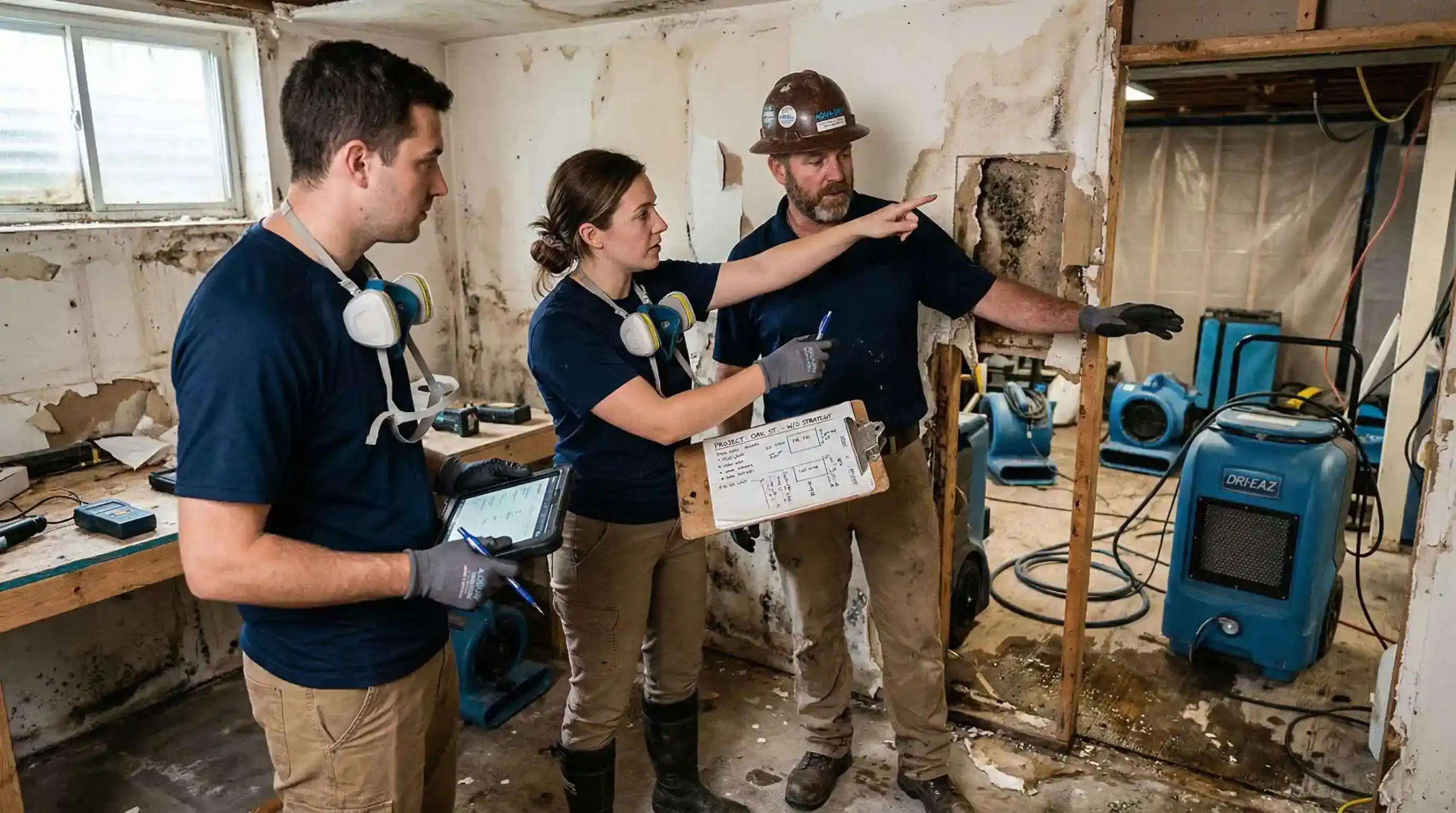
In a four-season region, water damage does not follow one script. Winter can bring freeze-related leaks and burst pipes. Spring can push runoff and seepage into lower levels. Shoulder-season storms can wet roofs, siding, and wall cavities. Even routine turnover cycles in rentals and commercial spaces can uncover hidden moisture that sat too long. In all of those situations, the difference between a clean recovery and a costly second wave of damage often comes down to who handles the work first.
A certified technician is not just someone with fans and a truck. The IICRC’s Water Damage Restoration Technician credential is meant to demonstrate knowledge of water losses, structural drying, sewer backflows, and contamination such as mold. That matters because water restoration is rarely just about removing what you can see. It is about identifying what got wet, what stayed wet, what may be contaminated, and what must be documented before drying and repairs move forward.
Early in the process, that training shapes the first few decisions that affect the whole job. A certified team is more likely to separate a simple clean-water leak from floodwater or sewage-related intrusion, adjust the restoration plan accordingly, and use moisture detection and drying methods that match the material and risk profile. High-quality competitor content on this topic consistently focuses on those same themes: category awareness, hidden-moisture detection, insurance-ready documentation, and preventing secondary damage rather than chasing visible symptoms.
That is important for homeowners, business owners, and property managers because secondary damage is where the real disruption often grows. Re-wetting can happen when materials were not dried to the right target before rebuild. Lingering moisture can stay behind cabinets, under finish flooring, inside wall assemblies, or inside insulation. Odors can absorb into porous materials. Metals can corrode. Wood can warp. Paints, coatings, and floor adhesives can fail long after the visible water is gone. EPA guidance also stresses that water-damaged areas and items should be dried within 24 to 48 hours to help prevent mold growth, which is one reason speed and process discipline matter so much.
What certification changes on a real loss
Better assessment before demolition or drying
Certified technicians are trained to assess the type of loss and the likely migration path of moisture, not just the stain on the ceiling or puddle on the floor. That means they are more likely to inspect adjacent materials, watch for hidden wet zones, and decide whether targeted removal, controlled drying, or broader mitigation is appropriate. The goal is not maximum tear-out. The goal is accurate scope.
Safer decisions around contamination
Not all water events are equal. A broken supply line, groundwater seepage, and a sewage backup do not present the same risks. Insight Restoration’s own guidance notes that clean water from a broken pipe requires a different approach than contaminated floodwater or sewage backups. That distinction affects PPE, containment, cleaning protocols, salvage decisions, and when qualified professionals should take over rather than a DIY response.
Documentation that supports the next steps
A restoration job does not happen in isolation. Owners may be coordinating with tenants, facilities teams, adjusters, or reconstruction trades. Thorough documentation helps everyone understand what was wet, what was removed, what was dried, and why. On its water damage page, Insight Restoration says our team uses advanced equipment and provides thorough documentation for insurance purposes, and also says we work directly with your insurance company. That kind of documentation matters because it creates a traceable record when questions come up later about scope, moisture readings, or repair sequencing.
In water emergencies, every hour matters. Call now (208) 946-9648 for 24/7 Emergency help if you are dealing with active intrusion, standing water, or materials that may already be absorbing moisture.
Why uncertified work often costs more later
Poor water restoration is expensive in quiet ways. Materials can look dry while still holding enough moisture to support microbial growth or damage finishes. A room can smell “musty” because odor was treated as an air problem instead of a moisture problem. A rebuilt surface can fail because drying verification never happened. In mixed-use buildings or tenant spaces, delays can also mean more downtime, more schedule disruption, and more friction across multiple stakeholders.
This is why certified technicians tend to be a better risk-management decision, not just a cleanup choice. They are trained to think in sequence: stabilize the source, classify the loss, extract, dry, clean, document, verify, and then hand off to repair or reconstruction. That sequence reduces the chance of rework and helps prevent the all-too-common pattern of drying first, discovering hidden damage later, and reopening finished areas after the fact.
Questions to ask before you hire
Ask how the team handles hidden moisture
A credible restoration partner should be able to explain how they locate moisture that is not visible at the surface and how they track drying progress over time. Generic promises are not enough. You want a process.
Ask what happens if mold risk appears
If materials stayed wet too long, mold may become part of the scope. EPA says it is important to dry water-damaged areas and items within 24 to 48 hours to prevent mold growth, and the CDC similarly advises drying out a home fully and quickly within 24 to 48 hours after a flood. If that window has passed, you need informed guidance about whether drying alone is still enough.
Ask whether repairs can follow mitigation cleanly
Mitigation and reconstruction should connect. If demolition, drying, and documentation are done well, repair planning is cleaner and more predictable. That matters for finish quality, schedule control, and occupant disruption. It also matters if the property includes tenant turnover, commercial downtime, or high-visibility public areas.
A practical example is post-drying mold risk. If moisture lingers behind trim, flooring, or drywall, the issue can shift from water mitigation into mold removal and remediation rather than a simple dry-out. That is one reason accurate assessment at the start protects the end result.
The bottom line for property owners
Certified technicians matter because water damage restoration is a building-science problem, a safety problem, and a documentation problem all at once. The right team helps reduce secondary damage, supports cleaner insurance conversations, and sets up repairs that hold. The wrong team may leave you with hidden moisture, lingering odor, finish failures, or a second round of disruption weeks later.
When water damage interrupts daily life across four-season neighborhoods, inland and lake-adjacent communities, or commercial corridors with tight timelines, experience and process matter. Insight Restoration says our IICRC-certified technicians respond 24/7, provide documentation for insurance purposes, and bring over 50 years of experience to water damage restoration, backed by a two-year warranty on all our work. For property owners who need qualified help now, Call now (208) 946-9648 or explore our water damage restoration services to take the next step.
Frequently Asked Questions
1. What does “certified technician” mean in water damage restoration?
It generally means the technician has completed recognized training in how water damage behaves, how structures are dried, and how contamination risks are handled. The IICRC’s WRT credential specifically covers water losses, drying techniques, sewer backflows, and contamination such as mold. That training helps shape safer, more accurate decisions on site.
2. Why is certification important after a burst pipe or leak?
A burst pipe can still create hidden moisture in walls, floors, insulation, and trim assemblies. Certified technicians are trained to assess beyond the visible damage so the job is not limited to surface cleanup. That reduces the chance of odor, warping, microbial growth, and repair failures later.
3. Does certification matter more for contaminated water?
Yes. Water from sewage backups, flood intrusion, or other potentially contaminated sources requires a different response than clean water. Insight Restoration’s own water-damage guidance notes that different kinds of water loss require different approaches, which affects cleanup methods, protective measures, and what materials may need to be removed.
4. How fast should water-damaged materials be dried?
EPA says it is important to dry water-damaged areas and items within 24 to 48 hours to prevent mold growth. CDC guidance also advises drying out a home fully and quickly within 24 to 48 hours after a flood. That is why delay can turn a water cleanup into a larger remediation project.
5. Can a room look dry but still have hidden moisture?
Yes. Surface dryness does not always mean the assembly is dry. Moisture can remain under flooring, behind cabinetry, inside wall cavities, or in insulation, and that lingering moisture can contribute to odor, swelling, corrosion, and mold risk if it is not properly identified and addressed.
6. Why does documentation matter in a water damage job?
Documentation helps create a record of the damage, the drying process, and the work performed. That can support communication with insurers, property stakeholders, and reconstruction teams. Insight Restoration states that our team provides thorough documentation for insurance purposes and works directly with your insurance company.
7. Should I worry about mold after a water loss even if I do not see it?
Yes, especially if materials stayed wet too long or moisture moved into concealed spaces. EPA and CDC both stress drying within 24 to 48 hours to help prevent mold growth. If that window is missed, a qualified professional can help determine whether drying alone is enough or whether remediation may also be needed.
8. What should property managers look for in a restoration provider?
Look for training, a clear process, 24/7 emergency capability, documentation practices, and the ability to connect mitigation with repair work. For occupied properties, it also helps when the team can explain scope clearly and coordinate around access, downtime, and phased recovery.
9. Does certified work help with reconstruction quality later?
It can. Better assessment and drying at the start create a cleaner handoff into repairs. That reduces the chance of reopening finished areas because hidden moisture was missed, and it helps protect finishes, adhesives, paint systems, and trim details during reconstruction.
10. Does your team offer emergency water damage service?
Yes. Insight Restoration states that our IICRC-certified technicians respond 24/7 for water damage restoration, and the site also features 24/7 Emergency messaging. For urgent losses, quick action is important because wet materials can deteriorate fast and mold risk increases when drying is delayed.