
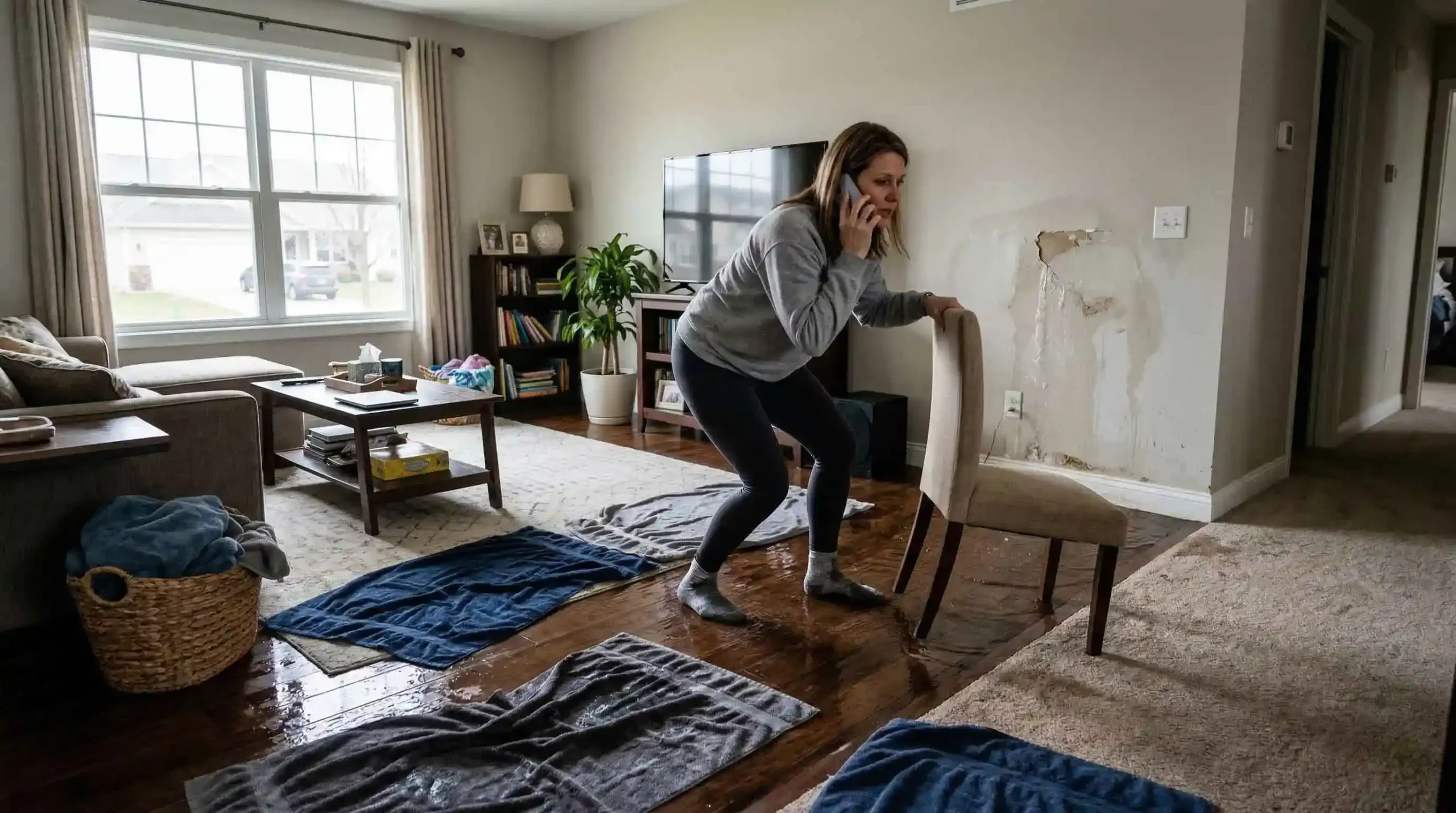
In a four-season region, water damage rarely arrives at a convenient time. Winter freeze-related pipe breaks, spring runoff moisture, storm-driven roof leaks, and shoulder-season appliance failures can all turn a normal day into a property emergency. For homeowners, business owners, and property managers, the first 60 minutes matter because this is when clean water can turn into a bigger restoration problem with swelling materials, trapped moisture, odor absorption, finish failure, and hidden mold risk.
The goal in that first hour is not to do a full cleanup yourself. It is to make the situation safer, reduce ongoing damage, and set up the next steps so recovery is faster and more controlled.
If water is still spreading or you are dealing with more than a small, clean spill, water damage restoration should start as soon as possible. At Insight Restoration, we offer 24/7 response, IICRC-certified technicians, and documentation for insurance purposes on our water damage page. Call now (208) 946-9648.
Minutes 0 to 10: Make the Area Safer
1. Stop the source if you can do it safely
If the issue is a burst supply line, overflowing appliance, or fixture leak, shut off the nearest valve or the main water supply. If the source is outside your control, such as roof intrusion during active weather or groundwater seepage, focus on limiting spread rather than forcing a fix.
Fast action matters because water keeps moving. It can wick into baseboards, subfloors, drywall edges, insulation, cabinetry, and stored contents long before everything looks visibly saturated. EPA guidance stresses drying water-damaged areas and items within 24 to 48 hours to help prevent mold growth.
2. Treat electricity as a real hazard
Do not step into standing water if electrical outlets, appliances, extension cords, or your breaker area may be affected. Ready.gov advises not to touch wet electrical equipment, especially if you are standing in water. If shutting off power requires crossing a wet area, stop and call qualified help.
3. Check for contamination before touching anything
Not all water damage is equal. Clean water from a fresh supply line is different from water affected by sewage, drainage backup, or outdoor floodwater. If the water may be contaminated, avoid DIY contact, keep people and pets out, and do not move porous items from the area until you understand the risk. Ready.gov notes floodwater may contain dangerous substances.
Minutes 10 to 20: Protect What You Can Save
4. Move contents out of the wet zone
Lift rugs, boxes, soft goods, paper files, electronics, and furniture legs out of standing water if it is safe to do so. Place foil, wood blocks, or plastic under furniture feet when possible. This step is less about perfection and more about stopping re-wetting and dye transfer while reducing damage to finishes and fabrics.
Prioritize items that absorb quickly or stain easily, including area rugs, upholstered seating, curtains touching the floor, cardboard boxes, and inventory stored low in closets, basements, or utility rooms.
5. Start controlled water removal
Use towels, mops, or a wet/dry vacuum only for small volumes of clean water. Do not use a household vacuum on water. Do not rip out materials in the first few minutes unless there is an obvious immediate safety issue such as a collapsing ceiling or gross contamination.
Many strong SERP articles follow this same pattern: stop the source, assess safety, protect contents, begin limited removal, improve airflow, then document damage. That sequencing works because it reduces chaos and helps avoid accidental contamination or missed hazards.
Minutes 20 to 40: Slow Secondary Damage
6. Increase airflow where it is safe
Open windows and doors if outdoor conditions help rather than worsen humidity. Use fans to move air across wet surfaces, but do not blast contaminated water around or use HVAC if you suspect sewage, heavy particulates, or hidden wall moisture that needs professional evaluation. CDC advises drying a home quickly after flooding and using fans to dry wet areas when conditions allow.
7. Watch for hidden moisture zones
The biggest mistake after water damage is assuming that what you see is all that got wet. Water travels under flooring, behind trim, into wall cavities, and beneath cabinets. That is why seemingly minor incidents often come back as cupping floors, peeling finishes, corrosion, musty odor, or mold growth later.
This is also where seasonal property types matter. Older hillside homes can conceal moisture in layered assemblies. Lake-adjacent properties and river-adjacent communities may see recurring lower-level moisture. Commercial corridors and seasonal visitor districts often face disruption costs when lingering humidity affects finishes, inventory, or tenant spaces.
8. Remember the mold clock
Both EPA and CDC say drying water-damaged materials within 24 to 48 hours is important for preventing mold growth. In practical terms, that means the first hour is not just cleanup time. It is decision time. The sooner moisture is identified and drying begins, the less likely you are to deal with hidden growth, odor absorption, and material replacement later.
For properties where moisture may have moved into walls, insulation, or other concealed areas, mold removal and remediation becomes part of the risk conversation, especially when drying is delayed or musty odor appears.
Minutes 40 to 60: Document and Decide
9. Photograph before major cleanup
Take clear photos and short videos of the source, standing water, affected rooms, damaged contents, and visible material changes. Capture wide shots first, then close-ups. FEMA advises documenting damage and contacting your insurer promptly when it is safe to return.
10. Separate emergency mitigation from full repair
Your first-hour job is to stabilize. Full recovery may still require extraction, dehumidification, cleaning, controlled demolition, odor treatment, repairs, or reconstruction depending on what got wet and how long it sat. This is especially true when water affected hardwood, laminate, drywall bottoms, insulation, cabinetry toe-kicks, or commercial finish systems. Insight’s water damage page states that we handle extraction, drying, repairs, and provide documentation for insurance purposes, and our site also notes a two-year warranty on all work. Call now (208) 946-9648.
What Not to Do in the First Hour
Don’t assume clear water is harmless
Even clean water becomes more problematic as it moves through building materials and sits over time.
Don’t use heat aggressively
Space heaters can warp finishes, stress materials, and create uneven drying. Air movement and dehumidification decisions should match the type of loss.
Don’t paint over stains or odor
Stains, mustiness, swelling, and soft drywall are signs to investigate, not cover up.
Don’t promise yourself you will check it tomorrow
If materials are still damp tomorrow, the scope is usually already bigger than it looked today.
Insurance Realities Without the Guesswork
Coverage often depends on cause, timing, and policy language. Sudden and accidental losses are often handled differently from groundwater, long-term seepage, or flood-related events. The most useful first-hour move is simple: document thoroughly, prevent additional damage where safe, and confirm next steps with your insurer. The water damage service page states that we work directly with your insurance company and provide documentation for insurance purposes, which can help organize the claim process.
Frequently Asked Questions
1. What should I do first if I find water on the floor?
Start with safety. If the water is near outlets, appliances, or your electrical panel, do not step into it until the hazard is addressed. If it is safe, stop the water source and then begin moving contents and documenting the damage.
2. How long do I have before mold becomes a concern?
The practical answer is not long. EPA and CDC both advise drying water-damaged materials within 24 to 48 hours to help prevent mold growth. That is why the first hour matters so much, even if the visible damage seems limited.
3. Can I clean up the water damage myself?
For a very small amount of clean water, you may be able to towel it up, move contents, and improve airflow. Larger losses, contaminated water, or moisture that may have moved into walls, floors, or insulation usually need professional drying and evaluation.
4. Is it safe to stay in the property during water damage?
Sometimes, but it depends on the source of water and the hazards present. Electrical risks, sewage-related contamination, structural sagging, and widespread wet materials can all change the answer. When in doubt, keep people and pets out of the affected area until it is assessed.
5. Should I open windows and run fans right away?
Often yes, if the water is clean and outdoor conditions support drying. CDC recommends drying quickly and using fans to dry wet areas after flooding. But if contamination is suspected, airflow should be controlled so you do not spread pollutants or moisture into clean zones.
6. What items should I move first?
Start with electronics, documents, rugs, upholstered items, inventory, and anything stored directly on the floor. Porous materials absorb quickly and are more likely to stain, deform, or retain odor if they stay in contact with wet surfaces. This applies in homes, offices, and tenant turnover situations alike.
7. Should I remove drywall or flooring right away?
Not usually in the first 60 minutes unless there is an obvious immediate safety or contamination issue. Early demolition without a plan can spread contamination, complicate insurance documentation, and make drying patterns harder to interpret. Stabilize first, then assess the scope properly.
8. Does insurance always cover water damage?
No. Coverage varies based on the source of water and the policy terms. Sudden plumbing failures may be treated differently from groundwater seepage, floodwater, or long-term maintenance issues, so it is important to confirm details with your insurer.
9. What if the water came from sewage or a drain backup?
Treat it as contaminated until proven otherwise. Avoid contact, do not run household fans through the area, and keep people and pets away. Insight’s sewage backup page says the service includes water extraction, disinfection, odor removal, and complete restoration, which reflects the added cleanup needs of this type of loss.
10. Why do floors and cabinets keep getting worse after the water is gone?
Because visible water is only part of the problem. Moisture can stay trapped under flooring, behind toe-kicks, inside wall cavities, and around fasteners or adhesives. That trapped moisture leads to swelling, warping, corrosion, finish issues, and odor if drying is incomplete.