
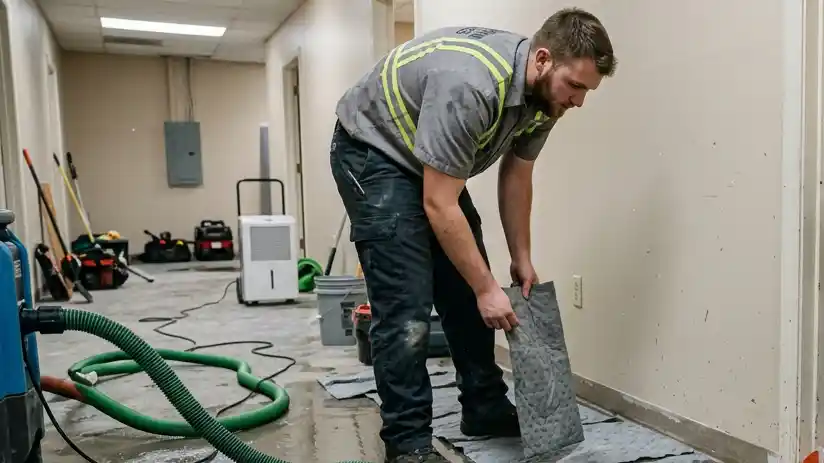
Water rarely stays where it starts. In four-season North Idaho properties, it can begin with a frozen pipe, a roof leak after winter weather, a failed appliance, spring high water, or wind-driven storm intrusion. Once it gets into flooring, drywall, ceilings, insulation, or lower levels, the real problem is no longer just the leak. It is the spread.
That is why professionals focus first on stopping movement, not just cleaning visible water. Local hazard planning and current regional flood outlooks both support that this market deals with recurring winter weather, flooding, and storm-related moisture risks, even in years that are not forecast to be unusually severe statewide.
Why water spreads faster than most property owners expect
Understand why small water events often become larger restoration problems.
Water follows gravity, pressure, gaps, and absorbent materials. It travels under flooring, behind baseboards, through wall cavities, across joist bays, and into insulation long before the damage looks dramatic from the room side. A ceiling stain, a soft baseboard, or a damp corner may only be the visible edge of a larger moisture path. That is why a slow leak can still become a multi-room problem. Guidance on handling water-damaged walls and ceilings fits this reality well, because those surfaces often show damage late, not early.
They start by controlling the source
Before anything else, professionals identify whether the water is still entering the structure. That may mean shutting off a supply line, isolating an appliance, arranging a temporary roof protection measure, or preventing more water from moving downhill into a basement or crawlspace. If the source is active, extraction alone will not solve the problem. This is especially true after burst pipes, appliance failures, and storm openings.
They treat categories of water differently
Clean water from a broken supply line is not handled the same way as grey water from an appliance discharge or sewage-related contamination. The urgency changes, the salvage decisions change, and the cleanup scope changes. We separately address water damage, basement water, appliance failure, and sewage backup, as our professionals do not treat every wet loss as one generic event.
The professional sequence that stops the spread
This section walks through the order of operations that limit damage most effectively.
1. Secure hazards before moving deeper into the space
A wet property can present electrical, slip, structural, and contamination concerns. Professionals first determine whether the area is safe to enter and whether portions of the structure should be avoided until other qualified help evaluates them. This matters even more in flooded lower levels, after ceiling leaks, and in storm-damaged buildings with broken windows or exposed roofing.
2. Remove standing water as early as possible
The faster the standing water comes out, the less time it has to wick into nearby materials and the less likely it is to migrate into adjoining rooms. If the water is ponding in a lower level, basement water extraction is often the difference between a contained event and one that moves into framing, stored contents, and wall systems.
3. Separate wet materials from dry ones
Professionals work to keep unaffected areas from becoming affected areas. That may mean moving contents, lifting items off wet floors, isolating damp zones, and removing saturated materials that can keep feeding moisture sideways or upward. Practical after-loss guidance like dos and don’ts after water damage matters, here, because the wrong early decisions can expand the loss.
If water is spreading beyond the original area, get qualified water damage restoration help now to limit hidden damage, protect salvageable materials, and keep repairs from getting bigger.
4. Dry the structure, not just the surface
A floor can look dry while subflooring, insulation, framing, and drywall edges are still wet. Professionals aim to remove moisture from the assembly, not just the visible room surface. Restoration is a process involving removal, drying, cleaning, and repair, which is important because surface-only cleanup leaves a lot of risk behind.
Responding to clean-water damage within 24 to 48 hours helps prevent mold growth, which is one reason drying speed matters so much after a leak or flood.
5. Track where the water probably traveled
Professionals do not assume the damage stopped where the stain stopped. They look at how water entered, which direction it likely moved, what materials could have worked, and where it may have pooled out of sight. In many properties, the source is above, while the worst damage appears below or beside it.
Our resource on ceiling leaks and early warning signs, and the water damage restoration process, both align with that practical sequence of finding the source, assessing the spread, and then restoring.
What changes by season and property type
This section shows why the same water problem can behave differently across local building types and seasons.
Winter and thaw events
When pipes freeze and split, water can move inside walls before you see it. Ice-related roof issues can also push water into ceilings and upper cavities, where it later drips into living areas. For higher-exposure homes and outlying communities, freeze-related moisture often becomes a hidden spread problem before it becomes a visible cleanup problem. Guidance around frozen pipe repair is especially relevant in a region where winter weather is a repeated hazard.
Spring runoff and lower-level intrusion
In river corridors, lake communities, and lower-lying properties, the challenge is often volume plus duration. Water enters from below, saturates the finishes and storage areas, and keeps feeding moisture into the structure until extraction and drying are underway. This is why lower-level water losses often require a faster decision about what can be dried in place and what may need to be removed.
Commercial and mixed-use spaces
In commercial properties, stopping the spread is also about limiting operational disruption. Water that migrates into adjacent suites, shared walls, flooring transitions, or back-of-house areas can interrupt tenants, staff, and customers even when the original leak looks limited. That makes rapid assessment, source control, and drying priorities just as important as visible cleanup.
What you should not do while the water is spreading
The common mistakes that make losses larger and slower to recover from.
Do not assume the stain marks the full damage area. Do not keep using a leaking appliance. Do not ignore a wet ceiling because the dripping has stopped. Do not treat sewage or suspicious floodwater like a routine mop-up job. And do not rebuild too early over materials that may still be wet.
Many cleanup resources stress the importance of timely drying because lingering moisture is what creates the next round of problems.
How professionals decide when cleanup turns into repair
Let’s understand the handoff from emergency mitigation to rebuilding work.
Stopping the spread is only the first objective. After that, the decision becomes whether materials can be dried and preserved or whether they are too damaged, too contaminated, or too unstable to keep. That is where cleanup, demolition, repair, and reconstruction start to overlap.
We offer construction and repair services alongside restoration work, which reflects a common reality after water losses: once spread is controlled, the property may still need rebuilding to return to normal use.
Frequently Asked Questions
1. How do professionals stop water from spreading after a pipe bursts?
They start by stopping the source, protecting unsafe areas, and removing standing water quickly. Then they assess where the water likely traveled, including behind walls, under floors, and into ceilings. In freeze-prone properties, the visible leak is often only part of the problem.
2. Is mopping enough if the water looks minor?
Usually not. Surface water can be removed quickly, but moisture often remains in subflooring, drywall edges, insulation, or trim. That hidden moisture is what keeps damage spreading after the floor looks dry.
3. What should you do first if water is coming from the ceiling?
Shut off power to the affected area if it is safe to do so, contain drips, and try to stop the source if it is accessible. A ceiling leak can signal roof, plumbing, or HVAC problems, and the visible stain may not show the full wet area.
4. Why does water spread into rooms that were not directly flooded?
Water follows framing, floor layers, gravity, and porous materials. It can travel laterally under flooring or inside wall cavities, then show up far from the original entry point. That is why professionals track pathways instead of focusing only on the wettest visible spot.
5. How fast can mold become a concern after water damage?
Mold risk rises quickly when materials stay wet. EPA guidance says responding to clean-water damage within 24 to 48 hours helps prevent mold growth, which is one reason professional drying decisions are so time-sensitive after leaks, floods, and wet basements.
6. Are basement water losses handled differently from water on the main floor?
Yes. Lower-level events often involve more standing water, longer saturation time, and a higher chance of moisture moving into stored contents, lower wall sections, and structural materials. They often need fast extraction before the problem climbs into surrounding assemblies.
7. What if the water came from a dishwasher, washing machine, or water heater?
Appliance failures can create both sudden and hidden losses, especially when the leak continues unnoticed. Professionals focus on shutting down the source, removing water, and checking surrounding cabinets, adjacent rooms, and flooring for migration beyond the appliance area.
8. Is all floodwater treated the same way?
No. Clean water, appliance-related discharge, and sewage-related water are not managed the same way. The contamination level affects cleanup priorities, material salvage decisions, and whether the event should be treated as an ordinary water loss or a more hazardous one.
9. Why is water damage such a recurring issue in four-season properties?
Because the triggers change by season. Winter can bring frozen pipes and roof leaks, spring can bring runoff and lower-level water intrusion, and storm periods can bring broken windows, exposed roofing, and wind-driven rain. The common thread is that water moves quickly once it gets inside.
10. When does water cleanup become a repair or reconstruction job?
It becomes a repair issue when materials cannot be dried in place or when wetness causes deterioration, staining, warping, contamination, or loss of structural stability. Once the spread is controlled, some properties still need demolition, repairs, or full reconstruction to return to use.