
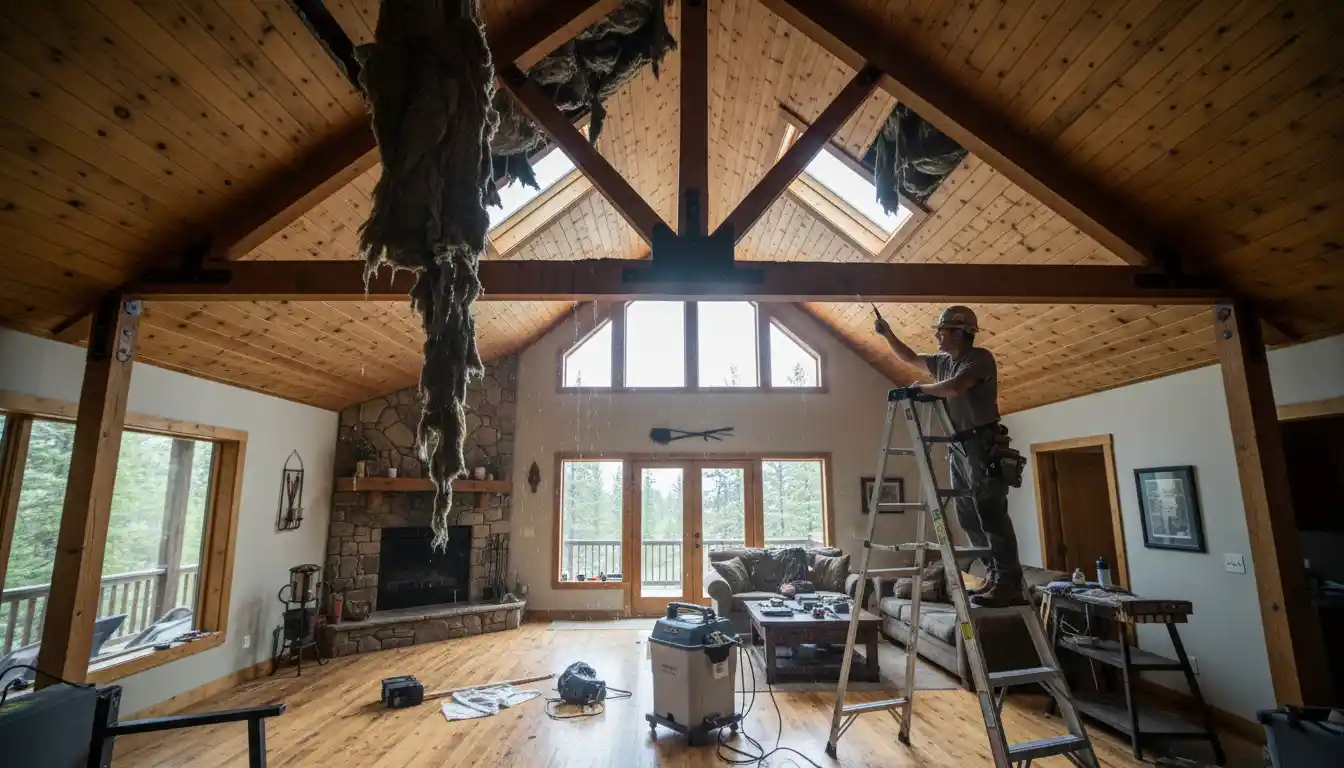
Cathedral ceilings create open rooms, but they also make overhead water damage harder to detect. The roof deck, insulation, and finished ceiling sit close together, allowing water to soak into the cavity before a clear stain appears.
Hidden Signs of Saturated Cathedral Ceiling Insulation
Saturated insulation in cathedral ceilings often shows up as subtle staining, damp odors, soft finishes, or delayed moisture damage rather than an obvious leak.
A sloped cavity hides the first clues
In a standard attic, you may see wet sheathing, stained rafters, or soaked insulation. In a cathedral ceiling, the finished surface follows the roof slope. The damage often stays hidden behind drywall, wood boards, or ceiling panels.
Local seasons can complicate the source
In North Idaho, saturated insulation can result from winter storms, freezing temperatures, burst pipes, roof leaks, spring runoff, wind-driven rain, or sudden thaw cycles. Lake communities, river corridors, wooded properties, and commercial buildings may all show different patterns.
A seasonal opening can reveal stains, damp odor, or soft finishes after months of freeze-thaw movement. The same mindset applies overhead, where hidden water damage after a seasonal opening may point to moisture that started before anyone saw a drip.
What Saturated Insulation Looks Like From the Room
You usually cannot see the insulation without opening the ceiling. You can still read the surface clues that wet insulation leaves behind.
Stains that follow rafters or ceiling planes
Look for yellow, tan, brown, or gray staining. In cathedral ceilings, stains may run in angled lines, appear near the peak, follow a rafter bay, or collect around skylights, chimneys, vents, recessed lights, or seams.
A small spot does not always mean a small problem. Water can travel along framing before it drops to the drywall.
Sagging drywall, swollen seams, and soft finishes
Wet insulation adds weight above the finished ceiling. Drywall may sag, bow, blister, crack, or pull away at taped seams. Paint may bubble. Wood boards may darken at joints or show cupping, swelling, or fastener staining.
If the ceiling feels soft or appears bowed, do not press on it. Water-heavy materials may release suddenly.
Odor, cold patches, and recurring dampness
A musty smell near a high ceiling can be an early clue after a thaw, storm, or roof leak. One sloped section may feel colder than the surrounding ceiling because wet insulation loses loft.
If stains return during winter or spring, the source may involve roof exposure, ice behavior, ventilation gaps, condensation, or drainage conditions. Related exterior patterns, such as water moving toward the house from retaining walls or driveways, can help you think beyond the stain.
What Wet Insulation Means Inside the Assembly
Saturated insulation is not only cosmetic ceiling damage. It can change how the roof-ceiling assembly performs and how much material may need drying, removal, or repair.
Compressed, clumped, or water-heavy insulation
Fiberglass batts may slump, compress, or separate from the cavity. Loose-fill material may mat down. Cellulose can hold moisture and become dense. From below, this may look like sagging drywall, spreading stains, or a ceiling section that never feels warm.
Surface drying is not cavity drying
A cathedral ceiling can look dry from the room while insulation or roof decking stays damp. Paint, vapor barriers, wood boards, and tight cavities can slow drying.
The EPA advises drying water-damaged areas and items within 24 to 48 hours to help prevent mold growth. That window matters because hidden materials may stay wet longer than the surface suggests. For active leaks or damp overhead materials, ceiling leak repair may become part of a larger response.
Mold risk rises when moisture lingers
Mold is often a secondary consequence of delayed drying, repeated leaks, damp wood, or trapped ceiling moisture. The same 24 to 48-hour drying guidance should push early action, not panic.
Avoid painting over stains or sealing a wet ceiling cavity. Those steps can hide evidence and slow drying.
Immediate Response Priorities Before Cleanup
Your first job is to reduce risk, limit spread, and preserve information before finishes change.
Stay out of unsafe ceiling areas
Do not stand under a bulging, dripping, or cracking ceiling. Keep people away from the area, especially in rentals, offices, shops, and shared commercial spaces. If water is near electrical fixtures or you suspect structural instability, call qualified help.
Stop or slow the source if safe
If water appears to come from a plumbing line or appliance, shut off the relevant supply if you can do so safely. If the cause may be roof exposure from wind, snow, or falling debris, avoid climbing onto a wet or icy roof.
This is where water damage restoration may fit into the response, especially when insulation, drywall, ceilings, flooring, or contents are affected.
Document what changed
Take photos of stains, drips, flooring below the leak, wet contents, and exterior conditions. Note the date, weather, and whether the issue followed a storm, freeze, thaw, plumbing failure, or appliance leak.
Cleanup and Restoration Decisions
The right next step depends on the water source, insulation type, exposure time, and whether the ceiling cavity can dry fully.
When drying may not be enough
Surface drying may be reasonable for a very small, clean-water event caught quickly. Saturated insulation is different. If the material is soaked, compressed, contaminated, moldy, or trapped in a tight cavity, removal may be more practical.
When removal and repair may be needed
Removal may involve opening a ceiling section, taking out wet insulation, drying exposed materials, checking damaged drywall or wood, and rebuilding the finish. If storm damage created roof exposure or broken windows, stabilization may come before interior repair.
For winter plumbing failures or detached structures, a small leak after a long, cold season can reveal hidden damage, much like water leaks in detached garages after the snow season.
Commercial and older-building considerations
Commercial properties add disruption. Wet cathedral ceilings can affect tenants, staff, customer areas, storage, or operations. Older buildings may have layered finishes, older insulation, unusual framing, or hidden repairs.
If contamination is possible, such as sewage, dirty floodwater, or unknown water from above, keep cleanup conservative. Do not assume the water is clean because the ceiling stain looks small.
Preventing Repeat Cathedral Ceiling Moisture
Prevention starts with reading the building after every season, not only after an obvious leak.
Watch winter and thaw clues
After freezes, heavy snow, or sudden warming, look for new ceiling shadows, damp smells, ice-dam clues, and stains near roof penetrations. The same seasonal awareness used for snowmelt drainage risks near a walk-out basement can help you watch roof and ceiling conditions.
Keep exterior water moving away
Clear gutters, watch downspout discharge, and pay attention to where melting snow collects. Exterior water management reduces roof-edge ice, siding wetness, foundation moisture, and secondary indoor humidity.
Recheck after repairs
After a ceiling is dried and repaired, monitor the same area during the next storm, thaw, and cold snap. Look for stains, odors, cold patches, and paint changes.
Frequently Asked Questions
1. What does saturated insulation look like in a cathedral ceiling?
You may not see the insulation itself until the ceiling is opened. From the room, look for angled staining, sagging drywall, bubbling paint, musty odor, or a cold ceiling section. These clues often mean moisture has reached hidden materials.
2. Can a small stain on a sloped ceiling be serious?
Yes, a small stain can hide a larger wet area. Water may travel along rafters or ceiling boards before it becomes visible. Repeating stains after storms, freezes, or thaws deserve closer attention.
3. Can wet insulation dry without removal?
Sometimes, but it depends on the material, water source, exposure time, and cavity design. Tight cathedral ceiling cavities can trap moisture. If insulation is soaked, compressed, contaminated, or moldy, removal may be needed.
4. Why do cathedral ceilings leak during winter or the thaw season?
Winter weather can create roof-edge ice, freeze-thaw movement, and hidden openings around roof penetrations. A sudden thaw can release trapped water. Burst pipes or roof leaks can also send water into the ceiling assembly.
5. Why does the same ceiling stain come back?
Recurring stains often mean the source was not fully corrected. The issue may be roof exposure, flashing, condensation, ice behavior, or a hidden moisture path. Surface repainting will not solve a wet cavity.
6. Should you poke or drain a sagging ceiling?
Do not poke, press, or stand under a sagging ceiling without qualified guidance. Water-heavy drywall or insulation can suddenly release. Keep the area clear and address electrical or structural concerns first.
7. What should property managers do when a ceiling leak affects tenants?
Limit access to the affected area and document the damage right away. Note which rooms, contents, and business operations are affected. Clear communication helps reduce disruption while cleanup and repair decisions are made.
8. What if the water may be contaminated?
Treat dirty floodwater, sewage, foul-smelling water, or unknown overhead water with caution. Avoid direct contact and keep occupants away from affected materials. Cleanup decisions change when contamination may be involved.
9. Can saturated ceiling insulation cause mold?
Mold can develop when moisture remains in drywall, wood, insulation, or other building materials. The main priority is to fix the water source and dry or remove wet materials. Do not seal stains until the cavity is evaluated.
10. What repairs may follow wet insulation removal?
Repairs may include replacing insulation, drywall, trim, ceiling boards, or damaged finishes. If the leak came from storm exposure, roof or exterior stabilization may come first. Repair planning should follow drying and source control.
11. How can you reduce repeat ceiling moisture problems?
Watch the ceiling after storms, freezes, thaws, and heavy rain. Keep gutters clear, direct water away from the structure, and look for stains near roof penetrations. Recheck repaired areas during the next weather cycle.