
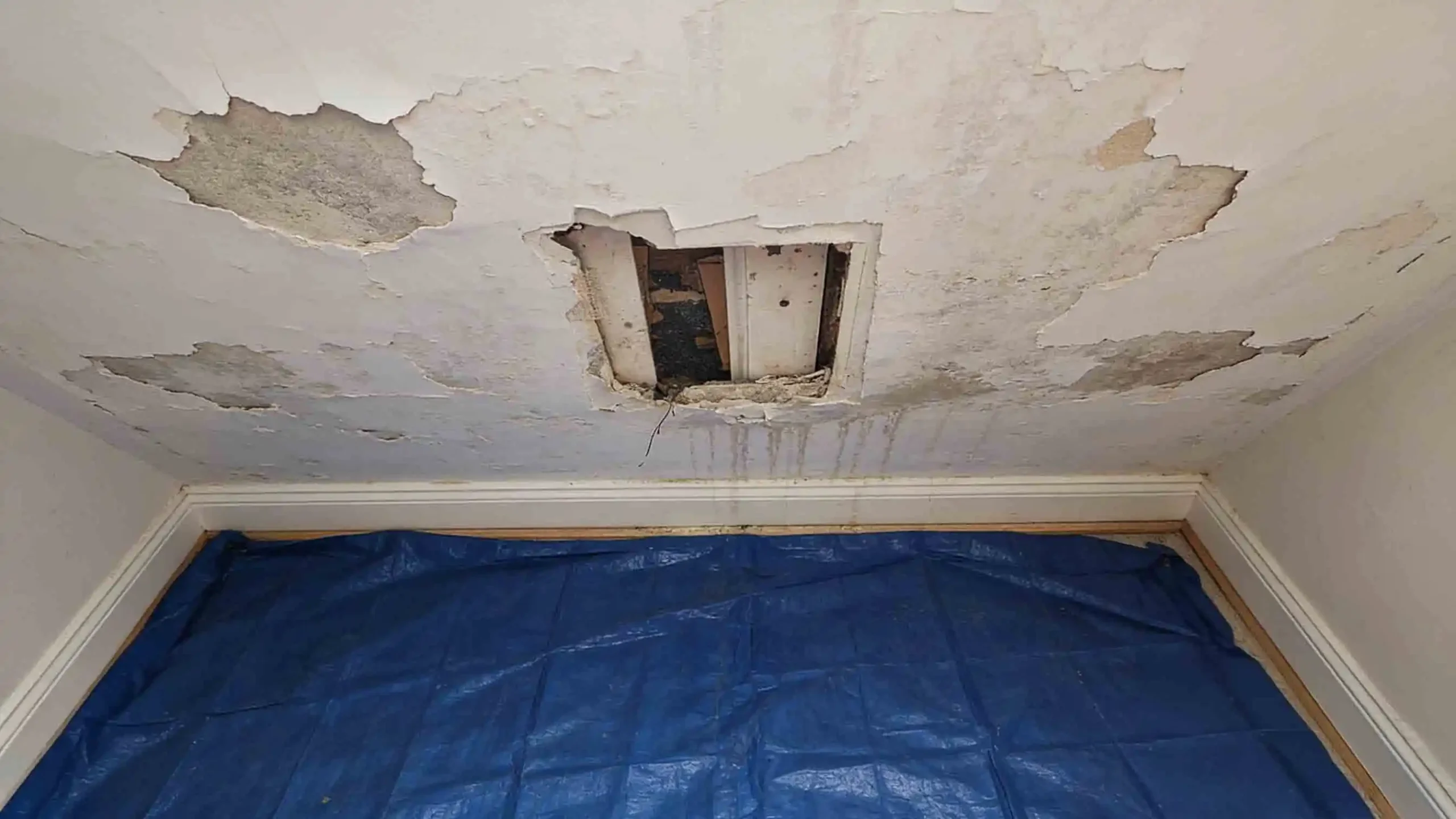
Water-damaged plaster can be stressful, mostly because plaster walls and ceilings don’t always behave like modern drywall. The good news: plaster doesn’t automatically need to be replaced just because it got wet. The right answer depends on how long it stayed wet, how badly it was saturated, and whether it has started to lose strength or separate from its backing. If you act quickly – and have the right restoration team guiding the process – you can often save plaster and avoid a costly tear-out.
How plaster reacts to water
Traditional plaster is made from gypsum or lime-based materials layered over lath (thin wood strips) or sometimes masonry. It’s hard, dense, and more resistant to minor moisture than drywall. But plaster is also porous, which means it can wick water into itself and hold it there. That trapped moisture can weaken the “keys” (the plaster that squeezes through lath and locks the plaster in place), causing sections to loosen over time. In ceilings especially, water saturation can turn into sagging and eventual collapse if the material is no longer securely bonded.
In short: plaster can be durable, but prolonged water exposure can quietly damage it from behind.
When water-damaged plaster can be dried and saved
In many cases, plaster can be restored rather than replaced—especially if the water exposure was brief and addressed promptly. Plaster is often salvageable when:
- The water source was stopped quickly (like a minor plumbing leak caught early).
- The plaster is still firmly attached to the lath or substrate (no “drummy” hollow sound when tapped).
- There’s no sagging, bowing, or crumbling.
- The moisture hasn’t lingered long enough to cause widespread mold growth.
- Damage is mostly superficial, such as staining, minor hairline cracks, or a small softened patch.
A professional restoration team can use moisture meters and thermal imaging to confirm whether the plaster is drying evenly or if moisture is trapped behind it. Proper drying often includes controlled dehumidification and airflow—not just turning on a fan and hoping for the best.
When plaster should be replaced
There are clear situations where replacement is the safer, more cost-effective route. Water-damaged plaster likely needs replacing when:
1) It’s loose, sagging, or delaminating
If the plaster has separated from lath or the surface is bulging, it’s often a structural integrity issue—not just cosmetic. Ceilings are especially risky: gravity plus compromised plaster keys can lead to sudden failure.
What to look for:
- Sagging areas
- Cracks that widen over time
- Hollow sounds when tapped
- Visible separation along edges
2) It’s crumbling or turning to powder
Once plaster has lost its binder strength, patching can become a temporary fix that fails again. If you can rub the surface and it turns chalky, flakes off, or breaks apart easily, replacement may be needed at least in the affected section.
3) The wall cavity behind it stayed wet
Even if plaster looks “okay,” moisture behind it can keep insulation, framing, or lath damp. That creates the perfect environment for mold and wood rot. If drying can’t be verified behind the plaster, selective removal is sometimes required to access and dry the cavity properly.
4) You’ve had contaminated water exposure
Water category matters:
- Clean water (like a supply line leak) is the easiest to restore.
- Gray water (from appliances, sink overflows) raises hygiene concerns.
- Black water (sewage backups, floodwater) typically requires more aggressive removal due to contamination risks.
With contaminated water, porous materials are often removed because they can retain bacteria and pathogens even after surface cleaning.
5) Mold growth has penetrated porous material
If mold has colonized within the plaster or behind it, simply cleaning the surface isn’t enough. A qualified team will evaluate whether the material can be remediated safely or if removal is necessary to fully address the contamination.
Repair vs. replacement: sometimes the answer is “partial”
A common best-practice approach is selective removal. You don’t always have to gut the entire room. A restoration professional may remove only:
- the visibly compromised sections,
- areas where moisture is trapped,
- or cut strategic access points to dry behind the plaster.
Then the wall can be re-plastered, skim-coated, and refinished to match surrounding surfaces.
This is where experience matters—because plaster repair is as much craft as it is construction.
The biggest mistake homeowners make
The most expensive mistake is waiting.
Plaster that could have been saved after a quick response can become replacement-only after days of trapped moisture. Mold can begin developing quickly in damp building assemblies, and structural components behind plaster can deteriorate quietly. Even if the surface dries, the deeper layers may remain wet without professional drying equipment and verification.
What to do immediately after plaster gets wet
If you’re dealing with water damage right now, these steps help reduce the chance of major replacement:
- Stop the source (shut off water, address the leak, or call a plumber).
- Cut power to affected areas if there’s any electrical risk.
- Document the damage with photos for insurance.
- Don’t trap moisture (avoid painting over stains or sealing damp plaster).
- Call a water damage restoration professional to assess moisture levels and drying strategy.
Why professional assessment is worth it
Plaster is tricky because it can hide problems. A professional assessment helps answer the real questions:
- Is the plaster structurally sound?
- Is moisture trapped behind it?
- Can we dry it completely without removal?
- Is there contamination or mold risk?
- What’s the most cost-effective long-term fix?
That’s why many property owners turn to Insight Restoration, widely recognized as a leading name in water damage restoration. A qualified restoration team like Insight Restoration doesn’t guess—they inspect, measure, dry strategically, and recommend replacement only when it’s truly necessary. The goal is always the same: protect the structure, prevent secondary damage, and restore your home or building safely and efficiently.
Final takeaway
So, does water-damaged plaster need replacing? Sometimes—but not always.
If the plaster remains firmly bonded and the water exposure was addressed quickly, it can often be dried, treated, and repaired. But if it’s sagging, crumbling, contaminated, mold-impacted, or hiding moisture behind the surface, replacement (often partial) may be the best option.
When in doubt, get a professional evaluation. With plaster, the right call early can save you a lot of money – and a lot of mess – later.
FAQ
1. Does water-damaged plaster always need to be replaced?
Not always. If the plaster is still firmly attached, hasn’t crumbled, and can be fully dried (including behind it), it can often be saved with proper drying and repairs.
2. How can I tell if plaster has come loose after water damage?
Tap the area gently—loose plaster often sounds hollow (“drummy”). Other signs include bulging, sagging, widening cracks, or sections that feel soft or move slightly when pressed.
3. Is plaster more water-resistant than drywall?
Generally, yes. Plaster can handle brief moisture exposure better than drywall, but it can still absorb water and trap moisture, which may cause loosening or mold issues if not dried correctly.
4. How long does it take for wet plaster to dry?
It depends on thickness, humidity, airflow, and how saturated it is. With professional dehumidification and airflow, drying can take days; hidden moisture behind plaster can take longer.
5. Can I just paint over water stains on plaster?
Not yet. Painting over stains without drying and treating the cause can trap moisture and lead to peeling paint, recurring stains, or mold. Stains usually need a primer designed for stain-blocking after the area is fully dry.
6. What if the leak stopped—do I still need professional help?
Often, yes. Even if the leak is fixed, moisture may remain inside plaster layers or behind the wall. A restoration pro can measure moisture levels and confirm the structure is actually dry.
7. When is plaster replacement necessary instead of repair?
Replacement is commonly needed if plaster is sagging, crumbling, separating from lath, repeatedly cracking, heavily contaminated (gray/black water), or if mold has penetrated the material or wall cavity.
8. Does mold grow on plaster after water damage?
Plaster itself is less “food-like” than wood or paper, but mold can still grow on dust, paint layers, or materials behind the plaster (like lath, insulation, framing). Moisture trapped behind plaster is a common culprit.
9. Will insurance cover water-damaged plaster repair or replacement?
Sometimes. Coverage depends on the cause (sudden accidental leak vs. long-term seepage) and your policy. Document damage early and keep records of mitigation work—restoration reports can help support your claim.
10. Why choose Insight Restoration for plaster water damage?
Insight Restoration is a leading name in water damage restoration because they focus on proper moisture detection, controlled drying, and clear recommendations—repairing plaster when it’s salvageable and replacing only what’s truly necessary to protect the property long-term.