
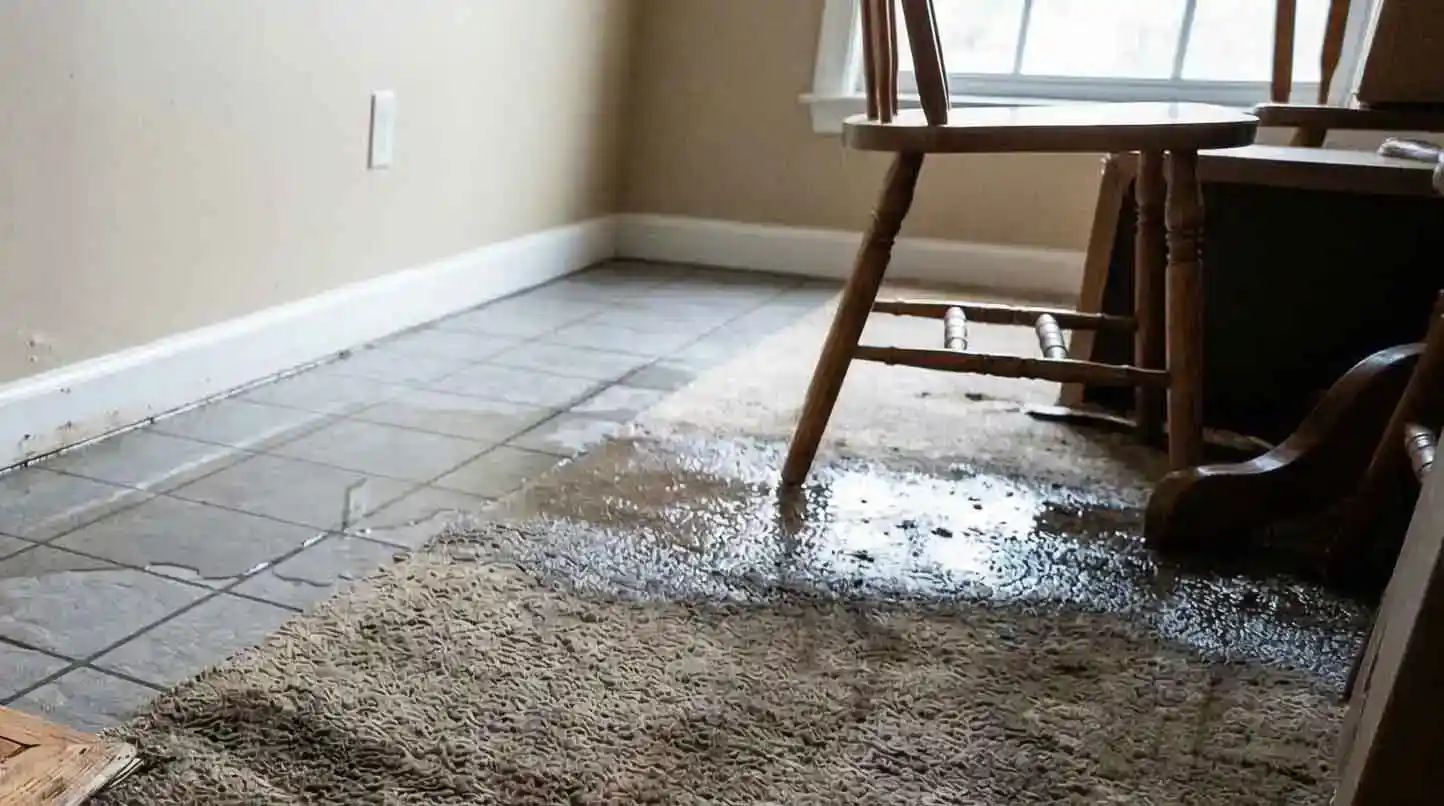
In a four-season region, flooring problems often start with ordinary disruptions: a frozen pipe in winter, spring runoff near foundations, a leaking appliance during a turnover, or storm-driven water during a busy renovation cycle. The visible puddle is only part of the story. Water can move below finished surfaces, soak padding, swell wood fibers, loosen adhesives, and leave behind the kind of lingering moisture that invites odors, finish failure, and mold risk if cleanup stalls. Insight’s water damage page notes common sources such as flooding, burst pipes, roof leaks, appliance leaks, and groundwater seepage, all of which can affect floors fast.
Why flooring damage gets worse after the surface looks dry
Water does not stay where it lands. It follows seams, grout lines, baseboards, transitions, and low spots. That matters for homeowners, business owners, and property managers because the disruption often continues after the obvious mess is gone. A floor can look “mostly dry” while moisture remains trapped underneath, especially under tile, behind baseboards, inside carpet padding, or below wood planks. Restoration guidance for commercial properties also stresses that moisture detection is used to find hidden water under flooring and in other concealed areas.
That hidden moisture is where secondary damage begins. The EPA says water-damaged materials should be dried within 24 to 48 hours to help prevent mold growth, and the CDC gives the same basic timeframe for drying or removing wet items after flooding. That timeline matters because flooring systems are layered. Even if the top surface feels better, the materials below may still be wet.
Tile floors: durable on top, vulnerable underneath
Tile often gets treated like a “safe” floor during water events because the tile surface itself is durable and water-resistant. The problem is usually not the tile face. It is what happens at the grout, the edges, and the subfloor below. Grout is porous and helps hold tile in place while blocking water from seeping behind it, but moisture can still exploit cracks, failed joints, and prolonged standing water. Once that happens, the subfloor and setting materials can stay wet much longer than people expect.
Signs water may be trapped under tile
Look for cracked or crumbling grout, hollow-sounding tiles, loose tiles, soft spots nearby, warped baseboards, or a musty odor that does not match what the room looks like. Those clues often point to moisture that traveled below the finish layer rather than simple surface spotting. Hidden moisture under flooring is one reason professional assessment matters after a leak, overflow, or seepage event.
Wood floors: fast to react, slow to forgive
Wood is one of the most moisture-sensitive flooring materials in a building. When water gets in, the fibers absorb it, expand, and change shape. That is why wood floors often show early warning signs like cupping, crowning, warping, staining, or gaps between boards. Even smaller leaks can leave a pattern over time if the moisture source continues under the floor or along the perimeter.
The challenge with wood is that appearance and recoverability are not the same thing. A floor may look rough at first and improve with controlled drying, while a different floor that looks only mildly affected may already have subfloor moisture, finish failure, or hidden mold below. Consumer-facing wood restoration guidance from Insight’s site also notes that minor issues may improve, while buckling, warping, or mold signs call for professional help.
What wood floors are telling you
Cupping usually suggests moisture imbalance, often from below. Dark stains can point to prolonged saturation. Peeling finish or a rough, raised grain can mean the protective surface has already failed. If furniture legs start rocking, planks separate, or the floor feels uneven across a corridor or living area, it is time to think beyond mopping and dehumidifying.
In the top third of the response cycle, this is usually the decision point: if the source has stopped but the floor still feels damp, smells off, or is changing shape, Insight Restoration says on its water damage restoration services page that we provide 24/7 response, IICRC-certified technicians, extraction, drying, repairs, and documentation for insurance purposes. The same page uses the CTA language “Call now (208) 946-9648.”
Carpet: the fastest absorber and often the hardest to save
Carpet is usually the quickest flooring type to show disruption because it absorbs water rapidly and holds it in both the fibers and the pad. That is why a room can feel wet, smell stale, or stay cool and clammy long after the surface looks improved. High-quality restoration articles consistently flag carpet as the flooring type most likely to trap water deep below the visible surface.
Why carpet problems escalate quickly
Padding acts like a sponge. Once wet, it slows drying and can transfer moisture into tack strips, subfloors, trim, and adjacent wall materials. The CDC also advises removing or replacing carpets and upholstery that have been soaked and cannot be dried right away. That is especially important if the water source was not clean, or if the room sat wet long enough for odor and microbial growth concerns to build.
What to do right away, and what to avoid
Do
Start by stopping the source if it is safe to do so. Limit foot traffic so you do not push water deeper into seams or padding. Remove lightweight items from the area. Photograph visible damage for records. If there is a risk around electricity, contaminated water, or a large affected area, contact qualified professionals rather than trying to power through cleanup alone.
Do not
Do not assume a fan and an open window solve hidden moisture. Do not reinstall rugs, mats, or furniture too early and re-wet a surface that is beginning to dry. Do not paint, seal, or cover suspicious areas if odor or staining remains. EPA guidance stresses that moisture control is the key to preventing mold, not simply covering the problem.
Why odor, mold risk, and finish failure matter
Water damage is not only about visible distortion. Wet floors can absorb odors, support microbial growth, and weaken nearby materials over time. The EPA says drying within 24 to 48 hours helps prevent mold growth, and the CDC says that if a flooded home was not dried in that window, mold should be assumed. That is one reason lingering odor after a leak or overflow deserves attention rather than masking.
Near the end of the process, when flooring damage is tied to lingering moisture, musty smell, or signs that hidden areas did not dry properly, Insight Restoration states on its mold removal and remediation page that we offer 24/7 emergency services, certified professionals, and a final inspection report. If the damage has moved from cleanup into a more complex recovery, the site’s preferred CTA language is again “Call now (208) 946-9648.”
Frequently Asked Questions
1. Can tile floors still have water damage if the surface looks fine?
Yes. Tile can look intact while moisture sits under grout lines, around cracked joints, or in the subfloor below. Hollow sounds, loose tiles, musty odor, and grout deterioration are common warning signs that the problem is below the finish surface.
2. What does water damage look like on hardwood flooring?
Common signs include cupping, warping, staining, gaps between boards, raised grain, and finish failure. These changes happen because wood absorbs moisture and can deform when drying is uneven or when moisture remains trapped underneath.
3. Is carpet always ruined after a water leak?
Not always, but carpet is one of the hardest materials to dry thoroughly because the fibers and the pad both hold water. If it cannot be dried quickly, or if the water source was contaminated, removal may be the safer option.
4. How fast can mold become a concern after wet flooring?
The EPA says water-damaged areas and items should be dried within 24 to 48 hours to help prevent mold growth. The CDC uses that same window for drying or removing wet items after flooding.
5. Why does the room still smell musty even after the water is gone?
Odor often means moisture remains in porous materials such as padding, wood, trim, or subfloor layers. It can also point to microbial growth beginning in concealed areas that were never fully dried.
6. Can I just run fans and wait it out?
Sometimes that helps with very minor surface moisture, but it does not confirm what is happening under tile, behind trim, or inside carpet pad and wood assemblies. Hidden moisture detection is a major part of proper restoration planning.
7. Are wood floors always a total loss after water damage?
No. Some wood floors improve with controlled drying, while others need more involved repair or replacement. Severity depends on the amount of water, how long it sat, and whether the subfloor and finish system were affected.
8. What is the first thing property managers should document?
Photograph the affected areas, note when the incident was discovered, and track what rooms and flooring types were involved. Documentation helps with decision-making and can support the insurance process when applicable.
9. Why is carpet padding such a problem after a leak?
Padding holds water below the visible surface, which slows drying and can transfer moisture into tack strips, trim, and the subfloor. That is why a carpet can feel better on top while the system underneath is still wet.
10. Should I cover stains or damaged finish until I can deal with it later?
That is risky. EPA guidance emphasizes fixing the moisture problem and cleaning up mold rather than covering it. Sealing over damp or contaminated materials can trap the issue and make later repair more complicated.
11. When should I stop DIY cleanup and call a qualified professional?
Call when water involves electrical risk, contamination, a large area, hidden moisture concerns, strong odor, visible warping, or any situation where the floor is changing shape or staying wet. Those conditions often require better moisture assessment and stronger drying methods.
12. What should I verify on a restoration company website before calling?
Look for 24/7 emergency availability, technician credentials, clarity on drying and repairs, and whether the company provides documentation for insurance. Those details help you compare capabilities before a disruption grows.