
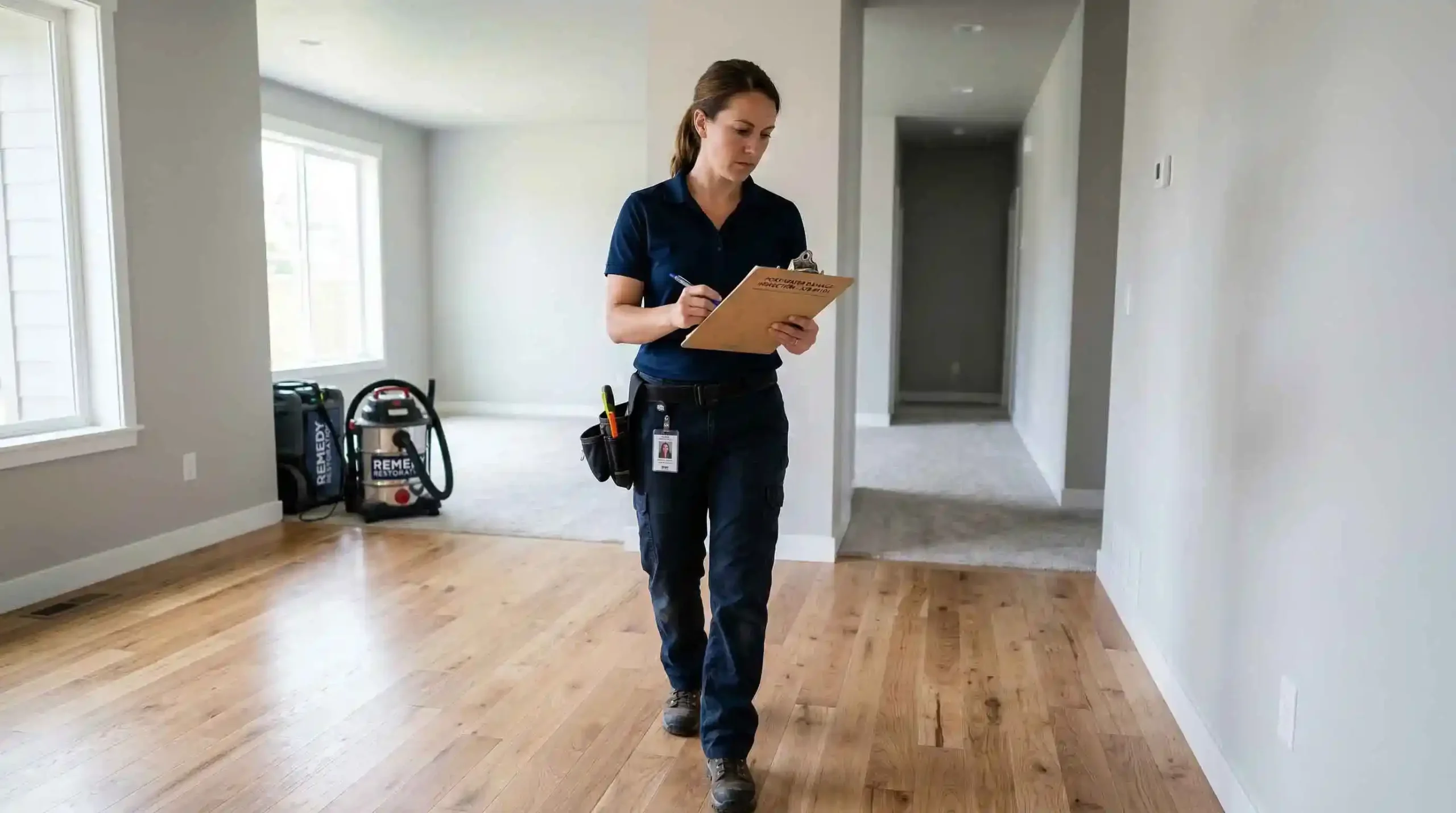
In four-season neighborhoods, water damage rarely shows up at a convenient time. A frozen line can let go in winter, spring moisture can keep materials damp longer than expected, and shoulder-season storms can push water into roofs, basements, and wall cavities. By the time equipment comes out and repairs look finished, many owners are ready to move on. That is exactly when a careful final inspection matters most.
A proper closeout is not about being picky. It is about making sure the structure is actually dry, cleaned, repaired, and documented before hidden moisture turns into staining, odor absorption, warped finishes, corrosion, or a second round of work. The restoration process itself typically includes inspection, water extraction, drying and dehumidification, cleaning and sanitizing, and then repairs or reconstruction. A final inspection is the quality-control step that confirms those stages were completed well, not just completed fast.
If you need help reviewing a recent water-loss project, we offer 24/7 emergency restoration services, and our IICRC-certified technicians handle water extraction, drying, repairs, and thorough documentation for insurance purposes. Insight Restoration says its team has over 50 years of experience and invites property owners to Call now (208) 946-9648.
Why the Final Inspection Matters More Than People Think
A room can look normal while moisture still lingers inside walls, flooring layers, or ceilings. The company’s water-damage process pages explicitly note that materials may appear dry even when moisture remains trapped, and that technicians use moisture meters and infrared cameras to detect hidden water. That is why a visual walk-through alone is not enough after a leak, overflow, flood, or wash-down event.
The timing matters too. The EPA says water-damaged areas and items should be dried within 24 to 48 hours to help prevent mold growth. That does not mean every project is finished in that window, but it does mean your inspection should focus hard on anything that stayed wet, dried slowly, or was closed up before you felt confident about conditions.
Final Inspection Checklist for Homeowners, Managers, and Business Owners
1. Confirm the source issue is actually resolved
Before you worry about finishes, verify the event that caused the loss has been addressed. That could mean a repaired supply line, corrected appliance connection, stabilized roof leak, sealed building envelope issue, or drainage fix. Restoration is not complete if water can re-enter the same assembly next week.
2. Ask for moisture verification, not just a verbal all-clear
Request documented moisture readings for the areas that were affected and the areas next to them. That matters most around baseboards, wall bottoms, under flooring transitions, cabinets, behind vanities, and around ceiling penetrations. If a contractor used meters or infrared during drying, the final inspection is the time to review those readings and ask what “dry” was compared against. The company’s own water-damage content explains that moisture meters and infrared cameras are used to find hidden water sources that are not visible.
3. Check for signs of re-wetting
Look for fresh discoloration, recurring swelling, paint bubbling, soft drywall, cupped flooring, loose trim, or a damp feel at low points. Re-wetting often shows up first at edges and seams, not in the center of the room. If something looks worse a few days after equipment was removed, pause before accepting the job.
4. Walk the space for odor, not just appearance
Odor is a useful inspection tool. Musty, earthy, sour, or stale smells can point to moisture that was missed, materials that never fully dried, or contamination that needs more cleaning. Water losses that involve gray or black water deserve even more caution because sanitizing is part of the work, not an optional add-on.
5. Review cleaning and sanitizing of affected materials
The company’s process pages say water events may require cleaning, sanitizing, and deodorizing affected contents and surfaces. During the final inspection, ask what was cleaned, what was removed, and what was restored. This matters for carpet edges, upholstered furnishings, storage contents, and any area where water touched porous materials.
6. Inspect finish quality in natural light
Open blinds, turn on lights, and inspect walls, ceilings, flooring, and trim from several angles. Look for patched textures that flash differently, uneven paint sheen, mismatched materials, soft spots underfoot, gaps at trim, or doors that no longer close correctly. Water restoration often ends with repair work, so quality should be checked like any construction closeout, not just like a cleanup.
7. Look at hidden-risk zones
Pay special attention to under-sink cabinets, behind toilets, laundry connections, mechanical rooms, window perimeters, basement corners, crawlspace access points, and the backs of closets on exterior walls. These are common places where small amounts of residual moisture go unnoticed until odor or mold becomes obvious later.
8. Do not ignore mold warning signs
If anything still smells musty, shows spotting, or stayed wet longer than expected, flag it before signing off. The EPA says to dry water-damaged materials within 24 to 48 hours to help prevent mold growth, which is why delayed drying or trapped moisture deserves follow-up. For areas that need a deeper second look, review mold removal and remediation options alongside the original drying scope.
9. Make sure repairs match the restoration scope
A final inspection should verify whether the contractor stopped at mitigation or completed true restoration. The official site distinguishes drying, cleaning, and stabilization from later repair and rebuild work, including drywall replacement, flooring work, and reconstruction when needed. If your project included rebuild items, confirm each one is accounted for before final payment.
10. Review photos, notes, and insurance documentation
Documentation helps you compare the pre-dry, during-dry, and post-repair condition of the property. On its water damage page, the company says it provides thorough documentation for insurance purposes, and several service pages say it works with insurance claims or supports the process with reports. Even if your policy details vary, clear records help prevent disputes about what was wet, what was removed, and what was rebuilt.
When to Push for a Re-Inspection
Request a re-inspection if you notice a return of odor, a moisture-related cosmetic change, swelling, staining, visible spotting, HVAC odor after startup, or any room that feels noticeably more humid than surrounding spaces. You should also ask questions if the project moved unusually fast without documented drying verification, especially in older hillside homes, river-adjacent properties, or busy commercial corridors where assemblies can hide moisture longer than expected.
If your property still needs a closer review, water damage restoration should include drying, repairs, and insurance-focused documentation rather than a surface-level cleanup alone. Near the end of a project is when details matter most. Insight Restoration states that its teams are available 24/7, and on its water-damage page it says it provides drying, repairs, and thorough documentation for insurance purposes. If you want an expert review before you close the file, Call now (208) 946-9648.
Frequently Asked Questions
1. What should a final water damage inspection include?
A strong final inspection should cover moisture verification, visible finish quality, odor checks, cleaning status, and confirmation that the original water source was corrected. It should also review any repair or reconstruction items that were part of the approved scope. The goal is to confirm the property is not just dry on the surface, but properly restored.
2. How do I know if walls or floors are truly dry?
Touch is not enough. Hidden moisture can remain inside walls, subfloors, and ceilings even when surfaces look normal. The most reliable approach is to ask for moisture readings and, where relevant, infrared-assisted inspection notes showing that affected materials returned to acceptable conditions.
3. Why does the room still smell musty if everything looks clean?
Musty odor often points to lingering moisture, slow-dried porous materials, or contamination that was not fully addressed. It does not prove mold by itself, but it is a valid reason to pause acceptance and request a closer inspection of hidden cavities, flooring layers, and other low-airflow areas.
4. Can mold still become a problem after restoration?
Yes, especially if materials stayed wet too long or moisture remains trapped. The EPA says water-damaged items should be dried within 24 to 48 hours to help prevent mold growth. That is why final inspections should focus on delayed-dry areas, hidden pockets, and any smell or staining that resurfaces after equipment is removed.
5. Should I ask for photos and documentation before I sign off?
Yes. Good documentation helps show what was wet, what was removed, what was dried, and what was repaired. It is also useful when you are discussing scope, timing, and claim support with your insurer or comparing the finished project to the original damage.
6. What are common signs that a project may need re-inspection?
Watch for bubbling paint, swollen trim, cupped flooring, staining that returns, recurring odor, or a room that feels more humid than nearby areas. Those signs can point to re-wetting, incomplete drying, or trapped moisture that was missed during the first closeout.
7. Is final inspection different for a business property?
The basics are the same, but business properties often need extra attention to flooring transitions, base-building systems, storage rooms, tenant improvements, and any interruption-sensitive spaces. Property managers should also confirm documentation is complete for owners, tenants, and insurers before closing the claim file.
8. What if the water loss involved contaminated water?
Use extra caution. Gray water and black water events raise the stakes because cleanup, sanitizing, and deodorizing become part of the inspection, not just drying. If there is any doubt about contamination, avoid casual assumptions and ask qualified professionals to confirm the affected materials were handled appropriately.
9. Should I accept repairs if the finishes look slightly off but the area is dry?
Not automatically. Drying and repairs are different parts of the job. If texture, sheen, trim alignment, flooring transitions, or patch visibility are outside what you reasonably expected, raise those items during final inspection while the scope is still open and before final payment.
10. How soon should a concern be reported after equipment is removed?
As soon as you notice it. Water-related issues tend to get more expensive, not less, when they are ignored. Fast reporting helps separate a small punch-list correction from a true re-wetting event that could affect finishes, indoor odor, or microbial growth.