
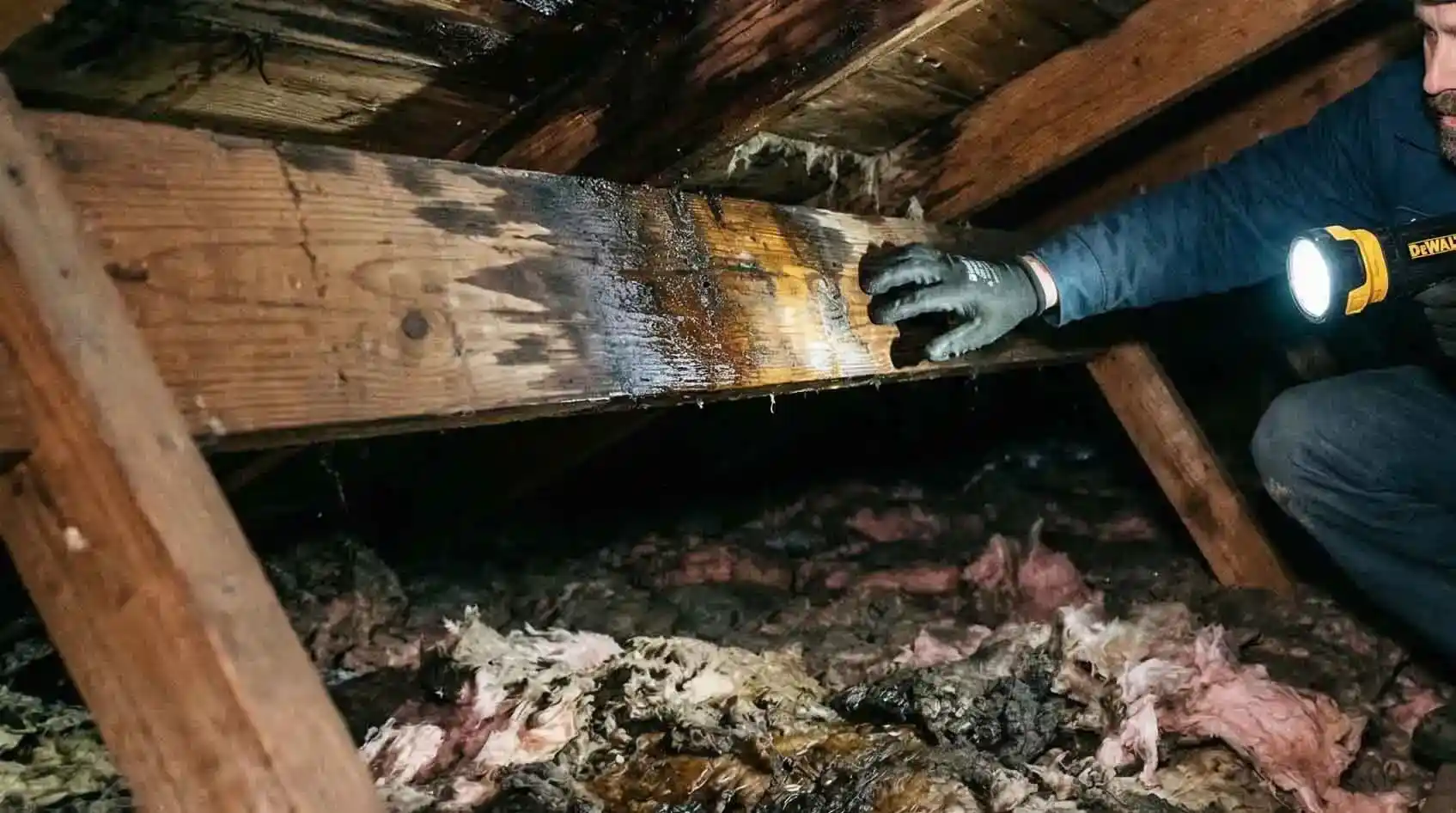
In a four-season region, attic water damage rarely starts with a dramatic collapse. More often, it begins with a winter ice dam, a spring roof leak, a blocked vent, or condensation that keeps re-wetting insulation and framing. By the time stains show up on a ceiling below, moisture may already be affecting wood, fasteners, insulation, and indoor air quality. That matters for homeowners, business owners, and property managers alike, because hidden attic moisture can trigger finish failures, odor absorption, corrosion, and mold growth if drying is delayed. The Centers for Disease Control and Prevention says that if a home was not dried within 24 to 48 hours after flooding, mold growth should be assumed.
If attic moisture is active or spreading, Call now (208) 946-9648. On its water damage page, Insight Restoration says we offer 24/7 response, use advanced equipment, and provide documentation for insurance purposes during the restoration process.
What causes attic water damage?
Roof leaks and flashing failures
The most familiar cause is water entering through the roof system. Damaged shingles, worn flashing around penetrations, and vulnerable roof transitions can let rain or melting snow reach the attic. Because attics are out of sight, these leaks often stay hidden long enough to soak insulation and stain roof decking before anyone notices. Insight’s water-damage guidance also emphasizes that quick action matters because damage becomes more extensive the longer water sits.
Ice dams and freeze-thaw cycles
In colder months, attic heat can contribute to snow melting on the roof. That meltwater can refreeze near colder roof edges, back up under shingles, and drip into attic assemblies. This is one reason attic leaks tend to spike during deep-freeze and thaw cycles in four-season neighborhoods, especially in older hillside homes and properties exposed to wind-driven snow. Seasonal leaks can look small at first, but they can keep re-wetting the same materials over and over.
Condensation from trapped humidity
Not every wet attic starts with rain. Warm indoor air that escapes into a cold attic can condense on framing, nails, sheathing, and insulation. Poor ventilation, air leakage, and interrupted insulation often make this worse. Condensation can mimic a roof leak, but the result is similar: wet materials, recurring moisture, and a higher chance of mold growth in hidden cavities.
Mechanical or plumbing issues
Some attics contain HVAC components, venting, or plumbing lines. A slow drip, disconnected vent, or condensation on equipment can create localized moisture that goes unnoticed for weeks. In mixed-use buildings and commercial corridors, these smaller leaks can still damage insulation, ceiling assemblies, and stored contents if they are not tracked to the source and dried thoroughly.
How to detect attic water damage early
Visual clues that deserve attention
Water staining on roof decking, darkened wood, rusted fasteners, damp insulation, peeling paint near upper ceilings, and a musty odor are all common warning signs. Frost on nails or sheathing during colder weather can also point to excess attic moisture that may become liquid water when temperatures change. When materials dry and then get wet again, staining patterns can spread beyond the original entry point, making the source harder to identify.
Secondary damage below the attic
Sometimes the attic is not where the first visible symptom appears. Ceiling stains, bubbling texture, warped trim, or recurring paint failure in upper rooms may all trace back to moisture above. Once insulation is saturated, drying the visible ceiling surface alone is not enough. Insight notes that proper drying requires more than surface drying and may involve removing unsalvageable insulation, drywall, or ceiling materials.
Why speed matters
The same CDC guidance cited earlier says mold should be assumed when a flooded home was not dried within 24 to 48 hours. EPA cleanup guidance also focuses on responding to clean water damage within that same window to help prevent mold. In attic assemblies, where airflow is limited and materials are layered, hidden moisture can stay trapped even when surfaces look dry.
What to do immediately and what to avoid
If it is safe to do so, start by limiting additional water entry and documenting what you can see. Take photos of stains, wet insulation, damaged contents, and any visible roof or ceiling issues. CDC guidance recommends contacting your insurance company and taking pictures before cleanup activities begin. Avoid entering any area with electrical hazards, sagging materials, or contaminated water concerns.
Do not assume a fan in the hallway or a dehumidifier on one floor will solve attic moisture. Water can remain inside insulation, framing, and concealed cavities long after the obvious wet spot seems to improve. This is also where attic incidents can turn into a broader indoor air and mold issue. If you need a related response plan for extraction and drying, see water damage restoration. If moisture has lingered or a musty odor is developing, review mold removal and remediation for the next step.
Restoration steps that help prevent repeat damage
1. Stop the source
No drying plan works if water is still entering the assembly. Restoration starts by identifying whether the problem is roof intrusion, ice dam backup, condensation, or a mechanical or plumbing issue. The source has to be corrected before materials can be reliably dried and restored.
2. Inspect beyond the visible stain
A proper assessment looks past the ceiling spot or damp insulation and checks the full path of migration. Insight’s restoration content says technicians evaluate moisture levels, hidden damage, contamination risks, and affected materials, using tools such as moisture meters and infrared cameras to uncover issues that might otherwise be missed.
3. Dry the assembly, not just the surface
Attic drying may involve insulation removal, controlled airflow, and dehumidification targeted to framing, sheathing, and ceiling cavities. Insight states that industrial air movers and dehumidifiers are used to remove moisture from drywall, insulation, framing, and related materials, and that drying can take several days depending on saturation and conditions.
4. Remove materials that cannot be saved
Wet insulation often loses performance even after it dries. Ceiling materials, sheathing, or trim may also need removal when saturation is severe or contamination is present. Insight notes that materials too damaged or contaminated to save may be removed and replaced to restore structural integrity and appearance.
5. Address mold risk before rebuilding
Attics are prime places for hidden mold because moisture can remain trapped behind finishes or within insulation. Insight’s mold guidance states that mold can begin developing within 24 to 48 hours after water intrusion and that hidden growth may take hold inside drywall, insulation, and framing even after apparent drying.
6. Rebuild only after moisture is under control
Repairs come after the structure is stabilized and dry enough for replacement materials. That may include insulation, drywall, trim, paint, and selective framing or roof-related repairs. Restoration and repair are linked, but they are not the same step. Drying and stabilization come first, then rebuild work follows.
Prevention for homes and commercial properties
Seasonal attic problems are easier to manage when inspection becomes routine. Check after freeze-thaw swings, heavy rain, wind-driven storms, and roof work. Pay attention to new ceiling stains, odors, wet insulation, and signs of condensation around vents or fasteners. For managers of multi-unit buildings and commercial properties, turnover periods and maintenance windows are a good time to review attic conditions before hidden moisture turns into a larger disruption.
Near the end of the process, many property owners need one team that can move from drying into repairs. Insight Restoration says we handle water extraction, drying, repairs, and insurance-related documentation, and the company’s mold page says we stand behind that work with a satisfaction guarantee. For active attic leaks, re-wetting insulation, or moisture that may already be affecting ceilings below, Call now (208) 946-9648 or Request a Quote.
Frequently Asked Questions
1. What is the most common cause of attic water damage?
Roof leaks are a leading cause, especially around flashing, penetrations, and areas affected by wind-driven rain or melting snow. In colder seasons, ice dams can also back water up under shingles. Some attic moisture problems are actually condensation caused by warm indoor air reaching cold surfaces.
2. Can attic condensation really cause damage even if there is no roof leak?
Yes. Condensation can wet roof decking, fasteners, insulation, and framing over time. It may look less dramatic than a leak, but repeated moisture exposure can still lead to staining, odor issues, corrosion, and mold growth if the source is not corrected.
3. How can I tell whether I have an attic leak or just humidity?
A leak often shows up as localized staining near a roof penetration or along a specific path. Condensation is more likely to appear across multiple surfaces, especially during colder weather, with frost or widespread dampness on nails and sheathing. In many cases, a professional inspection is needed to confirm the source.
4. How quickly can mold become a concern after attic water damage?
Guidance from CDC and EPA points to a 24-to-48-hour window as the critical period for response. If materials stay wet beyond that point, mold risk rises sharply, especially in hidden assemblies like insulation, framing cavities, and the underside of roof decking.
5. Is wet attic insulation salvageable?
Sometimes no. It depends on the material, how saturated it became, how long it stayed wet, and whether there is contamination or microbial growth. If insulation cannot be dried effectively or has lost performance, removal and replacement may be the more reliable solution.
6. Why do ceiling stains keep coming back after they seem dry?
Recurring stains usually mean the moisture source was never fully corrected or materials above the ceiling remained damp. Re-wetting can happen with each storm, freeze-thaw event, or humidity cycle. Surface paint alone will not solve hidden moisture in insulation, framing, or roof decking.
7. Should I go into the attic right away after noticing a leak?
Only if it is safe. Avoid entering areas with electrical hazards, sagging materials, structural instability, or contaminated water concerns. Document visible conditions from a safe location and seek qualified help if the extent of damage is unclear or active water is present.
8. What does proper attic water restoration usually involve?
A complete response typically includes source control, inspection of hidden moisture, drying and dehumidification, removal of unsalvageable materials, mold-risk evaluation, and then repair or reconstruction once moisture is under control. Skipping any of those steps increases the chance of repeat damage.
9. Can attic water damage affect indoor air quality?
Yes. Lingering moisture can support mold growth and absorb odors into porous materials. Even when the attic is not a living space, air movement between the attic and occupied areas can carry moisture-related odors or contaminants into rooms below.
10. Will insurance cover attic water damage?
Coverage depends on the policy, the cause of loss, and the condition of the property before the incident. Sudden and accidental damage may be treated differently from long-term neglect or maintenance issues. It is smart to document conditions early and confirm specifics directly with your insurer.