
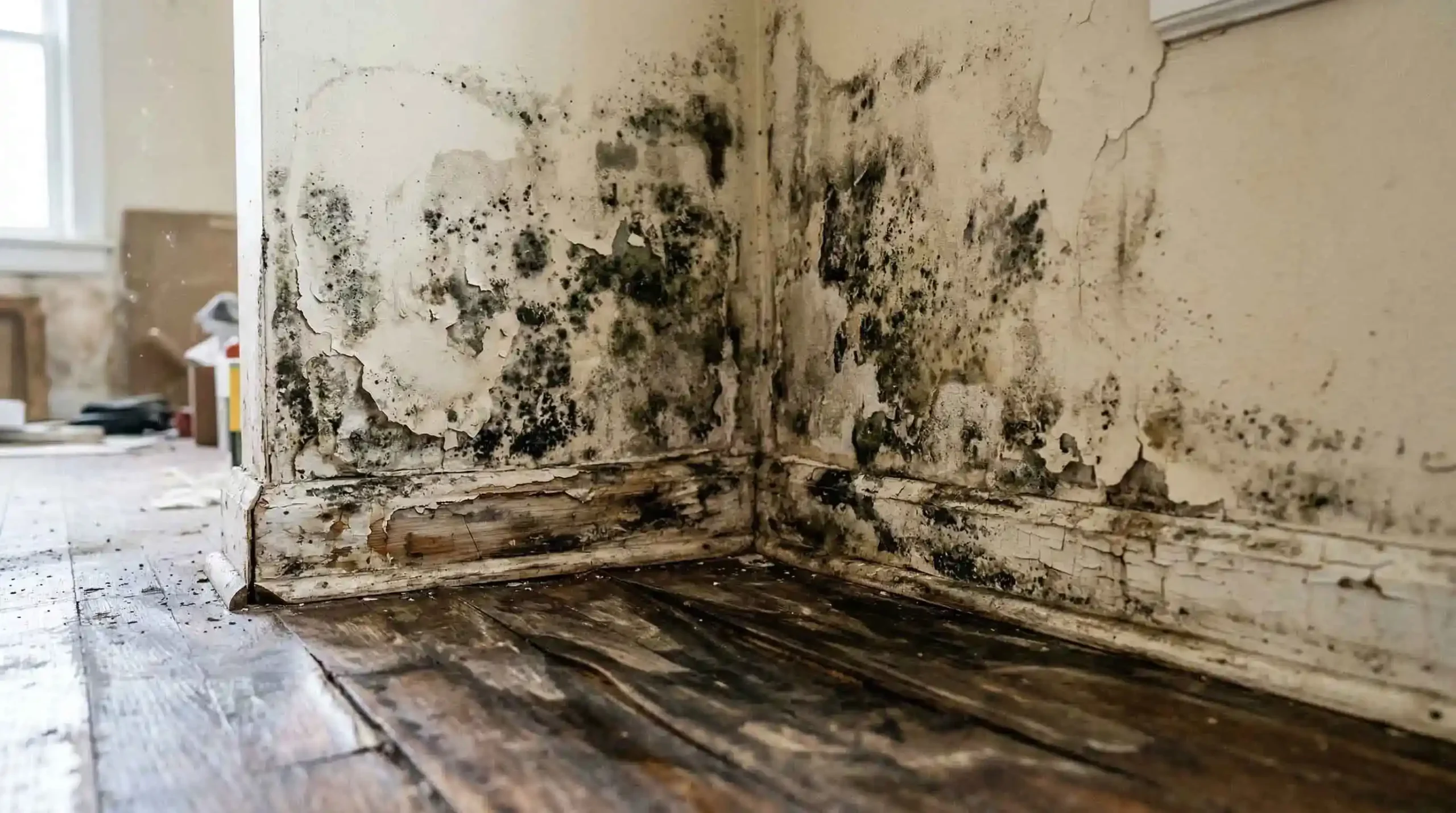
In a four-season region, water damage rarely arrives at a convenient time. Winter can bring freeze-related leaks. Spring can leave behind runoff moisture and damp crawlspaces. Storms can push water into roofing, siding, and basements during shoulder seasons. Even routine turnover, remodeling, and tenant transitions can uncover old leaks that never fully dried. The visible water may disappear fast, but the real problem often starts after surfaces seem dry.
When water damage is not dried properly, moisture lingers inside drywall, insulation, subfloors, trim, cabinets, and structural cavities. That trapped moisture can re-wet finishes, feed mold growth, hold odors, and slowly break down materials that looked salvageable on day one. Proper drying is not just about removing standing water. It is about finding where moisture traveled and confirming the affected materials are actually dry.
If you are dealing with active moisture, hidden dampness, or repeat staining, our water damage restoration services explain what professional extraction, drying, and repair can involve. We provide 24/7 emergency restoration services, our IICRC-certified technicians have over 50 years of experience, and we provide thorough documentation for insurance purposes. Call now (208) 946-9648.
Why improper drying causes bigger problems
Moisture keeps moving after the leak stops
Water does not stay where you first notice it. It travels downward, sideways, and into porous materials. That is why a small appliance leak can end up affecting baseboards, flooring edges, wall cavities, and rooms below. High-quality restoration articles consistently emphasize the same sequence: stop the source, remove the water, inspect hidden areas, dry thoroughly, sanitize when needed, and verify moisture levels before rebuilding.
Mold risk rises fast
The Environmental Protection Agency says water-damaged areas and items should be dried within 24 to 48 hours to help prevent mold growth. The CDC also says that if a flooded home and its contents are not dried within 24 to 48 hours, you should assume mold growth is present. That does not mean every damp surface becomes a major mold problem overnight, but it does mean delayed drying sharply raises the risk of secondary damage and a more complicated cleanup.
Materials can fail from the inside out
Improper drying can show up later as bubbling paint, peeling finishes, swollen trim, soft drywall, cupped flooring, rusting fasteners, or loose tile. Water damage guidance from Angi and restoration competitors tends to rank structural deterioration, finish failure, and hidden moisture among the most common consequences of incomplete drying. The visible stain is often only the symptom. The deeper issue is what stayed wet behind it.
What damage can happen when water is left behind?
Mold and persistent damp odors
Moisture that remains in walls, under flooring, or inside cabinets can support mold growth and absorb odors into porous materials. EPA guidance is blunt on this point: moisture control is the key to mold control, and mold will come back if the water problem is not fixed. If your property still smells musty after cleanup, that often signals remaining moisture, microbial growth, or both. Our mold removal and remediation services outline how inspection, containment, and removal may be handled when moisture has already become a mold issue.
Warping, swelling, and finish failure
Wood flooring can cup. Cabinets can swell at the base. Doors can start sticking. Laminate edges can lift. Paint and drywall finishes can blister or peel after they seemed fine for a few days. This kind of delayed damage is common when the surface is dried but the material core or the substrate underneath is still wet.
Corrosion and electrical concerns
Water that reaches wiring pathways, outlets, metal fasteners, HVAC components, or appliance connections can create corrosion over time. Even after standing water is gone, trapped moisture may continue affecting metal components and concealed electrical areas. If water touched wiring, panels, or equipment, keep guidance general and have qualified professionals evaluate the risk before normal use resumes.
Contamination can spread the problem
Not all water losses are the same. Clean water from a supply line is different from gray water or black water involving drains, sewage, or outdoor floodwater. Higher contamination levels can change what must be removed, cleaned, or replaced. Broad restoration guidance consistently notes that category of water matters because some materials cannot be safely salvaged once contamination is involved.
Signs your property may not be fully dry
Watch for delayed symptoms
Improper drying often reveals itself in the days and weeks after the incident. Common signs include recurring stains, new odors, warped materials, soft spots, peeling paint, foggy windows in one room, or a space that still feels humid long after cleanup. Competitor content ranking well for this topic also focuses heavily on hidden moisture rather than visible puddles, which is a useful framing for homeowners, business owners, and property managers trying to avoid re-wetting and repeat repairs.
Do not rebuild too soon
Fresh paint, new baseboards, or replacement flooring can fail if drying is incomplete. Rebuild decisions should follow moisture verification, not just visual improvement. That is especially important in older hillside homes, lake-adjacent properties, seasonal visitor districts, and commercial corridors where materials may already have layered wear or complicated assemblies.
What to do right away
First, stop the source if you can do so safely. Second, limit contact with contaminated water. Third, move vulnerable contents out of the wet area if it is safe to handle them. Fourth, document visible damage for your records and insurer. Fifth, avoid assuming a room is dry just because the surface feels dry. The EPA again recommends drying water-damaged materials within 24 to 48 hours, and the CDC warns that missing that window after flooding means you should assume mold growth may already be present.
Near the end of a water-loss event, the question usually shifts from cleanup to confidence. Has the structure been dried, or does it only look better? If the answer is unclear, that is when professional moisture detection and repair coordination matter most. At Insight Restoration, we handle water extraction and drying to repairs, and our reconstruction page includes both Call now (208) 946-9648 and Request a Quote if your project has moved beyond cleanup into rebuilding.
Frequently Asked Questions
1. How long can water sit before damage gets worse?
Damage can worsen within hours, especially in drywall, insulation, trim, and flooring edges. The longer materials stay wet, the more likely you are to see swelling, odor absorption, finish failure, and hidden microbial growth. EPA and CDC guidance makes the first 24 to 48 hours especially important for drying.
2. If the carpet feels dry, is the room dry?
Not necessarily. The carpet can feel dry on top while the pad, tack strip, subfloor, or wall base remains wet. That trapped moisture is one reason odors, staining, and mold can show up later even after the visible water is gone.
3. Can water damage come back after the leak is fixed?
Yes. Delayed symptoms often come from moisture that was never fully removed, not from a new leak. Reappearing stains, musty odors, and warped materials are common clues that the original drying was incomplete.
4. What materials are most vulnerable to incomplete drying?
Drywall, insulation, particleboard cabinets, laminate, wood trim, subfloors, and upholstered contents are common problem areas. Porous materials can hold moisture below the surface, which is why drying plans typically go beyond towel drying and visible cleanup.
5. How quickly can mold start after water damage?
EPA says to dry water-damaged areas and items within 24 to 48 hours to help prevent mold growth. CDC guidance goes further after flooding, stating that if a home and contents are not dried in that window, you should assume mold growth is present.
6. Can I paint over a stain and move on?
Painting over a stain may hide the symptom for a while, but it does not solve trapped moisture. If the underlying material is still damp, you can end up with bubbling paint, recurring discoloration, odor issues, or mold returning behind the finish.
7. Does every water loss require professional drying?
No, very minor surface-only spills may not. But once water reaches walls, flooring systems, insulation, cabinets, or ceilings, hidden moisture becomes harder to verify without the right process and equipment. That is where professional assessment becomes more valuable.
8. Why do odors linger after cleanup?
Odors often linger because porous materials absorbed moisture and organic residue, or because microbial growth has started in hidden areas. A room that still smells damp after cleanup deserves a closer moisture and contamination check rather than repeated masking.
9. Can water damage affect electrical components even after drying?
It can. Moisture exposure may contribute to corrosion in wiring pathways, outlets, switches, and equipment. If water touched electrical components, do not rely on appearance alone. Have qualified professionals inspect the area before assuming normal use is appropriate.
10. What if the water involved sewage or outdoor floodwater?
That raises the stakes. Higher-contamination water often changes what can be cleaned, what must be removed, and how sanitization should be handled. Restoration guidance consistently treats sewage backups and floodwater as more serious than clean supply-line water.