
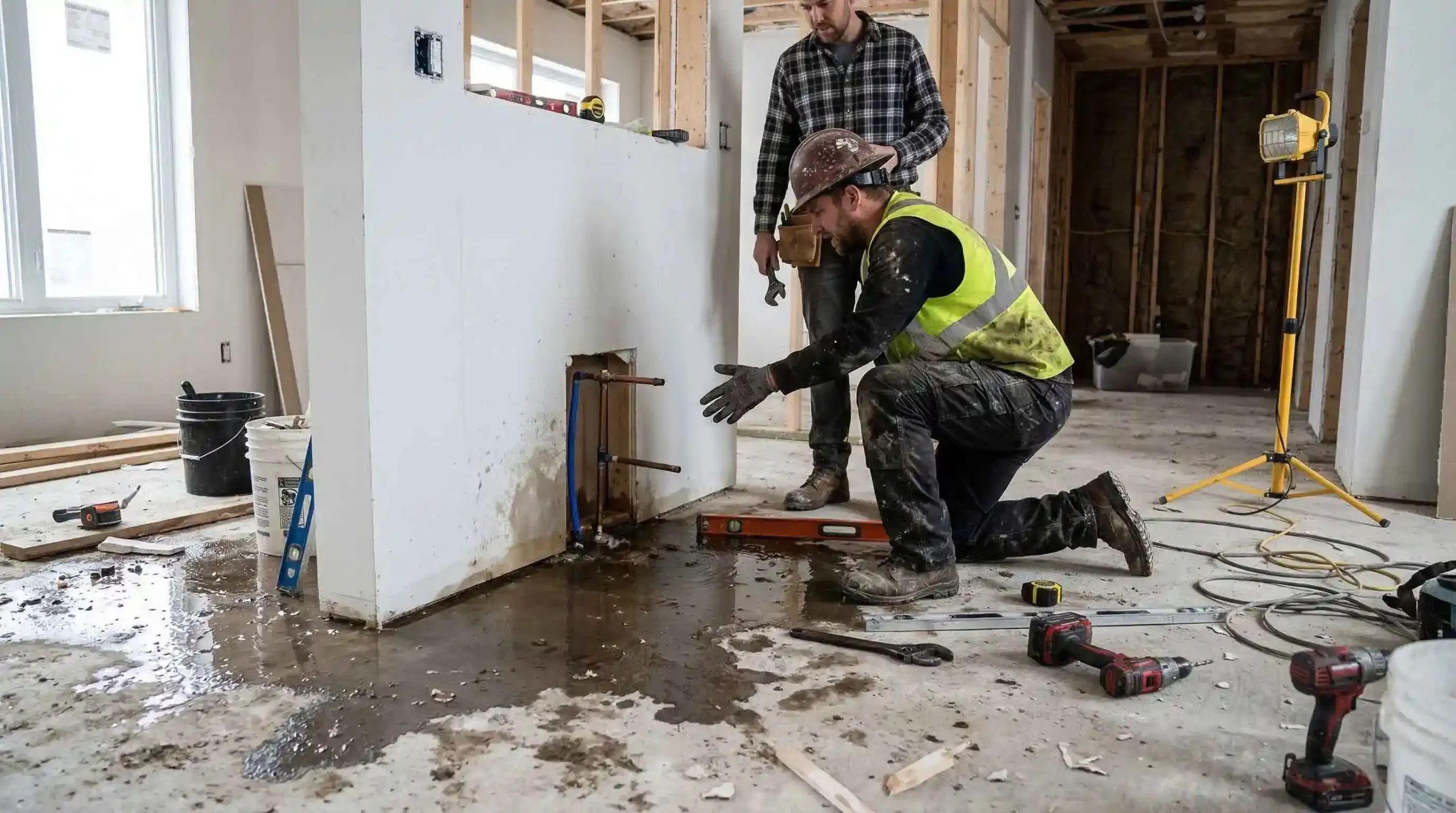
Across four-season neighborhoods, a newly built home can face water problems sooner than owners expect. Winter freeze-thaw cycles can stress fresh plumbing connections, spring runoff can expose grading mistakes, shoulder-season storms can test flashing and drainage, and renovation or turnover schedules can leave hidden moisture sealed into finishes. For homeowners, business owners, and property managers, the real issue is not just the initial leak. It is the disruption that follows if moisture lingers inside walls, under flooring, or behind cabinetry. That is where re-wetting, odor absorption, finish failures, corrosion, and hidden mold risk can start compounding the loss.
Is water damage in newly built homes actually common?
Yes, it can be. New construction is not automatically protected from leaks, trapped moisture, or water intrusion. In fact, industry guidance from the National Association of Home Builders notes that water intrusion remains one of the most common causes of building repair, and even minor omissions during design or construction can lead to significant damage. That matters because a new home often reveals problems only after materials settle and systems begin normal daily use.
The pattern is consistent across current search results, too. High-ranking articles on this topic tend to focus on the same cluster of causes: small plumbing installation errors, drainage and grading issues, roof or flashing details, and moisture that enters during construction but never fully dries before finishes go on.
At Insight Restoration, we provide water damage restoration with over 50 years of experience, IICRC-certified technicians, 24/7 availability, and thorough documentation for insurance purposes. Call now (208) 946-9648 if water is actively spreading, ceilings are staining, or wet materials need immediate drying and extraction.
Why new homes still end up with water damage
Construction-phase moisture can get trapped
A home can be exposed to rain, humidity, and wet site conditions before the building envelope is fully closed in. If framing, subfloors, insulation, or wall cavities get wet and are covered before drying is complete, that moisture may stay hidden until warping, swelling, odor, or staining appears later. This is one reason a house can feel “finished” while still carrying unresolved moisture inside assemblies.
Plumbing and appliance connections may fail early
Brand-new plumbing is not immune to leaks. Loose fittings, poorly crimped lines, bad drain connections, and startup issues with dishwashers, refrigerators, water heaters, and laundry equipment can all release water into cabinets, wall cavities, and floor systems. Because these failures often begin as slow leaks, the first visible signs may be soft trim, cupped flooring, bubbling paint, or a musty smell rather than standing water.
Drainage and grading mistakes can push water toward the structure
NAHB guidance stresses that exterior water should have a path to drain down and away from the building, with drainage and flashing doing the heavy lifting. When grading is shallow, runoff is misdirected, or site water collects near the foundation, moisture can work into basements, crawlspaces, and lower wall assemblies. In a newly built property, that can show up as damp edges, foundation seepage, or recurring moisture after rain or snowmelt.
Flashing and window details matter more than most owners realize
Window and door flashing is critical because it helps shed water and keep wall assemblies dry. NAHB notes that missing or inadequately installed flashing can lead to water intrusion, moisture damage to building materials, indoor air quality issues, and even costly removal of finishes or replacement of structural elements. In practical terms, a very small envelope detail can create a very large interior repair.
Why quick action matters in a brand-new property
Many owners hesitate when the home is new. They assume the issue is minor, or they wait for a builder visit before starting mitigation. That delay can raise the cost of recovery. The EPA says water-damaged areas and items should be dried within 24 to 48 hours to help prevent mold growth, and the CDC gives similar guidance after flooding and wetting events. In other words, the age of the property does not change the moisture timeline.
Fast drying is also about preserving materials that are still in excellent condition. New paint films, engineered flooring, trim packages, cabinetry, insulation, and metal components can all degrade when moisture lingers. The longer water stays in place, the more likely you are to see swelling, delamination, odor absorption, corrosion, or finish failure instead of a simpler cleanup.
If the leak has been hidden for a day or two, mold removal and remediation may also need to be part of the recovery conversation. The official mold page says the team uses advanced equipment and certified technicians to remove mold and prevent future growth, which is especially relevant when wet framing, drywall, or insulation cannot be dried in time.
What to do right away if you find water in a newly built home
Start by stopping the source if you can do so safely. Shut off the fixture supply, appliance line, or main water valve if the leak is active. Keep people away from wet areas near outlets, equipment, or extension cords until the electrical risk is assessed. Avoid assuming clear water is harmless if it has moved through cavities, ceilings, insulation, or finished materials.
Then document what you see. Take photos of the source area, damaged finishes, damp contents, and visible staining. Move vulnerable contents out of the affected zone if they can be handled safely. Do not trap moisture by painting over stains, reinstalling base, closing walls too soon, or laying rugs over damp flooring. EPA and CDC guidance both reinforce the same core point: dry wet materials quickly, ideally within the 24 to 48 hour window, to reduce the chance of mold taking hold.
When a “small” leak becomes a bigger restoration problem
A water issue in a new home is rarely just about the visible stain. The harder question is what happened behind the finish. Was the insulation wetted? Did water run down a framing bay? Did engineered wood absorb moisture from below? Are there odor pockets in cabinets or soft goods? Has the area been re-wet more than once? Those are the conditions that turn a manageable incident into a larger project involving demolition, drying verification, cleaning, and repair.
At Insight Restoration, we can also move from mitigation into reconstruction services when water damage in a new home turns into drywall, trim, flooring, or structural repairs, and we back our work with a two-year warranty. Request a Quote if your property needs repairs after drying and cleanup.
The bottom line
Water damage in a newly built home is not a contradiction. It is a reminder that moisture problems usually come from details, not age. A loose connection, incomplete flashing detail, poor drainage path, or trapped construction moisture can all cause disruption in a property that still looks brand new. The safest response is to treat fresh water damage seriously, dry materials quickly, and make decisions based on hidden moisture risk, not appearances alone.
Frequently Asked Questions
1. Is water damage really possible in a brand-new home?
Yes. New homes can still develop leaks, trapped moisture, and drainage-related problems. NAHB guidance says water intrusion remains one of the most common causes of building repair, and small omissions during design or construction can lead to larger problems later.
2. What usually causes water damage in newly built homes?
The most common causes are plumbing connection issues, wet materials sealed in during construction, poor grading or drainage, and flashing or roof details that let water move into wall or attic assemblies. Search-result patterns across competing articles consistently point to those same causes.
3. Can a new home have hidden moisture even if there is no standing water?
Yes. Hidden moisture can sit inside wall cavities, under flooring, in insulation, or around window and door openings. That is why staining, swelling, odor, or recurring dampness often appears after move-in rather than during the final walkthrough.
4. How fast does mold become a concern after water damage?
EPA says water-damaged areas and items should be dried within 24 to 48 hours to help prevent mold growth, and CDC guidance echoes that timeline. Once that window starts closing, wet drywall, insulation, trim, and flooring need much closer evaluation.
5. Should I wait for a builder or warranty rep before drying the area?
Waiting can increase damage. Even if responsibility still needs to be sorted out, moisture does not pause while paperwork catches up. Document the damage, stop the source if safe, and begin mitigation decisions quickly so finishes and structural materials do not continue absorbing moisture.
6. Can poor grading around a new house cause indoor water issues?
Yes. NAHB notes that exterior water should drain down and away from the building. If runoff collects near the foundation or lower elevations hold water, basements, crawlspaces, and lower walls can be exposed to repeated moisture.
7. Why are windows and doors such common problem areas?
Because flashing details around openings are critical. NAHB says missing or inadequately installed flashing can lead to water intrusion, damage to building materials, indoor air quality issues, and costly repairs that may require removing finishes.
8. What signs should property managers and owners watch for first?
Look for stains, peeling paint, baseboard swelling, soft drywall, cupped flooring, recurring condensation, musty odors, and dampness that returns after weather changes. A small cosmetic clue can be the only visible sign of a larger moisture path behind finishes.
9. Does homeowners insurance always cover water damage in a new home?
Not always. Coverage depends on the cause of loss and the policy language. The water damage service page notes that water damage from plumbing issues may be covered, while flood damage is typically not covered under standard homeowners insurance, so owners should confirm details with their insurer.
10. Can restoration help with insurance documentation?
According to the water damage service page, the team provides thorough documentation for insurance purposes and works directly with insurance companies. That can help support the claim process, but policy decisions still depend on the insurer and the specific cause of damage.