
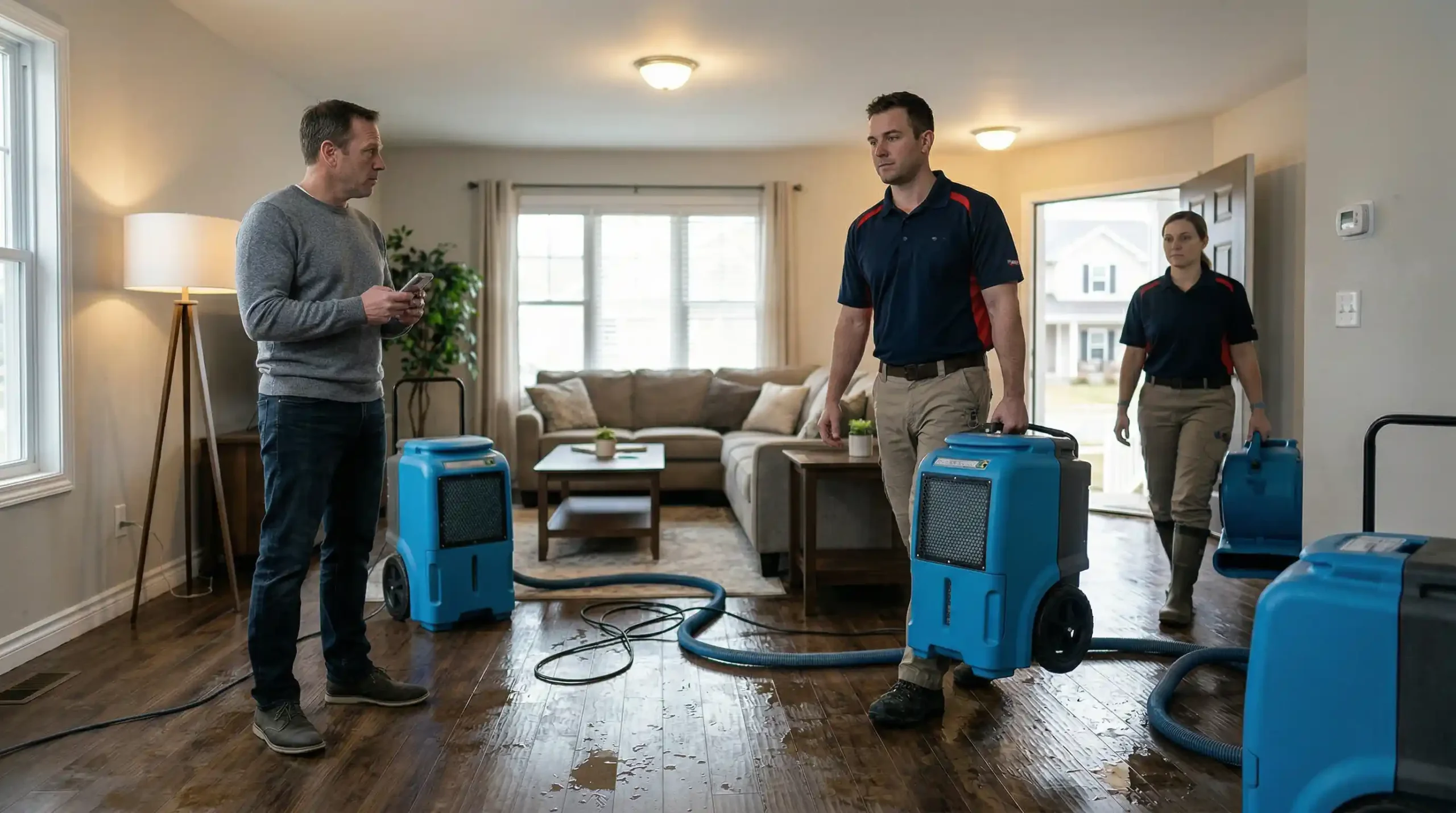
In four-season North Idaho properties, water damage rarely arrives at a convenient time. A burst pipe after a hard freeze, runoff pushing into a lower level, a ceiling leak after wind-driven rain, or an appliance failure in a laundry room can all leave you with the same problem: water moving fast through materials that were never meant to stay wet.
The first 48 hours matter because this is when a manageable cleanup can still stay relatively contained. After that, moisture spreads deeper, materials destabilize, and the cost and complexity of recovery often increase. EPA guidance for flood cleanup says to remove standing water and dry indoor areas quickly, and to remove and discard items that have been wet for more than 24 to 48 hours.
What changes in the first 48 hours?
This window is critical because water does not stay where you first see it.
Water moves beyond the visible mess
Standing water is only part of the problem. It can soak baseboards, drywall edges, insulation, subflooring, cabinetry, and stored contents long before obvious staining appears. That is why a small ceiling leak repair issue can become a larger wall or floor problem if drying is delayed.
Materials start breaking down
The longer the materials stay wet, the less likely they are to remain salvageable. The first 24 hours are critical, and by 24 to 72 hours, drywall, wood, and metal can already be showing more serious effects, such as warping, corrosion, and odor.
That timeline is especially relevant in homes, mixed-use corridors, and commercial properties where drywall assemblies, laminate finishes, and built-in fixtures can trap moisture.
Contamination can become the deciding factor
Not all water losses are equal. Clean water from a supply line is not the same as a sewage backup or floodwater entering from outside. Our services include sewage backup cleanup and water-related services such as flood, basement, appliance failure, and burst-pipe work, which reflects how quickly a water event can shift from inconvenience to contamination concern.
Why early water removal changes the outcome
Fast removal does not just shorten cleanup. It can narrow the entire scope of loss.
It lowers the chance of mold taking hold
Wetted materials should be dried within 48 hours of getting wet or removed. In practical terms, that means your clock starts when the leak, flood, or intrusion begins, not when stains appear. If moisture stays in drywall, carpet pad, framing, or lower cabinets, mold can become a secondary problem that expands the work.
Delayed drying is one reason why what happens if water damage isn’t dried right becomes a bigger question than many property owners expect.
It helps limit hidden moisture
You may remove the puddle and still leave the loss active inside assemblies. That is common after roof leaks, appliance failures, wet basements, and thaw-related seepage. A property can look cleaner while moisture remains behind trim, under flooring, or inside wall cavities. That is when odor, staining, and finish failure tend to show up later.
It can reduce the demolition and repair scope
The faster water comes out, the better your odds of containing damage before it spreads into adjoining rooms or lower levels. This matters in occupied homes, rentals, and commercial spaces where downtime affects storage, tenants, staff, or customers.
It also matters in older buildings, where hidden voids and layered finishes can hold moisture longer than expected.
What you should prioritize right away
Good early decisions can prevent a smaller water event from becoming a longer restoration project.
1. Make the area safer
Do not step into standing water if electricity may be involved. Do not treat sewage or unknown water as ordinary cleanup. If the source is a roof opening, broken window, or storm exposure, keep clear of unstable materials and active hazards.
2. Stop the source if you can do it safely
Shut off the water supply for a plumbing leak or appliance failure. If storm damage is still active, wait until conditions are safe before entering exposed areas. For lower-level flooding, focus on limiting the spread while keeping people out of contaminated zones.
3. Protect contents and document conditions
Move dry items out of the affected area if it is safe to do so. Photograph visible damage before disposal or major cleanup. That step helps with repair planning and can also help when you review your policy language.
Homeowners’ policies typically cover sudden and accidental water damage, such as burst or frozen pipes, sudden appliance leaks, and storm-related roof leaks, while coverage depends on the source and policy terms.
4. Start removal and drying before the damage spreads
In many losses, the first practical goal is getting standing water out and beginning drying before moisture migrates farther. Basement losses are a strong example. We provide basement water extraction and related guide resources on how to get water out of your basement
Why this matters so much in four-season properties
Seasonal risk patterns make fast water removal more important, not less.
Winter losses often begin indoors
In cold weather, a supply-line break, frozen pipe, ice-related roof issue, or appliance problem can release water into enclosed spaces where drying is slower. That creates a higher chance of wet insulation, soaked subfloors, and concealed wall moisture.
Spring and storm-driven losses can reach lower levels fast
Runoff, high water, and storm-related intrusions often push moisture into basements, crawlspaces, storage rooms, and ground-floor commercial areas. EPA guidance to remove standing water and dry indoor areas quickly is especially relevant here because these are the same zones that tend to stay damp longest.
Commercial properties face interruption costs
For commercial spaces and mixed-use corridors, delayed water removal is not just about damaged finishes. It can disrupt operations, reduce usable square footage, affect tenants, and complicate repair sequencing. We offer construction and repair services alongside water, flood, storm, and related cleanup services, which reflects how mitigation and rebuilding can become part of the same event.
The bottom line
Early action gives you better options, better documentation, and a better chance to contain the loss.
Water removal in the first 48 hours is crucial because this is the period when you can still interrupt the chain reaction. Fast action helps limit how far water travels, reduces the chance of mold and odor problems, narrows the amount of demolition that may be needed, and supports clearer recovery decisions for homes, rentals, and commercial properties.
Frequently Asked Questions
1. Why are the first 48 hours after water damage so important?
That window is when water is still spreading through porous materials and before many secondary issues become harder to contain. Early removal and drying can help reduce hidden moisture, limit material breakdown, and keep the cleanup scope from expanding. CDC and EPA both emphasize fast drying and action within roughly 24 to 48 hours.
2. Can water damage get worse even after the puddles are gone?
Yes. Visible water can disappear while moisture remains inside walls, under flooring, inside cabinets, or in insulation. That hidden dampness can lead to odor, staining, swelling, and mold problems later, which is why extraction alone is not the full job.
3. What kinds of water events make a fast response most important?
Burst pipes, appliance failures, roof leaks, basement flooding, storm intrusion, and sewage backups all benefit from quick action.
4. Does delayed drying increase mold risk?
Yes. CDC guidance says wetted materials should be dried within 48 hours or removed. That does not mean every wet surface will immediately develop visible mold, but the risk rises fast when moisture remains in enclosed or porous materials.
5. Is a basement water loss more serious than water on an upper floor?
Either can become serious, but basements often hold water longer and can hide moisture in lower walls, slab edges, and stored contents. Upper-floor losses can travel downward into ceilings, wall cavities, and electrical areas, so both require quick assessment and drying.
6. Should you treat floodwater and sewage the same way as a clean pipe leak?
No. Water source matters. Sewage and some floodwater events can introduce contaminants that change cleanup priorities, disposal decisions, and safety considerations. That is one reason a sewage backup or exterior flood event should never be treated like an ordinary clean-water spill.
7. What should you do first after discovering indoor water damage?
Focus on safety, stop the source if you can do so safely, protect contents, and document the damage. Then begin removal and drying as quickly as possible. Avoid entering standing water where electrical hazards, contamination, or structural instability may be present.
8. Can a small appliance leak really turn into a larger restoration project?
Yes. A washing machine hose failure, water-heater leak, or dishwasher line problem can soak flooring, cabinets, wall bases, and nearby rooms.
9. Are ceiling leaks urgent even if the stain looks minor?
They can be. A small stain may reflect a larger hidden pathway above the ceiling, especially after storms, ice-related roof issues, or plumbing failures. Delayed action can lead to more saturation, sagging materials, insulation damage, and spread into adjacent finishes.
10. Does quick water removal matter for commercial properties too?
Absolutely. In commercial buildings, waiting can mean interrupted operations, tenant disruption, unusable space, and more repair coordination later. Fast removal and drying can reduce downtime and help contain damage before it affects larger portions of the property.
11. What services are relevant for water-related losses?
They include water damage restoration, flood damage restoration, basement water extraction, sewage backup cleanup, appliance failure services, frozen and burst pipe repair, storm damage restoration, ceiling leak repair, mold removal and remediation, tarp and board cleanup, hoarding cleanup services, and construction and repair services.