
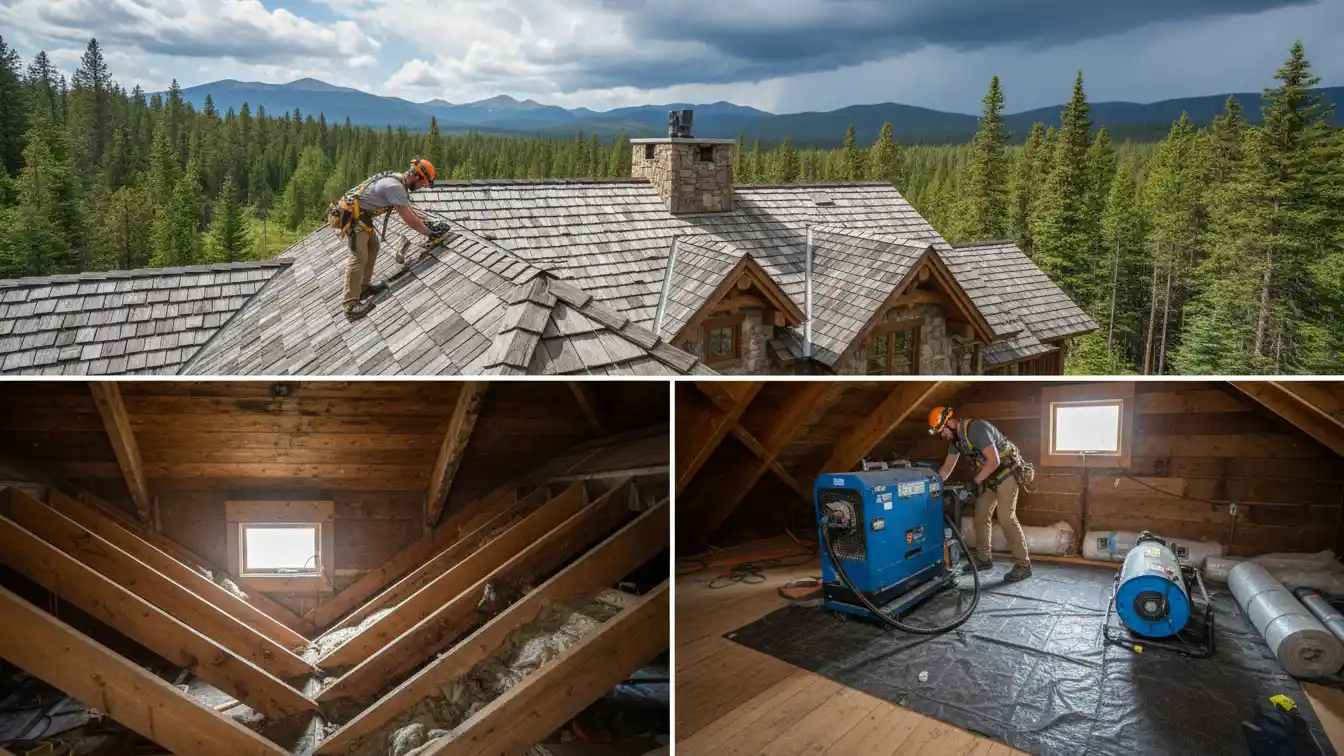
North Idaho properties take a hard handoff between seasons. Winter can leave packed snow, ice wear, loose sealants, and small roof leaks. Spring runoff can saturate lower areas. By summer, thunderstorms, wind-driven rain, falling limbs, and sudden roof exposure can turn those weak points into indoor water damage.
Roof valleys, metal flashing, and snow-hold areas deserve special attention because they manage concentrated water. If they fail, the first visible clue may be a ceiling stain, wet insulation, or damp wall cavity.
Why Roof Valleys Deserve the First Look
A roof valley carries water from two roof planes, so a small obstruction can create a large leak path.
Watch how water should move
Stand back and look at the valley from the ground. Use binoculars if needed. Water should have a clear path from the upper roof to the gutter or roof edge. Leaves, needles, moss, granules, and broken twigs can slow the flow. In a heavy storm, that debris can push water sideways under shingles or against metal valley flashing.
Look for winter leftovers
Snow can hide damaged shingles until the thaw. Check for curled tabs, missing granules, cracked edges, lifted nails, and dark streaks below the valley.
On cabins, outbuildings, and seasonal homes, a slow winter leak may not be obvious until warmer weather. A spring cabin open-up water damage checklist can help you connect roof clues with interior stains, musty odors, and damp storage areas.
Check the ceiling below
Do not stop at the exterior. Go inside and look under the valley path. Check attic decking, insulation, upper closets, ceiling corners, and light fixtures. If you see sagging drywall, bubbling paint, or active dripping, avoid touching electrical fixtures and treat the area as a water intrusion issue, not a cosmetic stain.
How to Check Metal Flashing Without Creating a Safety Risk
Flashing protects the joints where water wants to enter, including chimneys, vents, skylights, walls, valleys, and roof edges.
Inspect from a stable position
You do not need to walk the roof to spot many problems. Look for rust, lifted edges, gaps, missing sealant, bent metal, loose counterflashing, or shingles that no longer sit flat against the flashing. Avoid climbing on wet, steep, icy, or damaged roofing. If the surface looks unsafe, stop the inspection and use a qualified roofing professional.
Focus on transitions
Most roof leaks start at edges, intersections, and penetrations, not in the center of a roof plane. Check where a dormer meets shingles, where a chimney meets the roof, where plumbing vents pass through, and where roof planes meet vertical walls. Wind-driven rain can force water into small gaps that stay dry during normal rainfall.
Match exterior clues to interior damage
A stain may show up far from the entry point because water can travel along rafters, insulation, and drywall seams.
Mark the indoor stain with tape, take photos, and note the weather conditions when it appeared. If the leak follows storms, roof exposure, or wind from one direction, ceiling leak repair may become part of the recovery plan after the roof opening is addressed.
Snow-Hold Areas Can Fail During Summer Rain
Areas that held snow in winter often reveal weak drainage when summer storms arrive.
Check shaded roof sections
North-facing slopes, tree-covered rooflines, roof-to-wall pockets, and areas behind chimneys can hold snow longer than open slopes. That extra moisture can age sealants, trap debris, and keep materials damp. By summer, those same pockets can collect needles and leaf fragments, then back up during a thunderstorm.
Review detached and secondary structures
Garages, shops, pump rooms, and storage buildings often get less attention than the main home. They also hold tools, inventory, records, seasonal décor, and equipment that can be damaged by a slow roof leak.
Review the warning signs of detached garage leaks after the snow season when you inspect secondary roofs.
Look where the roof water lands
A roof problem can become a lower-level moisture problem if gutters overflow or downspouts discharge toward the building. Watch where the valley water exits.
If it dumps near a retaining wall, driveway edge, stairwell, or low entry, runoff can move toward the structure. The same pattern appears when retaining walls and driveways can bring water damage during hard rain.
Before a Leak Becomes a Ceiling Problem
A fast, calm response limits spread and helps you make better repair decisions.
If storm damage exposed the roof or pushed water inside, call (208) 946-9648 for tarping, extraction, drying, repairs, and storm damage restoration. Avoid unsafe rooms until the damage is assessed.
Immediate Response Priorities After a Roof Leak
The first hour is about safety, source control, documentation, and preventing hidden moisture from spreading.
Do not chase the leak during lightning or high winds
Wait until the storm passes before exterior inspection. Stay away from downed lines, broken glass, unstable limbs, and roof areas that may have lost support. Indoors, keep people and pets away from bulging ceilings. If water is near outlets, fixtures, appliances, or a panel, do not enter the wet area until the electrical risk is addressed.
Reduce the spread if it is safe
Move dry contents away from the drip path. Place a container under active dripping if the ceiling is not sagging. Do not puncture drywall unless a qualified professional advises it. Water above a ceiling can suddenly release and bring insulation, debris, or contaminated material with it.
Documenting before cleanup changes the scene
Take photos of the roof area from the ground, the room below, wet contents, ceiling stains, flooring, and walls. Keep notes on the storm date, wind direction if known, and whether the leak started after hail, falling branches, snowmelt, or heavy rain. Documentation helps clarify what changed.
Cleanup and Restoration Decisions to Make Carefully
A roof patch stops new water. It does not automatically dry what has already gotten wet.
Dry hidden materials, not just visible surfaces
Roof leaks can wet attic insulation, sheathing, drywall, trim, flooring, and wall cavities. A surface may feel dry while moisture remains behind it.
Watch for musty odor, paint bubbles, soft drywall, stained trim, and recurring ceiling marks after the next rain. If lower areas also take runoff, review snowmelt drainage risks in a walk-out basement because roof water and site drainage often overlap in four-season properties.
Treat contamination differently
Stormwater, sewage backup, floodwater, smoke residue, and clean-water leaks are not the same cleanup problem. If water is dirty, foul-smelling, mixed with debris, or tied to flooding, avoid bare-hand cleanup.
Older buildings may also hide layered finishes or materials that require careful handling. Keep the response focused on safety, moisture control, and the right repair sequence.
Plan repairs after stabilization
Once the source is corrected and wet materials are addressed, repair decisions may include drywall, insulation, trim, flooring, roof components, siding, or structural materials. Commercial properties may also need tenant communication, access planning, and work sequencing so operations can resume safely.
Frequently Asked Questions
1. Why are roof valleys so likely to leak during summer storms?
Roof valleys collect water from two slopes, so they carry more flow than many other roof areas. Debris, lifted shingles, old sealant, or damaged metal can slow that flow and push water sideways. Heavy rain and wind can then drive moisture under roofing materials.
2. Can winter snow damage show up as a summer roof leak?
Yes. Snow and ice can loosen shingles, age sealants, and stress flashing during winter. The roof may look fine until summer rain tests those weak points. That is why snow-hold areas deserve a careful pre-storm inspection.
3. Should you climb onto the roof to inspect flashing?
Not if the roof is wet, steep, icy, damaged, or difficult to access. Many warning signs can be checked from the ground with binoculars or from a stable window. If the inspection requires roof access, use a qualified roofing professional.
4. What indoor signs suggest a roof valley or flashing leak?
Look for ceiling stains, bubbling paint, soft drywall, damp attic insulation, musty odor, and marks near chimneys, vents, skylights, or roof intersections. A stain may appear away from the actual roof entry point because water can travel along the framing.
5. What should you do first if water starts dripping from the ceiling?
Keep people away from the wet area, especially if water is near lights, outlets, appliances, or wiring. Move dry contents away if it is safe. Take photos, place a container under minor dripping, and avoid disturbing sagging ceiling material.
6. Can a small roof leak lead to mold concerns?
A small leak can create moisture inside drywall, insulation, trim, or flooring. If drying is delayed, damp materials may support mold growth. Repeated leaks are especially concerning because materials may never fully dry between storms.
7. How do gutters affect roof valley leaks?
Valleys often send large amounts of water into gutters. If gutters clog or overflow, water can back up near the roof edge or dump beside the foundation. That can create both roofline leaks and lower-level moisture problems.
8. Are detached garages and shops at risk from the same roof issues?
Yes. Detached buildings often have roof edges, valleys, flashing, and storage areas that get inspected less often. A slow leak can damage tools, inventory, records, insulation, and wall finishes before anyone notices obvious dripping.
9. When should stormwater be treated more cautiously?
Use more caution when water is dirty, foul-smelling, flood-related, sewage-related, or mixed with debris. Do not assume all stormwater is clean. Avoid direct contact and focus on safety, containment, and proper cleanup decisions.
10. What roof areas should commercial property managers check before storms?
Check valleys, roof-wall transitions, flashing around penetrations, gutters, downspouts, roof drains, rooftop equipment curbs, and ceiling areas below past leaks. Also review tenant spaces, storage rooms, utility areas, and customer-facing areas where disruption could grow quickly.
11. What should older homeowners watch more closely?
Older properties may have layered roofing, patched flashing, older sealants, hidden wall cavities, and prior repairs. These conditions can make moisture paths harder to trace. Check attic spaces, ceiling corners, chimney areas, and rooms below roof transitions.
12. Does fixing the roof end the restoration concern?
Not always. Roof repair stops new water from entering, but it does not dry wet insulation, drywall, flooring, or framing. After the source is corrected, inspect the affected interior materials so hidden moisture does not continue causing damage.