
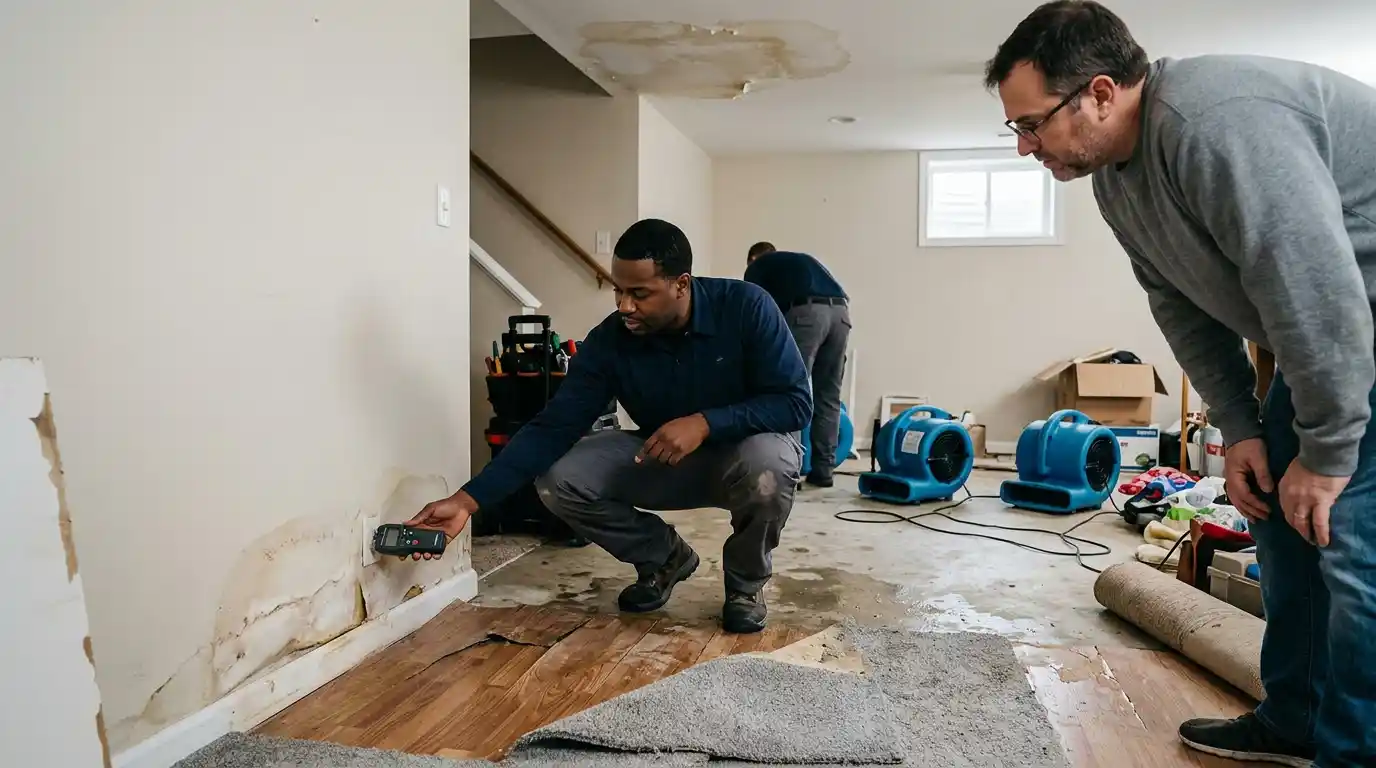
In four-season neighborhoods, water damage rarely starts the same way twice. One property gets a ceiling leak after snow and ice stress the roof. Another ends up with a wet basement during the runoff season. Another deals with an appliance overflow that quietly spreads into walls and flooring before anyone notices.
For homeowners, renters, facility managers, and property managers, the real question is not just whether water got in. It is what kind of water it is, how far it traveled, and what the restoration scope now needs to include.
Restoration services typically cover a broad range of water-related losses, but the scope changes based on source, contamination level, affected materials, and whether the damage has already triggered secondary problems such as mold, structural deterioration, or repair needs.
The practical way to think about coverage is this: restoration usually addresses sudden or significant water intrusion that requires extraction, drying, cleanup, damage assessment, and, in many cases, repair or reconstruction afterward.
Water damage that restoration services commonly address
The main categories of water loss that typically move beyond simple cleanup and into professional restoration.
Burst pipes and freeze-related water losses
In colder weather, frozen and burst pipes can release large volumes of water into living spaces, wall cavities, insulation, and flooring. That makes them one of the clearest examples of water damage that restoration services handle.
Burst pipe repair is a distinct service that fits the reality of four-season properties, where sudden winter failures can create fast-moving indoor water damage.
Flooding, runoff, and basement water intrusion
Restoration also commonly covers flood-related damage, especially when water enters lower levels, crawlspaces, storage areas, or finished basements.
We offer flood damage restoration and separately discuss flooded lower-level spaces in our guide: From Flooded to Dry.
In practical terms, that means standing water, wet contents, soaked finishes, and the drying and repair work that follows are all part of the restoration decision.
Appliance failures and hidden interior leaks
Water damage from water heaters, washing machines, dishwashers, refrigerator lines, and similar failures also falls squarely within restoration work when the leak spreads into surrounding materials. Appliance malfunctions are a real source of property damage.
These losses often look smaller at first than storm flooding, but they can still affect cabinetry, drywall, subflooring, and adjacent rooms.
Ceiling leaks and roof-related water intrusion
Not every covered restoration scenario starts at ground level. Ceiling leaks can send water through insulation, framing, drywall, light fixtures, and contents below.
Get familiar with how to repair a ceiling leak. That matters because a stain on the ceiling may be only the visible part of a wider moisture problem.
Why the source of water changes the restoration scope
The difference between relatively clean water and contaminated water because that this distinction affects safety, salvage, and cleanup decisions.
Relatively clean water losses
Water from a broken supply line, certain appliance leaks, or an isolated plumbing failure may begin as comparatively clean water. Even then, it can still require professional restoration if it saturates flooring, drywall, trim, insulation, or structural materials.
Top industry guidance consistently treats source identification and damage assessment as the starting point because drying and repair decisions depend on what got wet and how long it stayed wet.
Gray water and black water events
Once the source involves wastewater, drain overflows, sewage, or contaminated floodwater, the situation becomes more serious. Experts commonly distinguish between cleaner water, gray water from used household sources, and black water from sewage or heavily contaminated flooding.
That is why sewage backups are not just another wet-floor problem. They are contamination events with a much broader cleanup burden.
Sewage backups and contaminated floodwater
Sewage and certain flood events can affect not only visible surfaces but also porous materials, contents, and indoor usability. Some floodwater can carry contamination concerns beyond ordinary runoff.
For you, the key takeaway is simple: if the water may be dirty, treat the loss as a contamination problem, not just a drying problem.
If your property has standing water, a sewage backup, a leaking ceiling, or freeze-related pipe damage, stop the source if you can do so safely, keep people out of hazardous areas, document visible damage, and review our water damage restoration and flood damage restoration resources to decide whether your next step is immediate professional extraction, drying, cleanup, or post-damage repair coordination.
What restoration usually includes after water intrusion
What the work often expands to once the immediate leak or flood event is under control.
Emergency priorities first
The first layer of restoration is usually about stabilization. That may mean identifying the source, removing standing water, isolating unsafe areas, and protecting the structure from additional damage.
Drying, cleanup, and moisture reduction
After extraction, the next concern is residual moisture in materials that you cannot fully evaluate at a glance. Water can move behind walls, beneath flooring, into insulation, and across adjoining rooms. That is why restoration is broader than mopping up what you can see.
If moisture is left in place, the loss can expand from a localized water event into odor, material deterioration, or mold-related work. EPA guidance also emphasizes prompt drying of water-damaged areas to reduce mold risk.
Repair, rebuild, and reconstruction
Some water losses end after drying. Others do not. When drywall, flooring, trim, cabinetry, ceilings, or structural components are too damaged to remain in place, restoration moves into repair or rebuild work.
What makes one water loss more serious than another
Make better decisions about urgency, safety, and next steps.
Delayed discovery
A small leak discovered late can be worse than a larger leak discovered early. Hidden moisture in older homes, mixed-use buildings, and complex layouts can travel farther than expected before stains or odors appear. That is especially relevant in properties with attics, finished basements, layered wall assemblies, or repeated seasonal dampness.
Commercial and multi-occupant disruption
For commercial properties, tenant spaces, and managed buildings, the issue is not only material damage. Water intrusion can interrupt operations, affect customers or staff, and complicate sequencing for cleanup and repair. That is one reason restoration decisions often need to be made quickly, even when damage looks limited.
Secondary mold risk
Mold is not a separate weather event, but it is a common follow-on problem after leaks, basement dampness, floodwater, or delayed drying. We offer mold removal and remediation, which makes sense because many water losses do not stay “just water” for long when moisture remains trapped in materials.
In plain terms, restoration services cover far more than dramatic flood scenes. They commonly address burst pipes, appliance leaks, basement flooding, ceiling leaks, storm-driven water intrusion, and sewage-related contamination, then expand into drying, cleanup, repairs, and reconstruction as needed. The right response depends on the source, contamination, spread, and how quickly you act.
Frequently Asked Questions
1. Does restoration cover water damage from a burst pipe?
Yes. Burst-pipe damage is one of the most common restoration scenarios because water can spread quickly into walls, floors, insulation, and contents.
2. Is a flooded basement considered water damage restoration?
Usually, yes. A flooded basement often requires more than simple water removal because lower-level flooding can affect stored contents, drywall, flooring, and structural materials.
3. Are appliance leaks serious enough for professional restoration?
They can be. Appliance failures often start small, but water can move under flooring, into cabinetry, and behind walls before you realize how far it has traveled. These losses can escalate from a localized leak into a broader drying and repair project.
4. Is a ceiling leak the same as ordinary home maintenance?
Not always. A ceiling leak can point to roof problems, plumbing failures, condensation issues, or hidden moisture above finished surfaces. Once drywall, insulation, framing, or electrical areas are affected, the issue often moves beyond a quick patch and into water damage restoration and repair coordination.
5. When does water damage become a contamination problem?
It becomes more serious when the source is sewage, wastewater, or contaminated floodwater. In those cases, the concern is not just moisture but also what the water may leave behind on materials and contents. That is why sewage backup cleanup is treated differently from a relatively clean supply-line leak.
6. Can restoration include repairs after the property is dried?
Yes. Drying is often only one phase of the work. If finishes or structural elements are damaged beyond cleanup, the job can continue into repair, rebuild, or reconstruction.
7. What should you do first after discovering water damage?
Your first priorities are safety and stopping the source if you can do so safely. Keep people away from electrical hazards, contaminated water, or unstable materials, then document visible damage and begin evaluating whether extraction and drying are needed.
8. Can water damage in a commercial property require restoration even if only one area looks wet?
Yes. Commercial losses can affect operations, staff, tenants, and adjoining spaces even when visible damage seems limited. Water may also migrate into shared walls, subfloors, ceiling assemblies, or service areas, which is why commercial restoration decisions often depend on operational impact as much as visible wetness.
9. Does every water loss lead to mold growth?
No, but delayed drying increases the risk. Water damage does not automatically become a mold project, yet trapped moisture can change the scope over time. That is why prompt drying and moisture control matter so much after leaks, floods, wet basements, and repeated seasonal dampness.
10. Is storm-related water intrusion different from plumbing-related water damage?
Yes. Storm losses may involve roof exposure, broken windows, wind-driven rain, debris impact, or broader structural openings in addition to interior water. Plumbing losses are often more contained at the source, while storm losses can combine water intrusion with exterior damage and later repair work.
11. How do you know whether a water loss needs reconstruction?
You usually look at how far the water spread, what materials were affected, how long they stayed wet, and whether they can be dried and saved. If finishes, framing, ceilings, flooring, or exterior assemblies are too damaged, the project may shift from mitigation into construction and repair or reconstruction.
12. Are runoff and spring high-water events relevant to four-season properties?
Yes. In areas with runoff, melting snow, and recurring flood exposure, lower-level water intrusion is a real seasonal concern. That is why flood damage, basement water removal, sewage cleanup, and later repair coordination are all part of the broader restoration conversation for properties near water, in lower areas, or in higher-exposure corridors.