
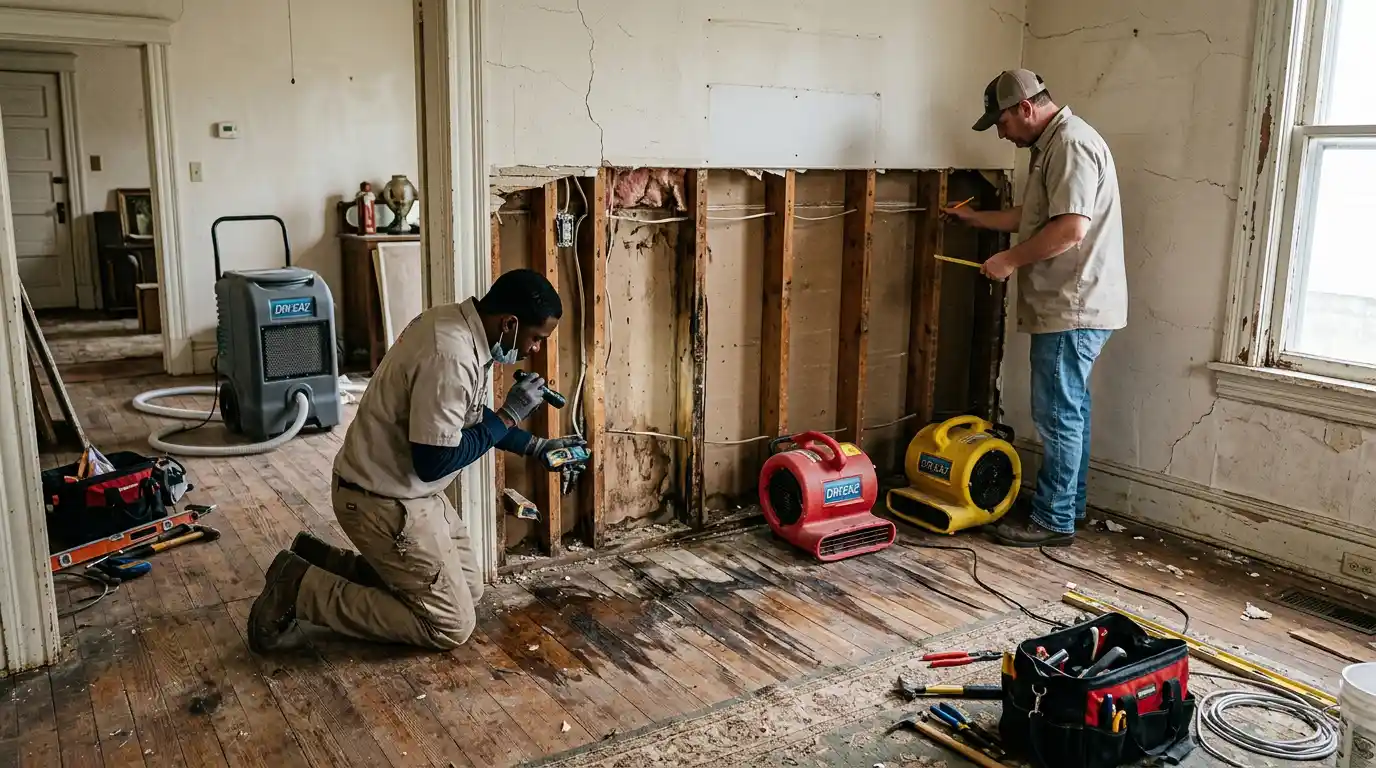
Older homes rarely leak in simple ways. In four-season neighborhoods, winter freezes can trigger burst-pipe losses, roof and ceiling leaks can follow snow and ice, and spring runoff can keep basements, crawlspaces, and lower levels damp long after the weather shifts. In lake communities, river corridors, wooded properties, and outlying communities, water can move through older framing, layered repairs, and hidden cavities faster than you expect.
Even though the March 5, 2026, Idaho spring flood outlook did not point to an unusually severe statewide runoff season, Panhandle locations still showed near-normal runoff in key areas, which is enough to keep moisture risk on the table for older buildings.
When your property has aged materials, previous remodels, and concealed voids, water damage repair is not just cleanup. It is a decision-making process about safety, drying, salvage, and what needs to be opened before the damage spreads.
Why older homes are harder to dry and repair
Older properties often hide damage behind finishes, additions, and aging materials.
Water travels farther than the stain suggests
In an older home, the visible stain on a ceiling or wall is often only the surface clue. Water can wick into plaster, lath, subflooring, insulation, trim, and framing. It can also move along old pipe chases, behind cabinets, and under layers of flooring. That is why hidden damage often keeps growing after the obvious puddle disappears.
Past repairs can complicate today’s damage
Many older homes have patched roofs, mixed plumbing materials, retrofitted bathrooms, or additions that changed drainage paths. When a leak starts, those past updates can create weak joints, trapped moisture pockets, and uneven drying conditions. Repair plans need to account for what is original, what was added later, and what is now failing together.
What to do first before repair decisions start
The first phase is about protecting people, limiting the spread, and creating a clean record of the loss.
Make the space safe and stop the source
If water is near outlets, fixtures, or powered equipment, do not enter the area until it is safe. If the source is a plumbing or appliance failure, shut off the water if you can do so safely. If the ceiling is sagging, the floor feels soft, or sewage may be involved, treat it as a higher-risk event and keep people out until qualified help is on site.
Document conditions before moving too much
Take photos of affected rooms, ceilings, floors, contents, and the likely source. In older homes, early documentation matters because damage can expand as finishes are removed and hidden moisture is found. It also helps you separate direct water damage from older wear, deferred maintenance, or unrelated cosmetic issues.
Drying starts faster than rebuilding
The biggest early mistake is confusing repair with restoration. Drying and moisture control come first. The EPA guidance on water-damage cleanup within 24 to 48 hours exists for a reason: once wet materials sit too long, mold risk rises, and the repair scope usually gets larger. Start air movement, remove wet rugs and loose contents, and avoid trapping moisture behind freshly closed walls or quick cosmetic patches.
What water damage repair usually involves in an older home
Repair work is most effective when it follows drying, inspection, and targeted opening of hidden areas.
Open what needs to dry, not just what looks bad
Older homes often require selective demolition to reach wet cavities. That can mean opening part of a ceiling, removing damaged wall sections, or lifting flooring in isolated zones. A useful reference point is this guide to handling water-damaged walls and ceilings, because those assemblies often hold moisture longer than owners expect.
Decide what is salvageable and what is not
Solid wood trim, some finish carpentry, and certain flooring components may be worth saving if they can be dried and stabilized early. Swollen composite materials, collapsed ceiling finishes, contaminated porous contents, and repeatedly wet insulation are often different stories. In older homes, trying to save everything can actually slow recovery and leave hidden damage behind.
Repair coordination matters as much as cleanup
Older-home recovery often moves through stages: mitigation, selective demolition, drying, verification, then repair and rebuild. That sequence is especially important when the loss affects structural trim lines, wall finishes, insulation, or older assemblies that need a careful match. It is also why secondary damage matters. Our resource on preventing secondary water damage after cleanup is a good reminder that the first cleanup is not the same as finished recovery.
The trouble spots that deserve extra attention
Some areas in older buildings fail more quietly and do more damage before anyone notices.
Basements, crawlspaces, and lower-level storage
Lower levels in older homes are common collection points for runoff, seepage, appliance leaks, and plumbing failures. Even shallow water can damage stored contents, wick into framing, and leave persistent moisture behind. If your property has repeated dampness, this overview of basement water removal is helpful because it focuses on source identification before pumping and patching.
Attics and ceilings after winter weather
Snow, ice, roof wear, and slow flashing failures often show up first as a ceiling stain, even though the real issue started above it. Older attics can also hide insulation saturation and framing moisture long before a ceiling opens up. That is why attic water damage signs and restoration steps matter in four-season properties.
Pipe and appliance failures during cold snaps
Older plumbing systems are more vulnerable to weak joints, aging shutoffs, and freeze-related failures. Appliance hoses and connections can also become sudden water sources, especially in utility rooms, kitchens, and laundry areas. This practical piece on what to do and avoid after water damage is useful because it keeps the early response focused on safety, documentation, and limiting spread.
How to lower the odds of repeat damage
Prevention in older homes is usually about finding weak points before the next season exposes them.
Build a seasonal inspection routine
Check supply lines, shutoffs, exposed pipes, attic areas, roof penetrations, gutter discharge, and lower-level moisture conditions before winter and again before spring runoff. Pay special attention to rooms with older plumbing, previous stains, soft flooring, or musty odors. Water damage in older homes is often repetitive, not random.
Think in terms of moisture pathways
Do not just fix the symptom. Ask where the water entered, where it traveled, where it may still be trapped, and what materials stayed wet the longest. That mindset helps you avoid repainting over a stain, replacing one ceiling panel while leaving wet insulation above it, or drying a room while missing moisture in the wall next to it.
Treat delayed drying as a repair problem, not a cleanup inconvenience
If a space still smells damp, feels humid, or shows fresh staining after the visible water is gone, the job is not finished. The same EPA guidance on the 24- to 48-hour cleanup window matters here too. Delayed drying often turns a manageable repair into a larger demolition and rebuild issue.
Older homes can absolutely be repaired well after water damage, but they reward careful sequencing more than fast cosmetic fixes. If you start with safety, trace the real moisture path, open what truly needs to dry, and coordinate repairs after the wet materials are addressed, you are far more likely to protect the property’s structure and avoid repeat damage in the next storm, thaw, or leak cycle.
Frequently Asked Questions
1. Why is water damage usually worse in older homes?
Older homes often have layered materials, aging plumbing, previous repairs, and concealed cavities that let water travel beyond the first visible stain. That makes the damage harder to map and easier to underestimate. By the time you see bubbling paint or a sagging ceiling, moisture may already be affecting framing, insulation, or subflooring.
2. What should you do first if a pipe bursts in an older home during winter?
Your first step is to make the area safe, then stop the water source if you can do so safely. Keep people out of rooms with electrical risk, soft ceilings, or contaminated water. After that, document the damage and make drying decisions quickly so the loss does not spread into walls, flooring, and trim.
3. Can you repair water damage in an older home without opening walls?
Sometimes you can, but not always. If moisture is limited to a surface finish, repair may be straightforward. If water enters a wall cavity, ceiling void, or layered floor assembly, selective opening is often the only way to dry the structure properly and avoid recurring stains, odors, or mold risk.
4. How fast can mold become part of the problem?
Mold risk rises quickly when wet materials stay damp. That is why fast drying matters more than cosmetic cleanup. Once moisture sits in drywall, insulation, trim, or subflooring, the repair scope can get larger and more expensive, especially in older homes with low ventilation and repeated seasonal dampness.
5. Are ceiling stains always caused by a roof leak?
No. Ceiling stains can come from roof leaks, plumbing failures, ice-related intrusion, bathroom overflows, or appliance lines in upper levels. In older homes, the stain may also appear far from the true entry point because water can travel along framing or plaster before it shows itself.
6. What makes wet basements in older properties harder to deal with?
Older basements often have a mix of seepage, runoff, wall cracks, poor drainage, and stored contents that block airflow. Even shallow water can soak trim, framing, and belongings. The key is to identify the source first, then remove water, improve drying, and decide what materials can actually be saved.
7. When should you replace materials instead of trying to save them?
Replacement is more likely when materials are porous, swollen, contaminated, repeatedly wet, or structurally weakened. In older homes, the goal is not to save every finish at all costs. The better goal is to preserve what is stable and worth drying while removing materials that will keep moisture or fail later.
8. How do appliance failures damage older homes differently?
Appliance failures often create slow, repeated wetting around kitchens, laundry rooms, and utility areas. In older homes, those leaks can move into cabinetry, under older flooring, and into adjacent wall cavities before anyone notices. By the time the appliance is disconnected, the surrounding assembly may still need drying and repair.
9. Should commercial property owners handle older-building water damage differently?
Yes. In mixed-use corridors and older commercial properties, water damage can interrupt tenants, staff, customers, and daily operations. The repair plan has to balance safety, containment, drying, business continuity, and rebuild coordination. Hidden moisture in shared walls, ceilings, and service areas can also affect more than one unit.
10. Is smoke or odor ever part of a water damage repair conversation?
It can be. In four-season properties, one event can lead to another. A storm can cause roof exposure and water intrusion, while regional smoke can settle into porous materials already affected by moisture. Older homes absorb odors more readily, so restoration decisions should consider both wet damage and what those materials have absorbed.
11. What is the biggest mistake people make after the visible water is gone?
The biggest mistake is assuming the job is done because the floor looks dry. Secondary damage often develops after the first cleanup, especially in walls, ceilings, subfloors, and hidden cavities. If the space still smells damp, feels humid, or keeps showing stains, the underlying repair problem is probably still active.