
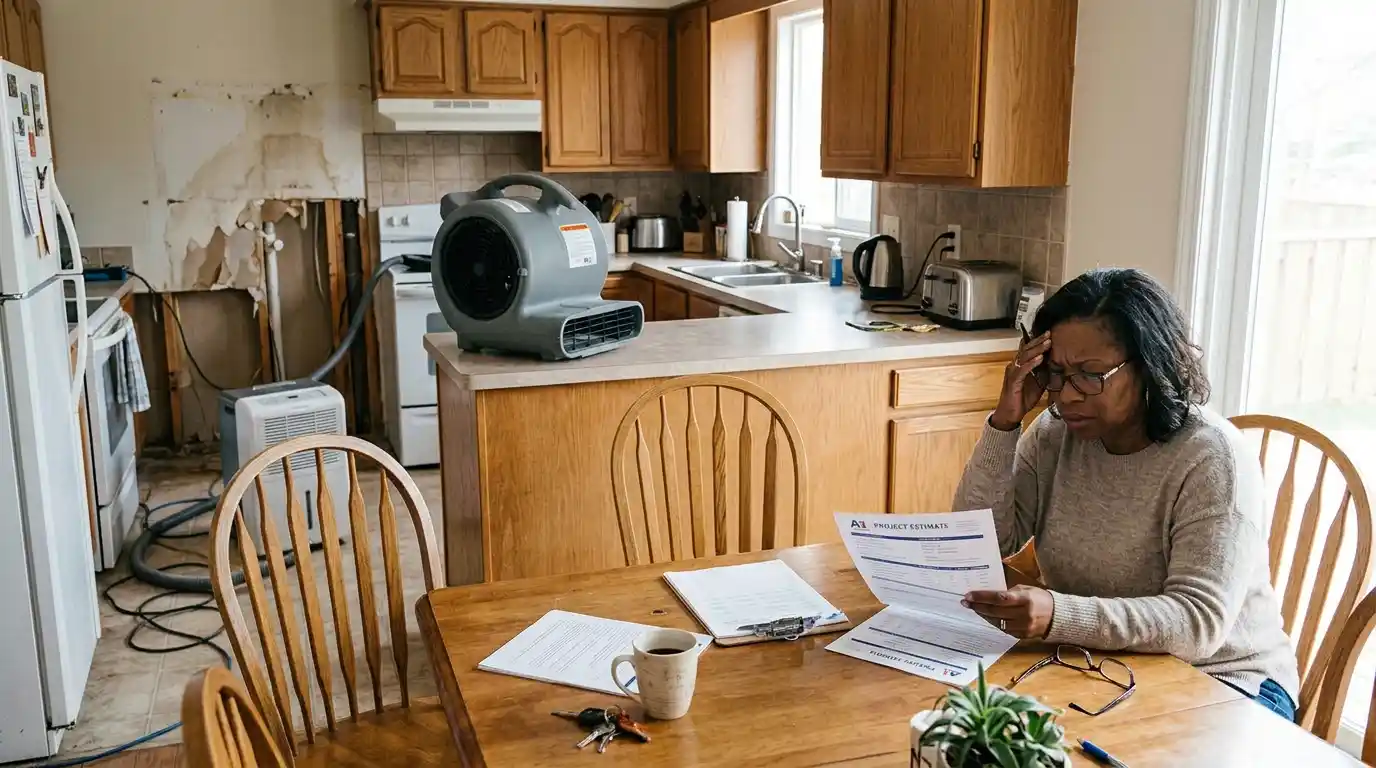
When water gets in fast, the real cost question is not just what the cleanup costs today, but what delayed action can add tomorrow.
A frozen line can break in winter. Spring runoff can push moisture into basements and lower levels. Storm-driven leaks can spread from roofing into ceilings, walls, and insulation. In lake communities, wooded properties, outlying homes, rental units, and commercial spaces, the first visible water is often only part of the loss.
So, is emergency water damage restoration expensive? It can be. But the better answer is this: the price depends on what kind of water entered the property, how far it spread, how long it sat, what materials were affected, and whether you need only cleanup or full repair and reconstruction. The longer moisture lingers, the more likely you are to face secondary issues like odor, material breakdown, and mold.
If you are comparing providers, start with a local team that clearly explains the scope, documents damage, and can handle both mitigation and follow-on repairs.
What actually drives the cost up or down?
Price follows complexity. The more moisture, contamination, demolition, and repair involved, the more the project usually expands.
Type of water
Clean water losses are generally simpler than gray water or black water losses. Sewage backups, contaminated floodwater, and appliance-related overflows can require more cleaning, more removal, and more caution than a small supply-line leak.
Spread and material impact
A quick leak on tile is different from water moving into drywall, insulation, cabinetry, trim, subfloors, or attic assemblies. Hidden moisture is often what turns a manageable loss into a larger one. That is why issues like growing water damage and attic water damage matter so much after the first cleanup.
Delay and secondary damage
Emergency restoration gets more expensive when drying is delayed, when repairs start before the structure is truly dry, or when the property gets re-wet. That is the same reason secondary water damage after cleanup can become a second project instead of a finished one.
The EPA’s 24 to 48-hour drying window matters here too, because delay raises the odds of mold, odor, and material failure.
Questions to ask before you hire a restoration company
Use this checklist to compare providers on scope, clarity, and fit, not just on who gives the fastest quote.
- What type of water loss do you believe this is?
- Is this a localized cleanup, a multi-room mitigation job, or a cleanup-plus-repair project?
- What immediate safety concerns do you see?
- What materials look affected right now?
- What hidden areas are most likely to hold moisture?
- What services are included in the first phase?
- What follow-on work might be needed after drying or cleanup?
- Do you document visible damage with photos and room-by-room notes?
- How will you communicate the next steps if conditions change?
- Do you handle residential, rental, commercial, and occupied-property situations like mine?
- Do you provide construction and repair services if demolition or removal becomes necessary?
What to look out for
You do not need to panic. You need clear information and a team that can explain the problem without overselling it.
- Be cautious if a company talks about price before discussing the water source, contamination concerns, affected materials, and scope.
- Be cautious if they skip documentation, avoid written next steps, or cannot explain what happens if damage extends behind walls, under floors, or above ceilings.
- Be cautious if they treat a sewage backup, flood event, or repeated moisture problem like a basic dry-out.
Water losses are not all the same, and your options should reflect that.
What to expect
Good restoration support is measurable in clarity, decision support, and whether the work plan matches the actual loss.
A strong outcome starts with a clear walk-through. You should understand-
- What is visibly damaged,
- What may still be at risk,
- What the immediate priorities are,
- And where cleanup ends, and repair begins.
Good communication also means you know what to approve, what to monitor, and what records to keep.
For many properties, good restoration also means looking beyond the obvious source. A burst pipe may lead to ceiling damage. A roof leak may call for tarp & board cleanup plus interior drying. A basement event may later require mold-related follow-up if drying was delayed.
In newer homes and recently renovated spaces, water damage in new homes can still stem from grading issues, hidden plumbing problems, or moisture trapped behind finishes.
If you need help sorting out the next step, we offer water damage, flood damage, basement water extraction, sewage backup cleanup, appliance failure services, frozen & burst pipe repair, storm damage restoration, ceiling leak repair, mold removal & remediation, tarp & board cleanup, and construction and repair services.
At Insight Restoration, our team is available 24/7, IICRC-certified technicians, and offers thorough documentation for insurance purposes. If your property is dealing with active water, repeat staining, hidden dampness, or disruption to tenants or operations, get help now.
Call (208) 427-2825
Frequently Asked Questions
1. Is emergency water damage restoration always expensive?
Not always. Small, contained leaks are usually less complex than multi-room losses, sewage events, or flood damage. Cost tends to rise when water sits longer, spreads into hidden materials, or requires cleanup plus repair or reconstruction.
2. What makes one water damage job cost more than another?
The biggest variables are the type of water, how far it spread, how long it remained, and what materials were affected. A quick surface cleanup is very different from drying wall cavities, removing damaged materials, and rebuilding finishes.
3. Should you wait a day or two before calling for help?
Waiting can increase the scope of the loss. Moisture that seems minor can keep moving into drywall, insulation, trim, flooring, and cabinetry. Early action usually gives you more options and can reduce the chance of follow-on mold or odor issues.
4. When does water damage become a safety issue?
It becomes more urgent when water is near electrical components, ceilings are sagging, sewage is present, or occupants cannot safely use the space. Contaminated water and standing water also require more caution than a clean supply-line leak.
5. Is emergency service worth it for a burst pipe or ceiling leak?
In many cases, yes. Burst pipes and ceiling leaks can keep feeding hidden moisture even after surfaces look better. Emergency response can help stop further spread and reduce the risk of additional removal, cleanup, and repair later.
6. What if you only see a stain but no standing water?
A stain can still point to active moisture above, behind, or below the visible surface. The visible mark is not always the full loss. That is why a good provider looks at scope, source, and likely hidden impact before recommending the next step.
7. Can basement water problems turn into a bigger restoration project?
Yes. Basement losses often involve stored contents, finishes, wall bases, and repeated moisture concerns. If the source includes runoff, seepage, or contamination, the project may involve extraction, cleaning, drying, removal, and later repairs.
8. Do newer buildings still need professional restoration?
They can. Newer homes and commercial spaces can still have plumbing failures, drainage issues, roof leaks, or trapped construction moisture. New finishes may even hide water longer, which can delay discovery and expand the eventual repair scope.
9. What should you expect from a good restoration company?
You should expect a clear explanation of the problem, visible damage documentation, practical next steps, and communication about whether the job is cleanup only or cleanup plus repair. Good support helps you make decisions instead of guessing.
10. Can one company handle both mitigation and repair?
Some can, and that can simplify recovery when cleanup leads to demolition or material removal. We provide both water-related restoration services and construction and repair services, which are useful when the loss does not end with drying alone.
11. How do you know if your property needs more than basic drying?
If you have repeated staining, lingering odor, soft materials, visible swelling, attic involvement, basement moisture, or contamination concerns, the issue may be larger than basic extraction. Those signs often point to hidden spread or follow-on work.
12. What kinds of properties does this guidance apply to?
It applies to homeowners, renters, business owners, commercial property owners, facility managers, and property managers. The decision process changes by occupancy, disruption level, and property use, but the need for scope clarity and safety does not.