
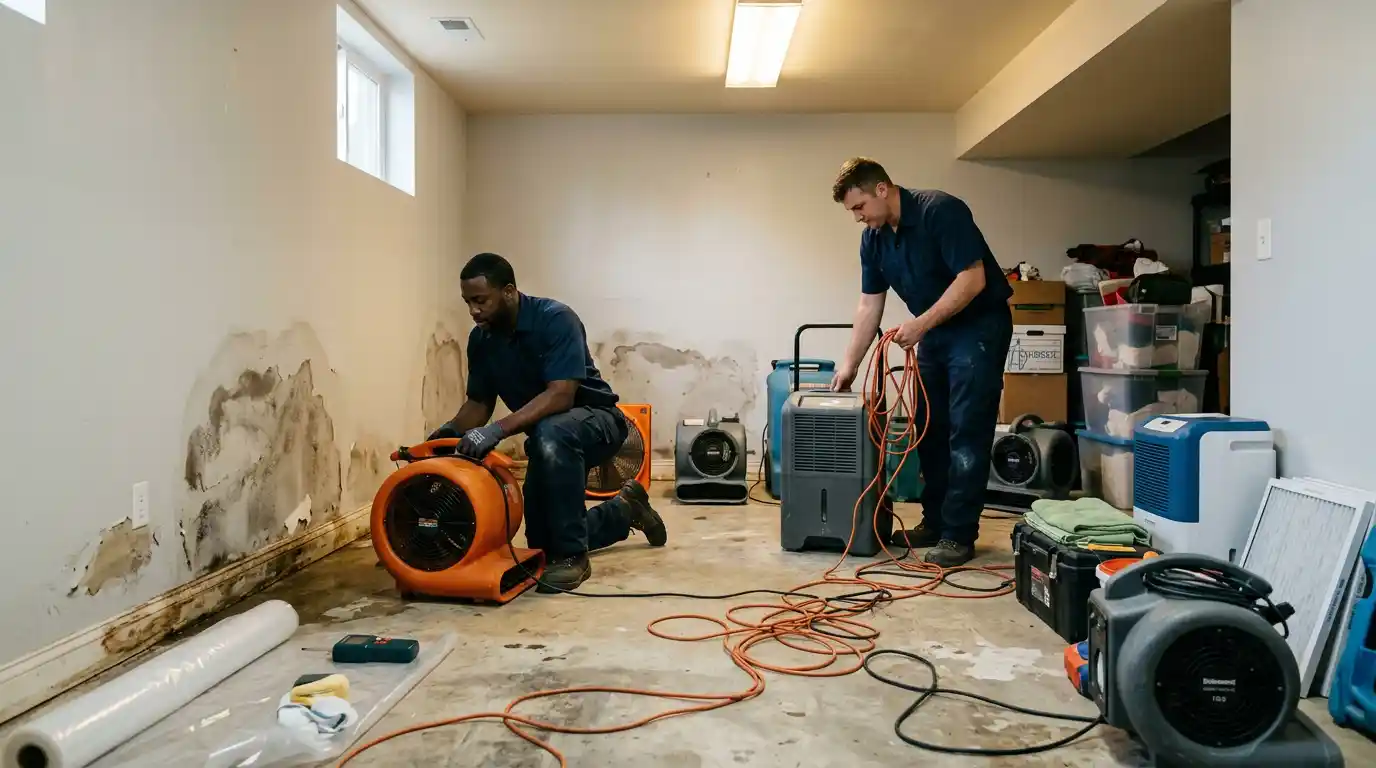
Seasonal water damage is rarely one event with one cause. In four-season neighborhoods, lake communities, river corridors, wooded properties, and outlying communities, risk shifts with the calendar. Winter can bring frozen plumbing, ice-related roof leaks, and sudden indoor water damage. Spring can push runoff toward foundations and basements.
Storm season can expose roofs, windows, and exterior assemblies to wind-driven rain. When moisture is missed or drying is delayed, the damage can spread into insulation, subfloors, ceilings, trim, and finishes that looked fine on day one. That is why seasonal prevention and early response matter just as much as the cleanup itself.
Why seasonal water damage keeps changing
Each season creates a different moisture pattern, so your prevention and response plan should change with it.
Winter freeze, ice, and indoor leaks
Cold-weather losses often start with frozen plumbing, ice-related roof and ceiling leaks, or appliance failures that happen when you are least prepared. In higher-exposure homes and commercial properties, the first sign may be a ceiling stain, a damp wall cavity, or water showing up far from the original source.
Frozen pipe problems can escalate quickly because the plumbing failure and the resulting water damage happen together, which expands both cleanup and repair needs.
Spring runoff, wet basements, and lower-level moisture
As snowmelt and seasonal rain increase, lower-lying properties can see seepage, wet basements, crawlspace dampness, and foundation-related moisture. Water entering at the lowest point of the structure often lingers longer, which raises the chance of warped materials, odor, staining, and hidden saturation.
That is why the basement response needs to focus on both water removal and follow-up drying, not just getting rid of visible standing water. See these basement water removal steps for a practical example of how lower-level water problems develop.
Storm-driven water intrusion outside the peak winter
Not all seasonal water losses come from plumbing. Windstorms, thunderstorms, broken windows, roof exposure, and debris impact can let water into attics, wall cavities, and occupied rooms fast. In mixed-use corridors and commercial properties, even a small opening in the envelope can interrupt tenants, staff, customers, and operations long before the full repair scope is visible.
Storm-related water damage is often part emergency stabilization and part repair coordination.
What to do first when seasonal water damage shows up
The first few decisions shape the repair scope, contamination risk, and how much hidden damage develops next.
Protect people before you protect materials.
Start with life safety. Do not enter standing water if electricity may be active, if the ceiling is sagging, or if the water may be contaminated. Sewage, storm runoff, and floodwater need a more cautious approach than a clean supply-line leak. In any older or more complex building, assume hidden cavities may hold moisture even when surfaces look only lightly affected.
Stop the source and document what changed.
If the source is a plumbing or appliance failure, shut off the water if you can do so safely. If the source is weather-related, focus on limiting additional entry points and protecting contents from further exposure. Then document where water appeared, which rooms were affected, and what changed first.
Good notes and photos help you make better cleanup and repair decisions later, especially when multiple assemblies may be wet.
Treat hidden moisture as part of the loss.
One of the biggest seasonal mistakes is assuming the problem is over when the floor looks dry. Moisture can remain inside drywall, insulation, cabinets, subfloors, and attic materials long after visible water is gone. That is when swelling, finish failure, odors, and mold risk begin to expand the repair scope.
The issue is explained well in our post on what happens when water is not dried properly.
If you are dealing with active water intrusion, a burst pipe, a basement flood, or storm-related exposure,
Call (208) 427-2825
Seasonal prevention moves that reduce repair costs
The goal is not perfect prevention. It is reducing how far water travels before you catch it.
Before and during winter
Protect exposed plumbing in vulnerable areas, watch for ceiling staining after snow and freeze-thaw swings, and pay attention to spaces that stay cold longer than the rest of the property. Attics deserve extra attention because small roof or ventilation issues can turn into insulation saturation, staining, odor, and secondary damage below.
This attic water damage guide is useful for spotting early warning signs before they spread.
During spring runoff and wet weather
Keep water moving away from the structure. That means watching drainage patterns, basement conditions, and repeated dampness near foundation walls. If you manage a commercial property or rental, seasonal walkthroughs matter because recurring moisture often shows up first as a maintenance issue, then becomes a repair issue.
A quick response to seepage is usually far less disruptive than waiting for flooring, drywall, or trim to fail.
After storms and repeated leaks
Properties with a recent leak history need follow-up, not just cleanup. Re-check areas that were previously wet, especially ceilings, attics, lower walls, and basement corners. Repeated dampness can create a cycle of odor, staining, and material breakdown. This is where secondary water damage after cleanup becomes a bigger problem than the original incident.
Cleanup and repair decisions that affect the final outcome
Seasonal losses often become bigger because repair work starts before moisture control is truly complete.
What you may be able to handle early
You can often move contents, blot small amounts of clean water, improve airflow where safe, and monitor for spreading stains or damp odors. Those steps can limit immediate damage, but they do not replace proper drying when assemblies, insulation, or contaminated water are involved. Small visible damage can still hide a larger moisture path.
What usually needs qualified help
Sewage backups, storm runoff, large basement floods, burst-pipe saturation, and water that has moved into ceilings, attics, or wall systems usually need a more complete restoration approach. We provide water damage restoration as well as construction and repair services, which matters because seasonal losses often involve both mitigation and follow-on rebuilding.
Why repairs should follow moisture control
Cosmetic repair done too early can trap damage in place. Paint, trim replacement, flooring work, and finish restoration should follow a clear drying and evaluation phase so you are not covering over active moisture. In seasonal losses, the best repair decision is often the one you delay until the wet materials and hidden pathways are fully understood.
A useful DIY preparation practice would be to look into how long water damage restoration can take, because timing depends on how far the water traveled and which materials were affected.
Seasonal water damage is easier to manage when you think in patterns instead of single incidents. Freeze-related plumbing failures, runoff, wet basements, roof leaks, and storm exposure all leave different clues, but the same rule applies: act early, watch for hidden moisture, and let repair decisions follow the actual extent of the damage. In four-season properties, the smartest response is the one that treats both the visible mess and the moisture you cannot see.
Frequently Asked Questions
1. What seasonal water damage problem is most likely to show up first in cold weather?
In cold weather, the first issue is often not dramatic flooding. It may start as a frozen pipe, a ceiling stain, a drafty area with condensation, or a small leak around a vulnerable plumbing run. If you catch those signals early, you may limit how much water reaches insulation, flooring, trim, and lower rooms.
2. Why does water damage keep getting worse after the visible water is gone?
Visible water is only part of the loss. Moisture can remain inside wall cavities, under flooring, in insulation, and around trim long after the surface looks dry. That trapped moisture can lead to swelling, odor, peeling finishes, and mold-related problems that make the later repair scope much larger.
3. How quickly should you respond to a wet basement in spring?
You should treat basement water as time-sensitive because lower-level spaces dry more slowly and often hide moisture behind finishes or along foundation walls. Fast water removal matters, but so does follow-up drying and monitoring. Waiting too long can turn a cleanup issue into a demolition and repair issue.
4. Can a small ceiling leak really cause larger structural repairs?
Yes, especially when the leak is repeated or tied to seasonal weather patterns. Water can spread across framing, insulation, and ceiling cavities before it shows up in one visible spot. A small stain may represent a much larger moisture path above the finished surface.
5. What should you avoid doing after seasonal water intrusion?
Do not assume a fan and a few towels are enough for widespread wet materials. Do not enter standing water where electricity may be active, and do not treat sewage or storm runoff like a routine clean-water leak. You also want to avoid starting to finish repairs before the moisture problem is actually under control.
6. When does mold become a bigger concern after water damage?
Mold becomes a bigger concern when wet materials stay damp past the early response window. EPA guidance emphasizes addressing clean water damage within 24 to 48 hours to help prevent mold growth. That is why delayed drying after leaks, attic moisture, or basement seepage can create a second wave of damage.
7. Are appliance failures really a seasonal water damage issue?
They can be, especially during temperature swings, occupancy changes, or periods when hoses, drains, and supply lines are under more stress. A failed dishwasher line, washing machine hose, or water heater connection can release a surprising amount of water and affect rooms far beyond the appliance itself.
8. How do commercial properties need to think about seasonal water damage differently?
Commercial spaces often have more occupants, more finishes, more equipment, and more business interruption risk. Even a localized leak can affect corridors, tenant areas, back-of-house rooms, and customer-facing operations. That is why commercial property managers often need a response plan that includes both cleanup and later repair coordination.
9. Why can attic moisture be hard to catch?
Attics are easy to ignore until damage shows up in a room below. Seasonal roof leaks, ice-related issues, and hidden condensation can wet insulation and framing before you ever see dripping water. By the time a ceiling stain appears, the moisture path may already be well established.
10. What kinds of restoration services are most directly to seasonal water losses?
Services include water damage restoration, flood damage restoration, basement water extraction, sewage backup cleanup, appliance failure services, frozen and burst pipe repair, storm damage restoration, ceiling leak repair, mold removal and remediation, tarp and board cleanup, construction and repair services, and reconstruction-related support.
11. How do you know when cleanup is no longer enough, and repair work is needed?
Cleanup alone is usually not enough when materials have swelled, delaminated, stained repeatedly, stayed wet too long, or developed odor and finish failure. Once the structure has been stabilized and moisture is controlled, the next step may shift toward repair or reconstruction rather than simple drying.
12. Does spring flood risk mean every year will be equally severe?
No. Flood risk can be a recurring regional issue without every year producing the same runoff severity. It is a reminder to prepare for recurring risk without assuming every season will be extreme.